

From the Newsstands: This article appeared in The Eagle’s December 2025 print edition which can be viewed here.
When she commented on a TikTok video about conservative influencer Charlie Kirk’s death on Sept. 10, College of Arts and Sciences professor Mandy Berry did not expect her job to be threatened.
“I didn’t even think about it,” Berry said in an interview with The Eagle in reference to her comment, as it was buried beneath thousands of other responses.

After Kirk was shot at Utah Valley University while promoting his organization Turning Point USA, university professors across the country were doxxed or fired due to their comments about Kirk’s controversial stances.
Following Berry’s comments, the University received two emails calling to fire Berry for her remarks. The University did not disclose to Berry whether these emails were anonymous or not, or if they were from the same source. She said she is one of at least 10 AU professors who were doxxed — a form of harassment where private information, such as addresses and names of family members, is published online.
The fallout from Kirk’s assassination came on the heels of broader threats to liberal colleges and universities, including freezing research grants, threatening to revoke federal funding to universities and rescinding international students’ visas.
The Trump administration has also invited all U.S. universities to participate in a compact that would enact preferential federal funding for schools willing to place a cap on international students, ban the consideration of race or sex in hiring or admissions, freeze tuition for five years and require standardized testing to become a part of the application process.

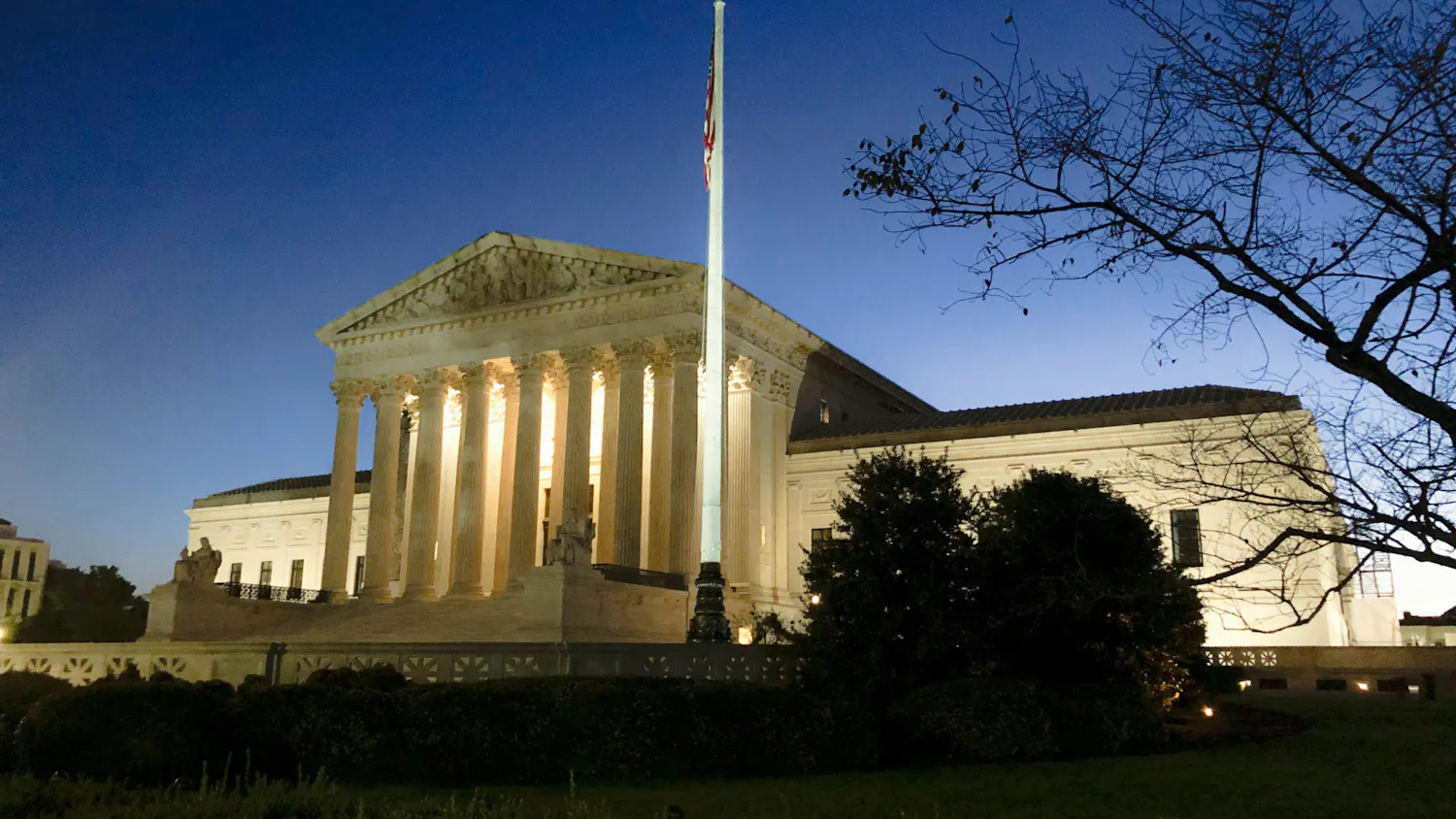
As a small, private, liberal arts university in the nation’s capital, questions about what these new policies could mean for the future of American University weigh on the minds of administrators, students and faculty members.
Berry said the University administrators handled her situation well, contacting her after receiving the messages and ensuring she felt safe. The school offered her software that would delete Berry’s data from the internet entirely to protect her in the future.
Berry said she wishes the University had alerted the community to the threats.
“It’s not just the individuals, it’s our community, and I personally feel like AU has not been forthcoming about what our position is in relation to the Trump administration,” Berry said.
Berry said she understood why university administrators would be hesitant to speak out during a time when higher education is under such scrutiny, but worries how the mission of the University will change because of this.
Faculty Apprehension
A survey conducted by the American Association of University Professors in January found that nationally, more than one in three faculty members feel they have less academic freedom today than at any other period. More than half were concerned they would be harassed online for their teaching and views.
Lara Schwartz, a senior professional lecturer in the School of Public Affairs and director of the Project on Civic Dialogue, said these attacks on higher education did not begin with the current presidential administration and instead suggest a much deeper divide in America’s views toward colleges and universities.

According to Schwartz, the early 2000s marked a partisan shift in support for higher education, as Republicans weakened their support for universities and colleges, a move that became more prominent in 2016.
Schwartz cited the growing wage gap between those with and without college educations, which she said creates resentment and impacts voting patterns. In the 2024 election, college-educated voters favored then-Vice President Kamala Harris over current-President Donald Trump, according to Inside Higher Ed.
“Universities themselves are not the cause of our economic system, but nonetheless it’s really easy to take people who are hurting and sort of blame higher ed,” Schwartz said.
An Oct. 15 Pew Research Center survey found 7 in 10 Americans said the U.S. higher education system is “going in the wrong direction.”
Concerns surrounding intellectual and political diversity have also put many universities under scrutiny.
“There’s a kind of panic … that there isn’t room for other voices and that there is a crisis of self-censorship and a lot of it is blamed on universities being liberal,” Schwartz said.
Chris Edelson, an assistant professor in SPA and a scholar on authoritarianism, said this targeting of higher education and free speech is part of a wider movement to silence dissidents, a tactic he said has been used in other countries that experience lapses in democracy.
“The United States has this image of itself, and many Americans do, as an exceptional country, as different from others, as having a specific kind of tradition in history,” Edelson said. “And it’s very difficult for people to understand that it is vulnerable to the same pressures and the same risks and dangers as other countries.”
Edelson voiced some relief that he has not faced any backlash from students or restrictions from the University’s administration for his teaching on authoritarianism this semester.
“In my view, the best thing that universities can do, and really all of us, is stand together,” Edelson said.
John Bracht, an associate professor in CAS and the president of AU’s chapter of AAUP, also emphasized the importance of solidarity between university administrators and faculty at this time. In reference to doxxed faculty, Bracht said the University did a good job of providing resources and support.
Bracht said he is more concerned about the University’s approach to liberal arts education as a whole. He said recent faculty meetings with the Board of Trustees have made him feel the University is moving toward prioritizing “career readiness” and entrepreneurship over liberal arts education.
“Nationally, AAUP has been a drive of this ideal of what a liberal arts education can be, and academic freedom protects the ability for the faculty to basically do this. So we just have to protect academic freedom at all costs,” Bracht said.
Institutions’ response
Some universities and free-speech groups have sued the federal government in response to attacks on academic freedom and freedom of speech. According to a database from Inside Higher Ed, there have been over 50 lawsuits against new education policies.
The Knight First Amendment Institute at Columbia University has become one of these litigants, as it focuses on defending the freedoms of speech and the press in the digital age. Recently, the institute filed a lawsuit, on behalf of AAUP, against Secretary of State Marco Rubio’s policy to deport pro-Palestinian activists.
In late September, a federal judge ruled that the policy violated the First Amendment.
Ramya Krishnan, a senior staff attorney with the Institute, said it is victories like these that show why universities should continue to resist pressures from the current federal administration.
Some schools, such as Harvard University, have had federal aid and research grants terminated due to their resistance to the federal government. But Krishnan said even schools that have attempted to adhere to the administration’s policies aren’t safe.
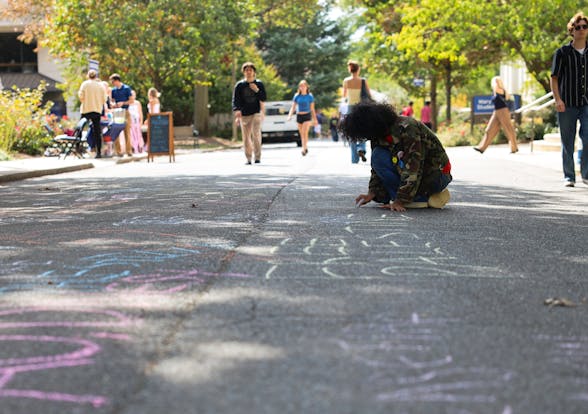
“I think there are some promising signs that universities are learning that capitulation is not a sustainable strategy with this administration, that it is no guarantee that they will not be attacked for a second or a third or a fourth time,” Krishnan said.
At AU, administrators have largely chosen a quieter approach. Since Trump was inaugurated for the second time in January, the University has quickly rolled out a plan of response. It joined national coalitions of higher education institutions voicing support for universities like Harvard, while also launching new messaging around inclusive excellence and student belonging.
In May, the University announced it would be rebranding its Center for Diversity and Inclusion as the Center for Student Belonging. In August, the Center for Student Involvement updated its Recognized Student Organization (RSO) Manual, more than doubling its length and including new training requirements, advisor agreements and an updated Openness and Inclusion Expectation.
The RSO Manual’s Openness and Inclusion Expectation states that any organization’s constitution, mission, purpose statement, Engage profile and marketing material must clearly invite any students interested in the organization’s mission, purpose or goals.
“The Openness and Inclusion Expectations in the Recognized Student Organization Manual reflect AU’s long-standing requirement that all student organizations be open to all students,” Assistant Vice President and Deputy Chief Communications Officer Elizabeth Deal said in a statement to The Eagle. “Over the summer, CSI worked with recognized student organizations to incorporate these expectations through the annual renewal process.”
Student leaders across campus integrated these new expectations into their organizations’ Engage pages, governing documents and marketing materials, Deal wrote.
In an interview with The Eagle, University Vice President and Chief Communications Officer Matt Bennett said changes within CSI were done in consultation with and based upon feedback from students and faculty.
“The work that we are doing is always based on our commitments to inclusive excellence, our commitments to the mission of educating and creating knowledge, of promoting inquiry and thought and debate and dialogue and community. That’s where everything starts from,” Bennett said.
Individual schools have responded in varying ways. Faculty in the School of Communication wrote an open letter reaffirming their commitment to free expression, the School of Education emphasized “equity amid change” in a statement to the campus community, the School of International Service sent out a newsletter on “Navigating Uncertainty” and CAS introduced a new Social Action, Justice & Performing Arts certificate linking the arts to civic engagement.
Yet others, such as SPA and the Kogod School of Business, have remained publicly silent.
Bennett said the current “very difficult, very complex, very unique environment” was requiring the University to consider two perspectives: policy changes and “atmospheric pressure.” Bennett described atmospheric pressure as the stress placed on higher education institutions following news stories emerging from and sanctions placed on universities like Harvard and Columbia.
Federal changes to Pell Grants and loan limits also present new challenges for administrators.
“You need to understand what might be happening in the world,” Bennett said. “You need to focus very clearly and very strongly on what we are doing, based on our mission, based on our principles, based on continuing to do that work going forward, and that's how we're approaching it.”
Student organization response
Much of the University’s response has affected student organizations that form the core of AU’s civic and cultural life.
For multiple student organizations, new university regulations have created additional barriers to participation. Since the RSO Manual’s update, Rabbana Bari, the president of AU’s chapter of the Muslim Student Association, said the MSA and other organizations have had multiple challenges with tasks like club registration and are concerned about their ability to speak out.

“We don’t know if saying something could put us at risk, both for e-board and club members,” Bari said.
Bari said multiple MSA members have also been doxxed as Islamophobia rises in the U.S.
“We’re doing everything that we can to keep our community safe, and to not have them be concerned by a lot of things at once,” Bari said.
Eli Givens, an SPA junior and e-board member for Guns Down DC at AU, said clubs and organizations on campus have been critical in offering students a community of like-minded individuals. Amid a changing political climate, Givens said it is communities of their peers that give them hope.
“We are not the first people ever to experience this level of fascism, we're not the first people to experience that in history — and the people in history fought back,” Givens said. “That gives me hope that we’re not the only ones, and we never have been.”`
The Undergraduate Senate has also taken steps to ensure students feel safe on campus, passing a referendum to make the University a sanctuary campus. Que Riggins, a sophomore in SPA and SOE and speaker pro tempore of the senate, sponsored the referendum.
Though the referendum passed in March, Riggins said the University administration has been unclear about important details pertaining to compliance with Immigrations and Customs Enforcement orders — namely administrative warrants, documents the Immigration Defense Project calls a “ruse” to obtain consent to enter private property.
The University released some guidance on ICE in February, but clarifying University procedure responding to ICE is one of many issues upon which the administration “refuses to take a stance,” Riggins said.
In a statement to The Eagle, Deal said the University is composed of both public and nonpublic spaces: Public spaces are areas open to the general public, like the quad or the lobby of Bender Arena, and nonpublic spaces include residence halls, classrooms and other controlled-access areas.
Law enforcement officers may not enter “spaces that are not generally open to the public without a judicial warrant signed by a judge or prior authorization from the University,” Deal wrote.
Signs posted on at least some classrooms label the space as a private area. The designation establishes the spaces are intended for “instruction and other activities in pursuit of the University's mission.”
“The signs placed in academic buildings are for informational purposes only and serve as a reminder that classrooms are nonpublic areas intended for instruction and university activities, and that access is limited to faculty, staff, students, and invited guests,” Deal wrote.
In September, the University’s chapter of Amnesty International tried to pass a Firewall for Freedom referendum as part of the national organization’s campaign. Though the referendum would protect students’ information from being handed over to the government, it did not receive enough votes to be put on the ballot, club president and SIS junior Steven Mendell said.
“It’s a much more comprehensive way of protecting students than other protective laws and policies might not necessarily do, and so in its namesake, it forms a firewall to protect their information,” Mendell said.
Currently, Mendell and Amnesty International are working toward conversations about firewall policy with the University administration despite the referendum’s shortcomings in signatures. Without a speech protective policy in place, Mendell is concerned that students will shy away from controversial conversations and stop pursuing activism.
“If you don’t feel secure that your First Amendment rights are going to be enshrined and you think that you're going to be persecuted for them, then how can anything continue?” Mendell said.
Other student organizations have felt similar uncertainty as national tensions surrounding free speech have grown.
Charlie Murphy, a junior in SIS and co-president of Sunrise @ AU, said the student climate movement has become increasingly focused on protecting democratic freedoms and resisting authoritarian policies alongside their environmental advocacy.
“Sunrise was founded on the ideas of the Green New Deal and climate justice, but we’re now transitioning to fighting against the rise of authoritarianism,” Murphy said. “Our partnerships with FREE DC and Students Rise Up are showing that the student body is willing to fight back, not just for the environment, but for democracy itself.”
Murphy said the organization has participated in national coalitions, including Students Taking Action for a New Democracy, which includes more than 30 universities. On campus, Sunrise plans to experiment with new forms of protest beyond walkouts, while navigating the University’s strict regulations on student organizations and protests.
“We’re still trying to play by these new rules, even as regulations get tighter,” Murphy said. “At the same time, AU hasn’t done much to repress our messaging, but they haven’t exactly been receptive, either.”
While Sunrise has avoided direct regulation from the University, unlike other organizations such as AU’s chapter of Students for Justice in Palestine, Murphy said the group has faced online harassment, especially during their recent walkout with FREE DC on Sept. 9. Murphy noted increased negative comments on their social media platforms accusing student activists of “hurting” their peers or calling for universities to lose funding.
With federal funding for higher education shrinking and the University’s multimillion-dollar budget deficit, Murphy worries the University will eventually sign onto the Trump administration’s proposed compact, which would promise funding to universities in exchange for certain policy changes.
Riggins expressed a similar sentiment, concerned that the University’s existing financial burdens may influence administrative silence on divisive issues.
“We have always prided ourselves on student voice. When I was touring to come here, it was like, ‘Eagles are for change, AU was a place for changemakers,’” Riggins said. “Why isn’t the administration leading by example?”
Copy editing done by Sabine Kanter-Huchting, Emma Brown, Ariana Kavoossi, Avery Grossman, and Audrey Smith. Fact-checking done by Aidan Crowe.
