
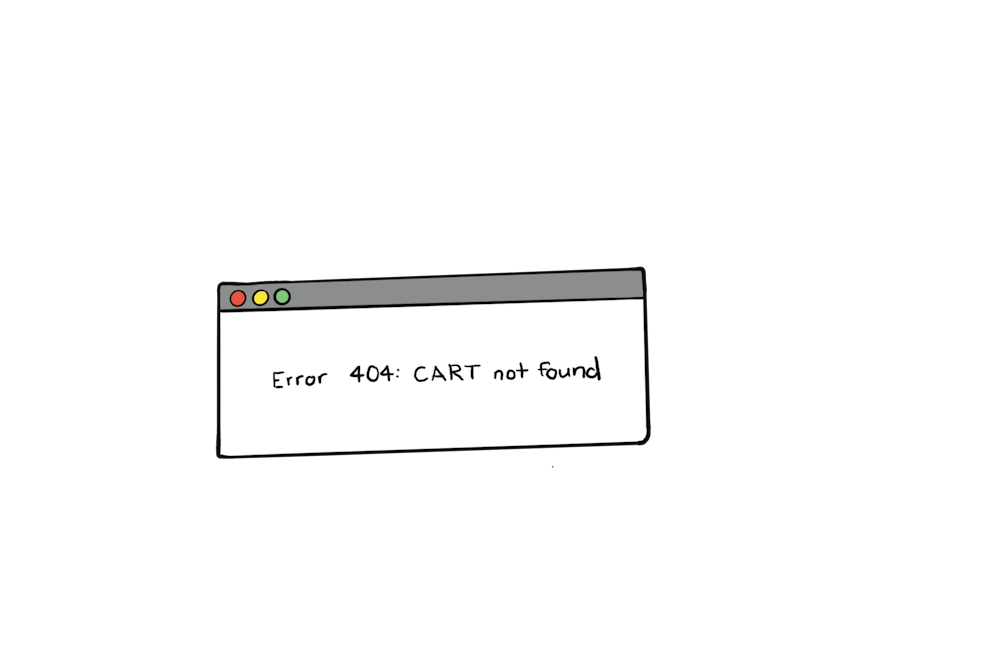
American University launched its Campus Climate Action Response Team two years ago with no official announcement. With the program now on hiatus, some students and staff remain confused.
Following several protests regarding the Israel-Hamas war, CART launched in 2024 with the Office of Inclusive Excellence to address “campus climate concerns,” which the University defines as meaningful conduct or harmful to the campus’community but is not a formal policy violation.
As of spring 2026, CART no longer works as a group. If students or faculty were to reach out, they would be redirected to the Title IX office.
If a report is submitted to CART, the group would address safety concerns, provide student support and define next steps. Potential outcomes from a report include an educational or training initiative, facilitated dialogue or a connection to resources.
According to the website, CART would meet with those who reported the issue and campus leadership to develop policy and other recommendations.
Although created after a slew of student protests, protest-related policy decisions fall to Dayne Hutchinson, vice president for the Office of Student Engagement and Success, not CART. If a report filed with CART addressed a policy violation, it would be directed to the Office of Title IX, according to the website.
Regina Curran, the director of privacy and cyber policy in the Office of Information Technology, was part of the CART planning and pilot phases for the 2024-2025 academic year under then-Assistant Vice President for Diversity, Equity and Inclusion Amanda Taylor. Curran said training focused on dealing with issues outside of policy violations through restorative justice.
Restorative justice practices include collaborative conversations, community circles and connection to further resources.


Curran said CART would address issues similar to the 2017 case when AU investigated a racially discriminatory act against a former Student Government president. If the program existed then, CART would work with the student to address the situation and subsequent emotional and physical safety concerns.
“[CART] was imagined as a group that could do community level response to harms like that,” Curran said.
CART does not have an active office, and no records show there ever was. Curran said the team met monthly to review reports, but by the end of the pilot phase, individual members worked on specific cases.
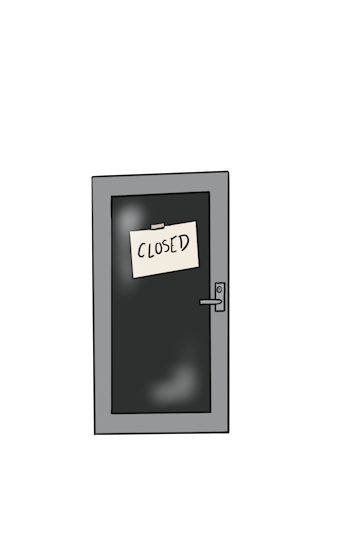
Now, the only members tackling CART-related issues are Zaibis Munoz-Isme, assistant vice president of inclusive leadership and learning, Lisa Taylor, assistant dean of inclusive excellence and leadership and Andrew Toczydlowski, director of graduate student success and office management.
Previously active members are waiting for CART to reconvene. Curran is one of them.
“I’m frustrated as someone who was there from the beginning, understanding what this group could be and really feeling like it was a missing resource on our campus,” Curran said.
The disbanding of CART, according to Curran, happened for several reasons, including a change in administration and large staff turnover. Assistant VP of DEI Taylor left for a position at the American Association for State Colleges and Universities, prompting many staff members working on CART to leave as well.
The University’s Communication and Marketing Team declined The Eagle’s request for an interview with Munoz-Isme, providing a statement largely taken from the CART website.
According to its website, CART faculty would undergo three training sessions per year on how to engage in collaborative communication with students filing reports.
Phase one of CART’s development would involve staff members with prior experience in mediation, conflict resolution, DEI, trauma-informed practices and educational development.
Despite CART no longer being a running program, it is still listed as a student resource on the OIE’s website, which does not have information about its closure or when and if it will resume.
CART is mentioned in the revised 2025 Registered Student Organization Manual, saying it will work with student organizations reported for misconduct. However, CART’s website states it does not work personally with student organizations.
The RSO manual lists CART initiatives as “a formal acknowledgment of harm, restorative dialogue circle, and/or initiatives aimed at building trust with affected communities or groups.”
Whether CART is still available has created confusion amongst some students.
This semester, the AU College Democrats club listed CART as a resource for its statement against the AU College Republicans hosting an event with a controversial speaker, Paul Ingrassa.
Asher Heisten, a junior in the School of Public Affairs and member of AU Rise Up, said he did not know about CART until speaking with The Eagle. Even if CART was active, he said he would not see it as a reliable group to resolve conflict due to his distrust toward administration.
“I don’t know if I necessarily have faith that another AU administration branch would be able to do any different than what AU itself has already done,” Heisten said. “It would take a lot to build trust between these [students and administration] groups.”
Sierra Gray, a sophomore in SPA and co-director of Guns Down DC at AU, said she was also unaware of the program. Gray echoed Heisten’s statement that administration is often one-sided with campus issues.
Gray said if the University is going to create programs such as CART for students to “feel that they’re protected,” the administration must do more in creating an inclusive campus environment.
“All they had to do was send an email to student leaders and be like, ‘Hey this is a thing, this is how you use it,’” Gray said.
Along with communication, Heisten said he wants CART to be a way for the University to better represent students.
“Maybe CART could be a group that extends a representative to hear out students and see what it is they really want,” Heisten said. “I think that would do a lot to build, or start to build trust between these groups.”
In a statement to The Eagle, Silvana Gutierrez, director of strategic internal communications and engagement, said that more information regarding CART will be available in six months.
This article was edited by Owen Auston-Babcock, Payton Anderson and Walker Whalen. Copy editing done by Avery Grossman, Paige Caron and Mattie Lupo. Fact-checking done by Andrew Kummeth and Luca Palma Poth.
investigations@theeagleonline.com
