
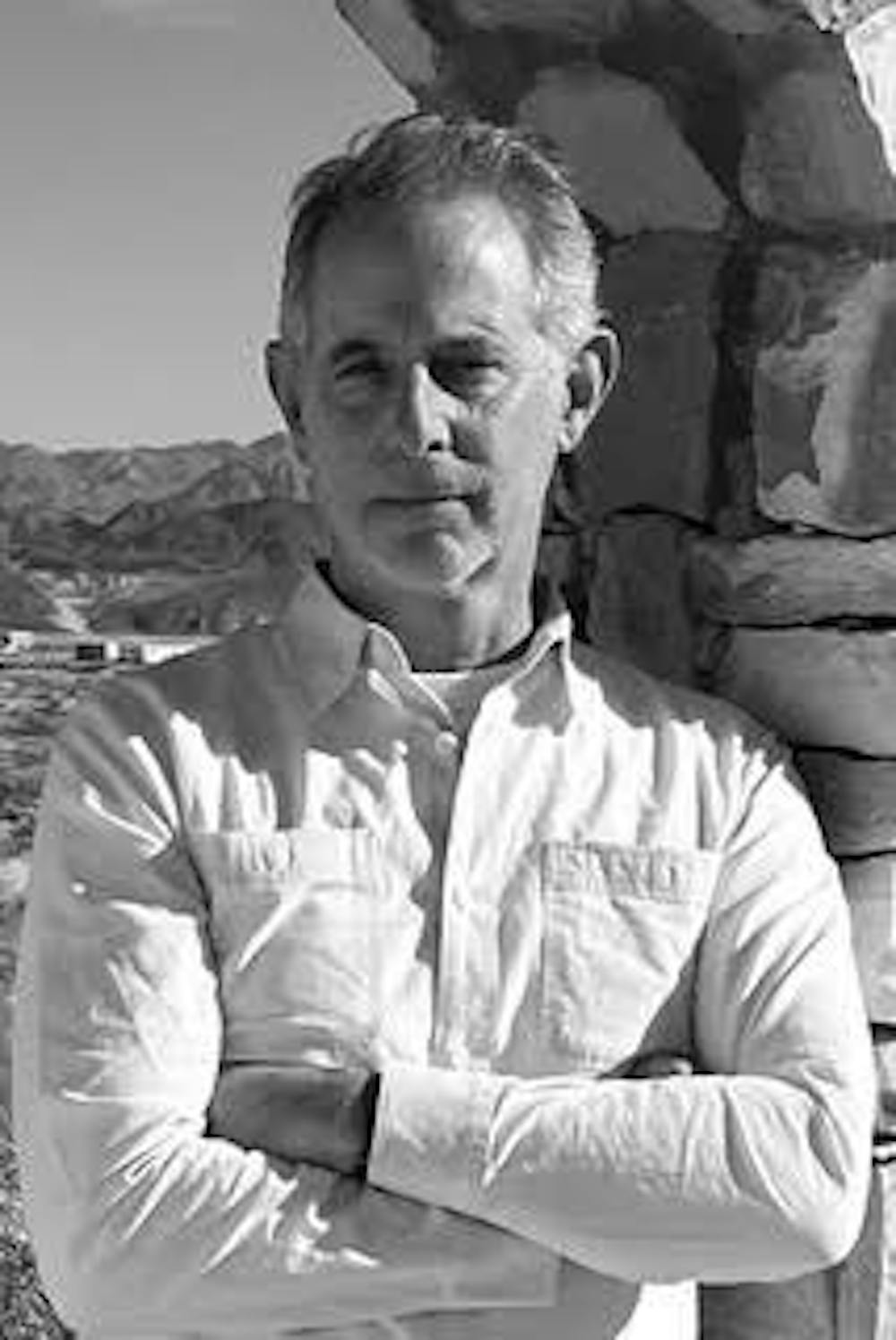
Pulitzer-nominated journalist and American University alumnus Sidney Balman Jr. is preparing for the release of his fourth and newest novel, “The Mural,” which is set to be published in February 2026. “The Mural” is a fictional story based on the 2022 school shooting in Uvalde, Texas.
Balman studied English and business at Vanderbilt University and later attended American University for graduate school, from which he graduated in 1990 with a master’s degree in journalism and public affairs, which helped him start his career as a national security correspondent, and eventually, as an author.
Balman spent his career before writing novels as a journalist. He received an internship with the Dallas Times Herald, which turned into a full-time job covering “cops and robbers.” Balman also worked during his career as a stringer for Time Magazine during the first Iraq War and became a United Press International Diplomatic National Security Correspondent.
Balman said that after doing journalism for over 20 years, he decided to step back and write a novel. He received a book deal for his Seventh Flag trilogy. The last installment of the trilogy was published in 2023.
He decided to write “The Mural” shortly after the Robb Elementary School shooting as a way to better understand America’s current political and cultural climate, rather than just viewing the event as a national tragedy.
“In thinking about it and talking about it with my publisher and my editors, it started to look more and more like a blueprint for America finding its way out of this sort of extreme phase we’re in right now,” Balman said.
Kleo Belay, Balman’s editor, said incidents of violence happen almost every day, but it seemed like what happened in Uvalde was not going to be forgotten anytime soon.
Belay said that she felt Balman was someone who could use his background in journalism to make meaningful change in the world after something so tragic.

“I felt like Sidney was one of the few people in the world with the kind of experience that can really inform this in a very legitimate way and create a discussion and a dissection of these types of violent acts that we’re experiencing in everyday life in this country,” Belay said.
Before beginning the writing process, Balman spent two years researching by speaking with families and community members affected by the tragedy. He observed their daily lives, listened to their stories l and took in their profound grief and resilience.
These experiences informed the considerable emotional component of “The Mural,” helping him portray the complexity of mourning, memory and the ongoing healing process.
“I think what’s unique about Sidney’s book is that it doesn’t just talk about problems,” Belay said. “It’s also focused on the solutions, because one of the hardest things about talking about this is it’s so traumatic, it’s so hard for the human psyche to take that in.”
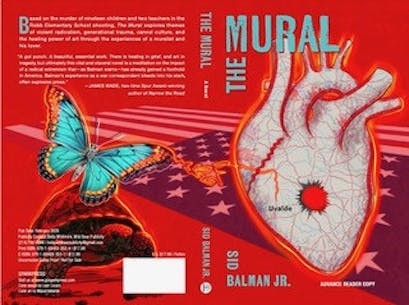
The book’s cover was designed by Miguel Valverde, a muralist from Mexico. Belay said that Balman never described the mural to him and gave Valverde creative freedom.
Valverde’s cover design was inspired by a scene from the book featuring a butterfly turtle: a moment when two characters in India watch as a butterfly drinks a turtle’s tears. Balman said the resulting cover appropriately captures the story’s sense of optimism and relationships among different forms of life.
“And I’m glad it did because it really is a good representation of that hopeful side of things, which is the connection between living beings,” Balman said.
Balman said that some aspects of his writing process drew upon his reporting experience, noting that the process of gathering information is invaluable.
“I had to bring all of my experience to the fore and talking to those families, it’s a very difficult thing,” Balman said. “I’ve covered many tragedies, many wars, genocides, Rwanda, Iraq, … you learn to communicate in a certain way.”
Balman hopes a sense of healing comes out of his new book.
“The importance of [“The Mural”] is this idea, this recognition that we’re a traumatized nation, deeply traumatized nation, just as these people are deeply traumatized, but that there is a path to healing.”
This article was edited by Samantha Skolnick, Abigail Hatting and Walker Whalen. Copy editing done by Sabine Kanter-Huchting, Avery Grossman, Ava Stuzin.
