

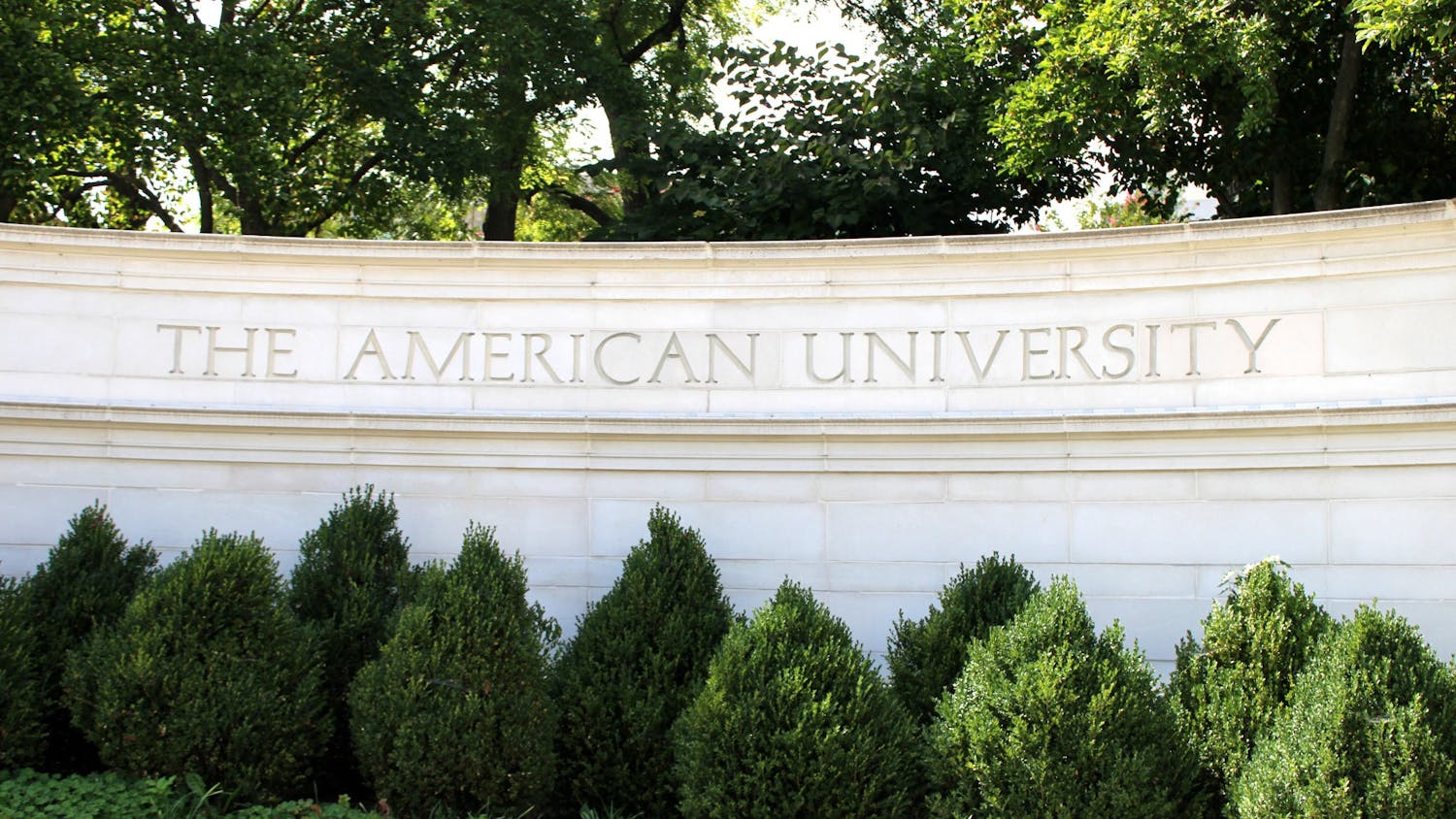
When Coby Meytin and Justin Greenberg stepped onto American University’s campus, they expected a campus abuzz with political activism and diverse discourse. Instead, they were met with an isolating echo chamber of liberalism.
Meytin and Greenberg, now sophomores in the School of International Service and the School of Public Affairs respectively, aim to fill this void in on-campus spaces with their new Bipartisan Club. Unlike other politically-centered clubs on campus, this group’s goal is to seek civil conversation rather than heated debate.
“There’s no real club focused around bringing people who either don’t want to be put into a partisan box, or just want to talk with people on the other side,” Greenberg, the club’s co-president, said.
Greenberg said this club will focus on something already familiar to AU – civil dialogue.
“A big difference of what we’re trying to bring here is a space that’s run by students,” Greenberg said.
Last year, outgoing President Jonathan Alger launched several programs focused on civic dialogue, and while some felt these created a space for students to hear different perspectives, others, like Greenberg, still felt a looming divide.
“If you have faculty there, if you have administrators in there, if you have, you know, people who have some kind of power over you, it’s harder to really express your opinions and your feelings,” he said.
Meytin said that the hesitation to express differing opinions is especially pronounced on a campus like AU’s, which has consistently ranked as one of the most liberal campuses in the country. He said the school’s liberal “bubble” has made it so that many students aren’t used to disagreeing with others.


Bipartisan Club Treasurer Jackson West, a sophomore in SPA, said another factor is one that mirrors the dynamics on Capitol Hill; students aren’t willing to hear other opinions.
“We can see in our country’s politics today, there is not a lot of cooperation, and a lot of times there’s not even a lot of conversation between these two sides,” West said.
In the last few years, political polarization has grown as Americans have become increasingly divided along partisan and ideological lines. According to the Pew Research Center more than eight in 10 Americans say Republicans and Democrats are more focused on fighting each other than solving problems.
Political tensions at AU intensified the same year Meytin and Greenberg stepped on campus.
In March, the AU College Republicans were met with students protesting a guest speaker who’d claimed to have a “Nazi streak.”
Tension between Students Supporting Israel and Students for Justice in Palestine also increased in recent years, reflecting the sharp political divide on campus over the war in Gaza.
“Those were some of the biggest reasons that we decided to go through with this,” Meytin said. “Just seeing the complete lack of ability to listen to anyone who disagrees with them on the campus has been concerning, honestly.”
Given that many AU students are considering careers in politics after graduation, West said that creating a space for students to practice healthy political discourse was a priority for the club’s five-member executive board.
“We just feel passionate that it will be better in the future if the people that disagree can disagree a lot more peacefully,” West said.
Alongside SPA Professor Lara Schwarts, director of the Project on Civic Dialogue, the club polled students throughout the 2025 fall semester on the idea of starting a bipartisan club and received strong support. For West, who grew up in rural Ohio, where the population leans more conservative, the opportunity to hear perspectives different from his own was a major reason he chose AU in the first place.
“There should be a place where the different perspectives can have debate, healthy debate, healthy conversation, where we can disagree and talk about things intelligently instead of the personal playground insults and the stuff we see on a national political level,” he said.
Fostering this safe and civil environment will also depend on how the club functions, which Greenberg said the executive leadership board prioritized when discussing how club meetings will be structured.
Although the logistics are still being finalized, Greenberg said the club’s “Dialogue Dinners” will definitely make an appearance this semester.
“You don’t know who you’re sitting next to, but we still have some topics to talk about at that dinner,” Greenberg said. “You’ll be sitting next to a person who has an opinion because they’re there to actually discuss that issue, and you'll be sitting next to that person and actually be able to talk to them.”
Greenberg said the idea of these dinners is not to establish a “right” or “wrong” opinion, but to encourage students to hear each other out. Any behavior that makes another student feel unsafe for their views will not be tolerated, the club leaders said.
“We’re trying to have people come there and disagree, but do it in a respectful way and do it in a way where you see this person as like your fellow student,” he said. “As somebody who you engage with every day, but also as somebody that has a difference in opinion from you.”
Meytin said the club will also try to intentionally seat participating students next to those with a differing view, which will be established by pre-dinner polling. Students will be able to engage with one another in a conversational manner, rather than simply listening to a speaker or prepared arguments like in a traditional debate setting, he said.
“We want people to be able to humanize the people on the other side,” Meytin said. “We’re not trying to change anyone’s opinions on any specific subjects, but hopefully we can allow people to understand where another side is coming from without just villainizing them.”
Ultimately, West said the club hopes to move conversations toward finding common ground.
“Because progress isn’t one side winning, but it’s both sides agreeing on how they can make it better,” West said. “We all share that belief that that's the only way this country can get better.”
This article was edited by Sophie Milner-Gorvine, Cara Halford and Gabrielle McNamee. Copy editing done by Avery Grossman and Ryan Sieve. Fact-checking done by Luca Palma Poth.
campuslife@theeagleonline.com
