
The following piece is an opinion and does not reflect the views of The Eagle and its staff. All opinions are edited for grammar, style and argument structure and fact-checked, but the opinions are the writer’s own.
Most people don’t read books anymore. But I do.
This year, I am being intentional about reading more. It’s a personal fight against the cognitive offloading made so easy by the availability of artificial intelligence. I will not let myself become a person who cannot read a full-length novel.
Now, AI can be a great tool. But it can also be detrimental to essential skills. I’ve seen it.
Last semester, I studied abroad in Berlin, where expectations about AI use differed from those at American University. Immediately, though the rules were more relaxed, I was cautious, having had previous professors not allow AI use in most, if not all, cases.
One professor told our class we could use AI for our final essay, only saying it would be boring for him to read. I recall thinking I was there to improve my writing.
In another class, a professor handed us a printed article to read and then discuss. He added that he had uploaded the article to our class page, and we could run it through AI if we wanted.
To be quite honest, I was puzzled by this attitude. The expectation that university students are not able to read a ten-page article in 15 minutes made me deeply concerned. We are in school to learn how to think critically, analyze, and communicate ideas, not have a large-language model do it for us.


Global literacy is suffering for a variety of reasons — many predating AI — but AI now accelerates this struggle. According to UNESCO statistics for 2026, at an age when students should have completed elementary school, only half of students worldwide achieve reading proficiency. In early 2026, teachers in England also remarked that students lack basic writing and problem-solving skills due to AI usage.
Any skill is like a muscle. Use it or lose it. If you choose not to read and let yourself use AI to summarize everything, you’ll experience cognitive atrophy, reducing your ability to read, comprehend lengthy texts, and think critically.
A late 2025 study concluded that dependence on AI is associated with lower critical thinking skills. Of the 580 participants in this study, 74 percent reported that they primarily use AI for work and academics, indicative of the growing use of AI in learning.
Accordingly, the consequences of widespread AI use in academics are already apparent. Some professors are now cutting back on the amount of assigned reading, primarily because students refuse to do it. Last spring in Berlin, I witnessed this firsthand.
While reviewing the syllabus the first week, one of my professors said to just “read, skim, or summarize at least one of the readings.”
What about the other readings? Are they not important? If they aren’t, then why were they assigned in the first place?
Students’ AI use is negatively impacting the expectations of student capabilities. In one of my classes, we were charged with coming up with a definition for “energy policy.” I wrote a short definition to share with the class. As a part of my definition, I included that a component of energy policy is “supply chain partnership building.”
My professor’s face contorted.
“Those aren’t your words, are they?” he said.
I was shocked and confused.
“Yes, actually, they are. It was an original thought, and I just wrote it down,” I responded.
It was disappointing to me that my abilities were doubted so immediately and that the expectation was that I had used an AI tool rather than my brain.
We cannot let our literacy and critical thinking skills fade. We should rise to expectations, not have them lowered to us.
We are a very capable generation, but we must build a foundation of core skills and not let those skills weaken in the face of new technology.
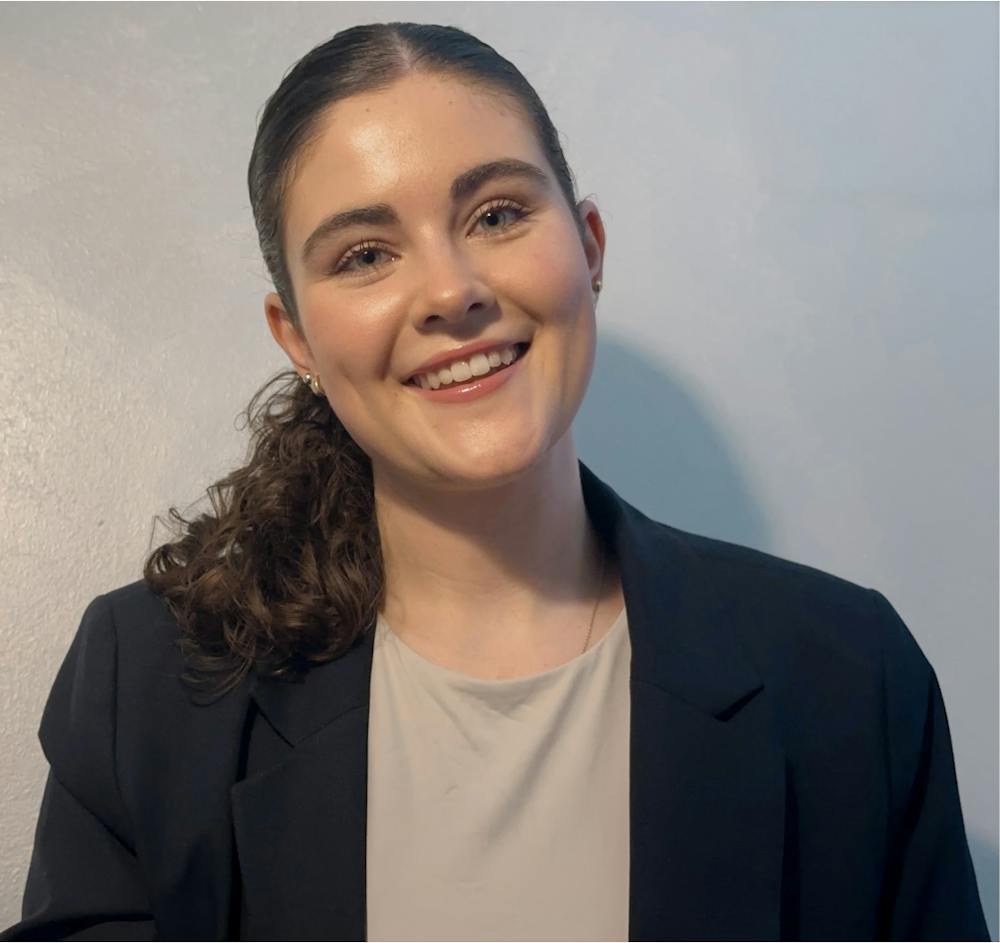
Audrey Campbell is a senior in the School of International Service.
This article was edited by Harry Walton, Addie DiPaolo and Gabrielle McNamee. Copy editing done by Avery Grossman, Arin Burrell, Paige Caron and Nicole Kariuki. Fact-checking done by Andrew Kummeth and Luca Palma Poth.
If you are a current American University student, faculty or staff member and want to submit a guest column, email us below!
opinion@theeagleonline.com
