
Scott Perry serves Harrisburg, Pa. as its Congressional Representative, a city which is over 100 miles away from Washington, D.C.
However, in September 2025, Rep. Perry introduced the Stop D.C. Camera Act to ban automated traffic enforcement, such as speeding and red-light cameras.
D.C. Vote, an organization dedicated to reaching democratic equality and representation for D.C. residents, gathered in Harrisburg to speak with its residents about Perry’s proposed legislation on March 21.
“We have conversations directly with [Perry’s] constituents to ask them what’s on their mind, and whether D.C. local traffic laws are on their radar,” Amy Vruno, the executive director of D.C. Vote, said.
Vruno said that interviewers were met with confusion when asked about Perry’s interference with D.C. traffic laws.
Vruno said this is just one of many examples of federal oversight in the District. Due to its lack of statehood, Congress retains the authority to review and overturn local initiatives written by elected local government bodies like the D.C. Council. She said this can leave D.C. citizens subject to laws made by lawmakers who don’t represent them.
“Ultimately, what will prevent this kind of micromanaging and interference for local D.C. laws would be statehood,” Vruno said.
Vruno said most residents agree when it comes to feelings on the statehood debate.


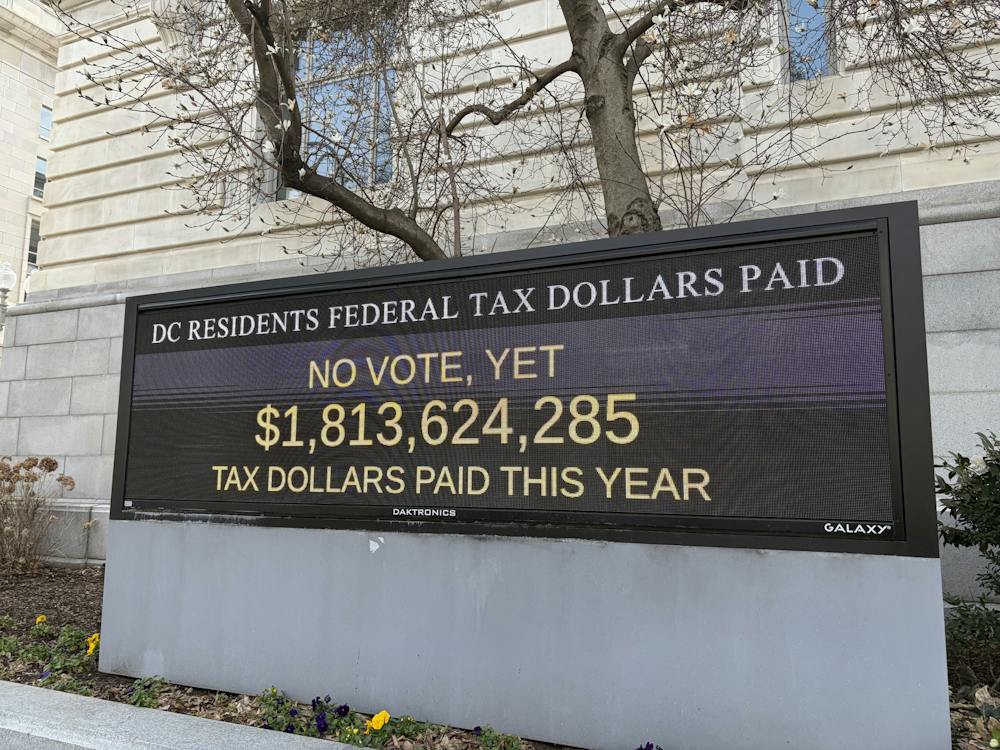
D.C. residents are denied full democratic rights with no voting representation in Congress, as noted by Vruno.
According to Asher Heisten, a senior in the School of Public Affairs and member of AU Rise Up, opponents of D.C. statehood argue it would lead to unbalanced representation in Congress. However, Heisten said this concern is irrelevant, referencing D.C.’s high federal taxes and lack of representation.
“It’s about pulling away representation from a very strong and outspoken city in the United States,” Heisten said.
Heisten pointed to the deployment of the National Guard in D.C. and other major cities as an extreme example of federal interference. In his experience, the guard makes residents feel less safe, he said.
Kymone Freeman, U.S. House non-voting D.C. delegate candidate, said he feels frustrated with local governance. Freeman referenced D.C.’s lack of representation, contrasting high taxes and believes it to be a primary issue that can change the way power is structured nationwide.
Freeman added that D.C. college students — a population of over 80,000 — are all eligible to change their voting registration to participate in local elections.
Freeman said that even in purple states, one person cannot make a tangible impact in their home elections. But, if the majority of college students in D.C. register to vote locally, the large-scale impact could shift the political landscape of D.C., he said.
“It is incumbent upon me to try to impress upon them that they have a lot more power here than back home,” Freeman said.
But lacking statehood goes further than just Congressional representation. Freeman referenced the nationwide AIDS infection rate, with D.C. having 12 times the national average of infections.
“We were the only jurisdiction in America that was barred from using its own taxpayer money to fund needle exchange programs,” he said.
Heisten suspects the resistance to granting D.C. statehood is a result of its diversity.
“[D.C.] is a very diverse, very multicultural city and we know that part of the reason why they haven’t given D.C. representation is because of that,” he said.
This article was edited by Gabrielle McNamee, Payton Anderson and Walker Whalen. Copy editing done by Avery Grossman, Mattie Lupo and Jaden Maitland Anderson. Fact-checking done by Andrew Kummeth.
localnews@theeagleonline.com
