
From the Newsstands: This article appeared in The Eagle’s December 2025 print edition which can be viewed here.
Editor’s Note: Mackenzie Konjoyan is a former staff member of the Eagle. She was not involved in the pitching, reporting or writing of this article.
He was wiping down the last tables inside the restaurant and fixing place settings and silverware. It was a morning like any other at Millie’s in Spring Valley — until two Immigration and Customs Enforcement officers walked through the door, demanding to speak to the manager.
“They told him that they needed to check all of our I-9 employee records,” said Samuel Rosenfeld-McMahon, a junior in the School of Public Affairs and a server at Millie’s.
Rosenfeld-McMahon said the officers visited Millie’s in May, along with other D.C. restaurants. Although the officers were referred to Millie’s corporate office, Rosenfeld-McMahon said the incident left a strain of anxiety on the workplace that has only grown.
“A good majority of our staff are Hispanic,” Rosenfeld-McMahon said. “Seeing the officers at our place of work just made some people’s worries a reality, which is very concerning.”
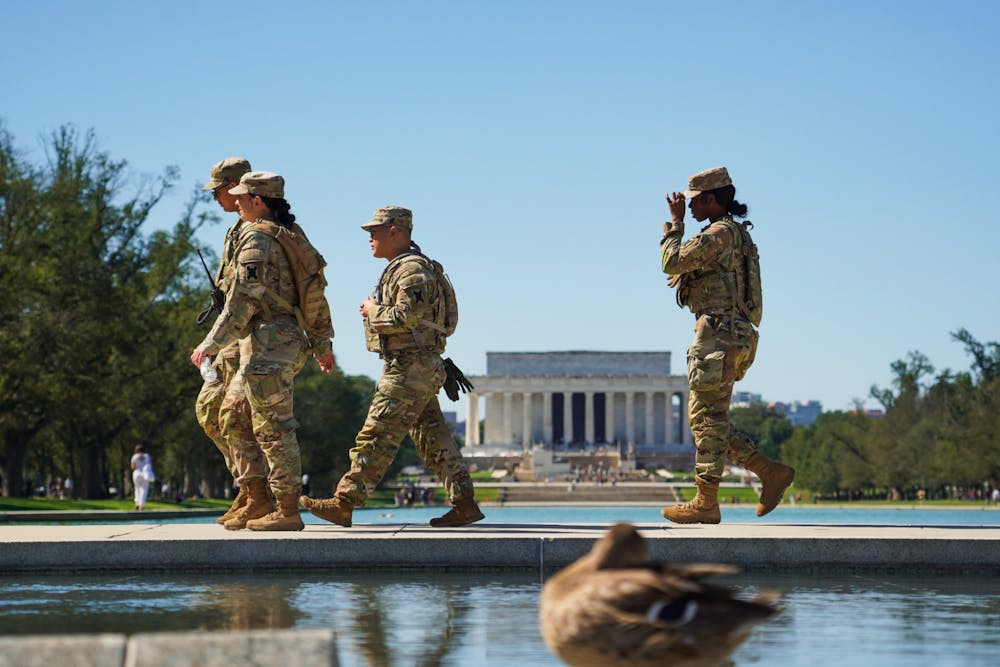
Months after the ICE officers entered Millie’s, the Trump administration declared a 30-day federal takeover of the city, claiming “crime is out of control.” Although the takeover expired in September, federal agents are projected to stay in D.C. through November and stay possibly until summer 2026.
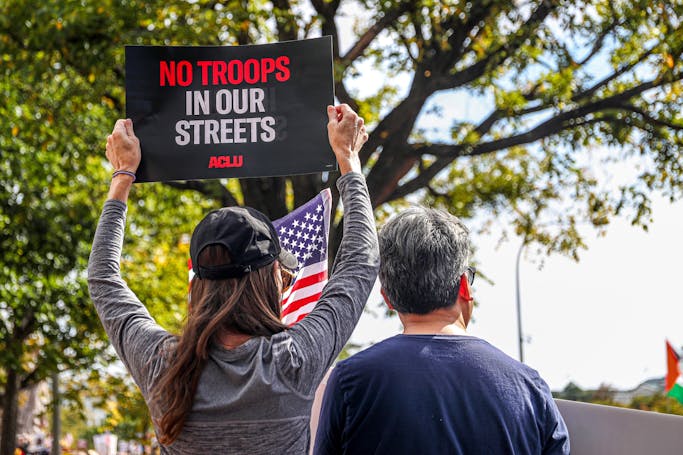


Continued federal law enforcement presence in D.C. brings increased fear among residents. Advisory Neighborhood Commission 1A05 Commissioner Christine Miller described the sentiment in her community with one word: “terror.”
“We have residents and members of our community who are not going to school, who are not going to their jobs,” Miller said. “Some aren’t even getting the basic necessities, like groceries.”
Miller, representative for the neighborhood of Columbia Heights in Northwest D.C., which has one of the largest Hispanic populations in the city, said there have been more ICE and federal arrests in her community than she can count.
“Nobody knows when and where they’re going to show up, and so it has just that unpredictability,” Miller said.
Miller said the ANC is working with D.C. Council members to ensure local government assists in remedying the lack of access to Medicare and food insecurity to immigrant populations amid federal funding cuts.
“I’m only one person, and we’re only 10 commissioners, but holding the District where we can accountable is something we are prioritizing,” Miller said.
Similarly, Darby Hickey, senior policy counsel of DC Justice Lab, said it is pushing D.C. officials to address the harm the takeover and deployment have caused the community.
“We’re doing a lot of traditional policy work of trying to give [D.C. officials] the information and the facts about why these are not the right responses and why,” Hickey said.
Hickey said this concern is relevant to how D.C.’s federalization impacted the homeless community. An August study said the daily cost of the National Guard deployment in D.C. was more than four times the cost of operating affordable housing for the city’s entire homeless population.
“[The Trump administration] wants harm to come to these communities, and in the form of policing and in the form of incarceration,” Hickey said. “They’re trying to manufacture a story about it.”
Kelsye Adams, a Free D.C. Project co-founder and organizing director of D.C. Vote, said D.C. and its residents do not want federal law enforcement in their communities, especially given that 13 police departments and over 30 supplemental government agencies already serve law enforcement functions in the city.
Rather, residents feel threatened by the Guard’s presence, according to Adams. She recounted hearing stories from community members of armed police and military troops standing outside of elementary schools.
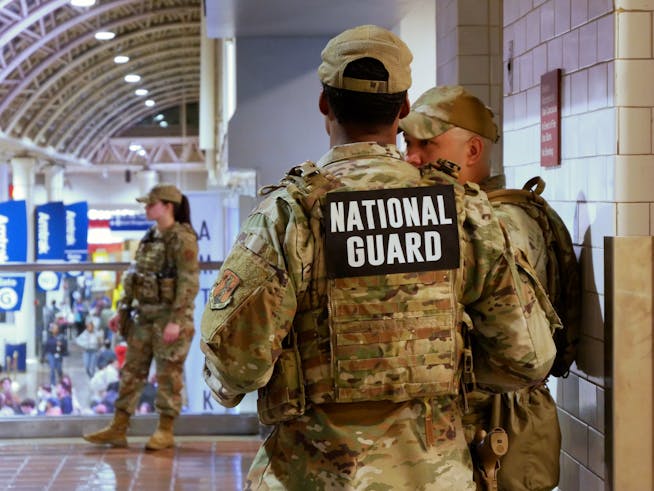
“They have AK-47 machine guns in front of [our youth], and there’s no war happening outside of the students’ windows,” Adams said. “They’re very confused as to why they’re in a war zone, and the only people they’re seeing when they look at the mirror is themselves.”
Hickey said the Justice Lab is also working to correct the harmful portrayals of D.C. and communities like the homeless, something American University alumna and freelance journalist Mackenzie Konjoyan helped with this summer. As an editorial intern for Street Sense, a media organization covering the homeless community in D.C., Konjoyan said she covered the encampment enclosures, which spiked after Trump’s takeover.
“We would go to the different encampments and witness the closures, talk to residents, just kind of be aware of the news there,” Konjoyan said.
Closing encampments decreased the homeless population in D.C. and pushed many people out to Virginia and Maryland, making it harder to find people to talk to, Konjoyan said. She said a lot of them “just started disappearing.”
“They were sometimes only given 24 hours’ notice,” Konjoyan said. “I was just frustrated that they had to pack everything up so quickly.”
In recent weeks, the federal government sent troops to other American cities. The National Guard began patrols in Memphis on Oct. 10, and 500 troops were deployed to an Army Reserve station outside Chicago on Oct. 8. Adams noted these cities, like D.C., have large populations of disenfranchised people and minorities.
“This clearly is a fascist takeover, and we’ve seen a domino effect of it,” Adams said.
But Adams said it’s important to prioritize joy right now.
“As long as we stay joyful in our work, and even through chaos, you know we will prevail,” Adams said. “As long as the people keep continuing to come out, the people keep continuing to hit the streets, we will prevail.”
Copy editing done by Sabine Kanter-Huchting, Emma Brown, Ariana Kavoossi and Audrey Smith. Fact-checking done by Aidan Crowe.
