
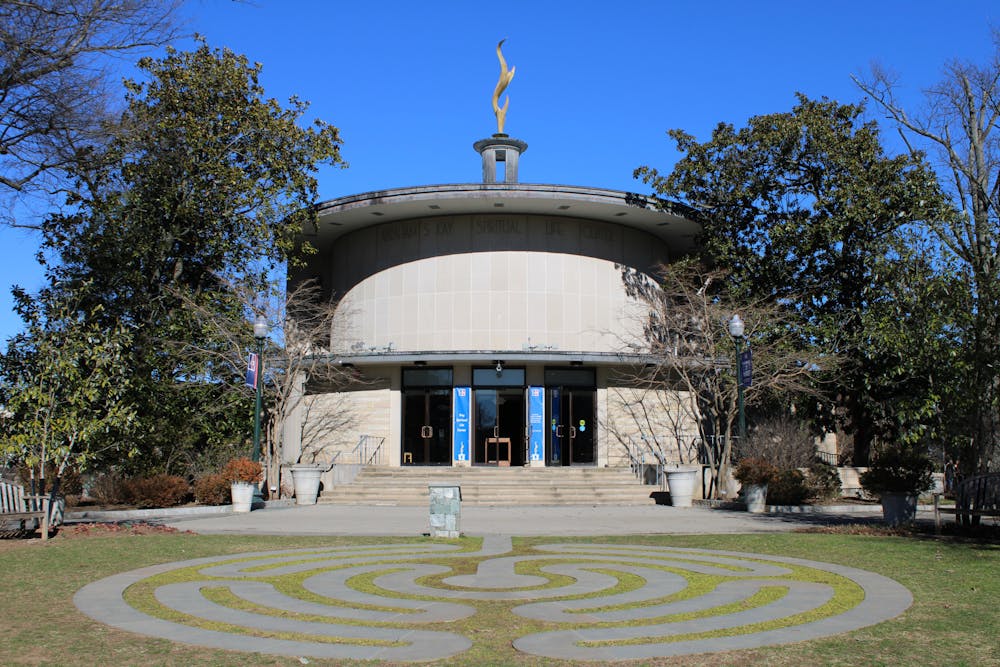
Each week, the Kay Spiritual Life Center offers the University community a space to slow down with an evening Buddhist meditation session. Beneath the stained glass of KSLC, students and faculty are invited to set aside daily stressors and engage in guided mindfulness practices.
“I’ve been attending them all semester because it is a good way to be able to sit with my thoughts and actually listen to them,” Theryn Gray, a junior in the School of International Service, said.
Venerable Katugastota Uparatana leads the sessions, having taught meditation at AU since 1989. He also founded the Maryland Buddhist Vihara in Silver Spring. The center offers community meditation, devotional services and language classes.
Buddhism originated in northern India in the sixth century and spread across civilizations as monks traveled the Silk Road to foster peace.
Similarly, a delegation of monks came to the University on Feb. 10 as one of the final stops of the Walk for Peace, a 2,300-mile pilgrimage led by Buddhist monks from TKTK. The walk’s leader, Venerable Bhikkhu Pannakara, encouraged students to practice mindfulness and self-reflection before concluding their journey.
During the weekly sessions at KSLC, students recite two loving-kindness prayers. The words “may all beings be happy, may all beings be free from suffering, may all beings be healthy” sound throughout the building as Venerable Katugastota Uparatana rings a bell, signaling it is time for participants to close their eyes and relax.
“No matter what faith you belong to, spiritual life is very important,” Uparatana said. “All the material things are things we can earn.”
Beyond providing a safe space, the sessions equip participants with techniques they can apply outside of meditation.



“You learn to pay attention to your thoughts and the more you practice it, the more you can recognize it even when you’re outside of meditation,” Gray said.
Uparatana said meditation can help with anger management, stress alleviation, wisdom and quality of life. He said that if students lose their mindfulness, trouble is bound to happen.
Uparatana said making time for meditation is important, even with a busy schedule.
“You don’t need to be meditating for 24 hours,” he said. “Whenever you have trouble, just sit and concentrate.”
This article was edited by Sydney Hemmer, Jessica Ackerman and Walker Whalen. Copy editing done by Avery Grossman, Ryan Sieve and Ava Stuzin.
life@theeagleonline.com
