

Between jobs, internships, extracurriculars and course loads, students have a lot on their plates.
American University recognizes this and is making an effort to help students learn to cope in healthy ways with courses in stress management offered by the College of Arts and Sciences.
Susan Comfort is an adjunct professor teaching Strategies in Stress Management. She said stress can lead to consequences if not addressed. “When human beings are on their own, sometimes they don’t make good choices because they don’t know the consequences of their actions,” she said.
Comfort said that stress management is achieved through practice and learning about the habits we develop throughout our lives in response to stressful situations. College is where students can develop these skills, as it is often their first time living independently, according to Comfort. Comfort finds that stressors within college may be innate to a campus environment. The stress can be generated from a variety of outside factors.
These factors include “not getting enough sleep or eating enough greens,” according to Comfort.
Courses such as Strategies in Stress Management give students the opportunity to explore different stress management techniques they can use outside of class, while also learning how stress affects the body physiologically.
Natasha Benitez also teaches Strategies in Stress Management and is an adjunct professor at the University.


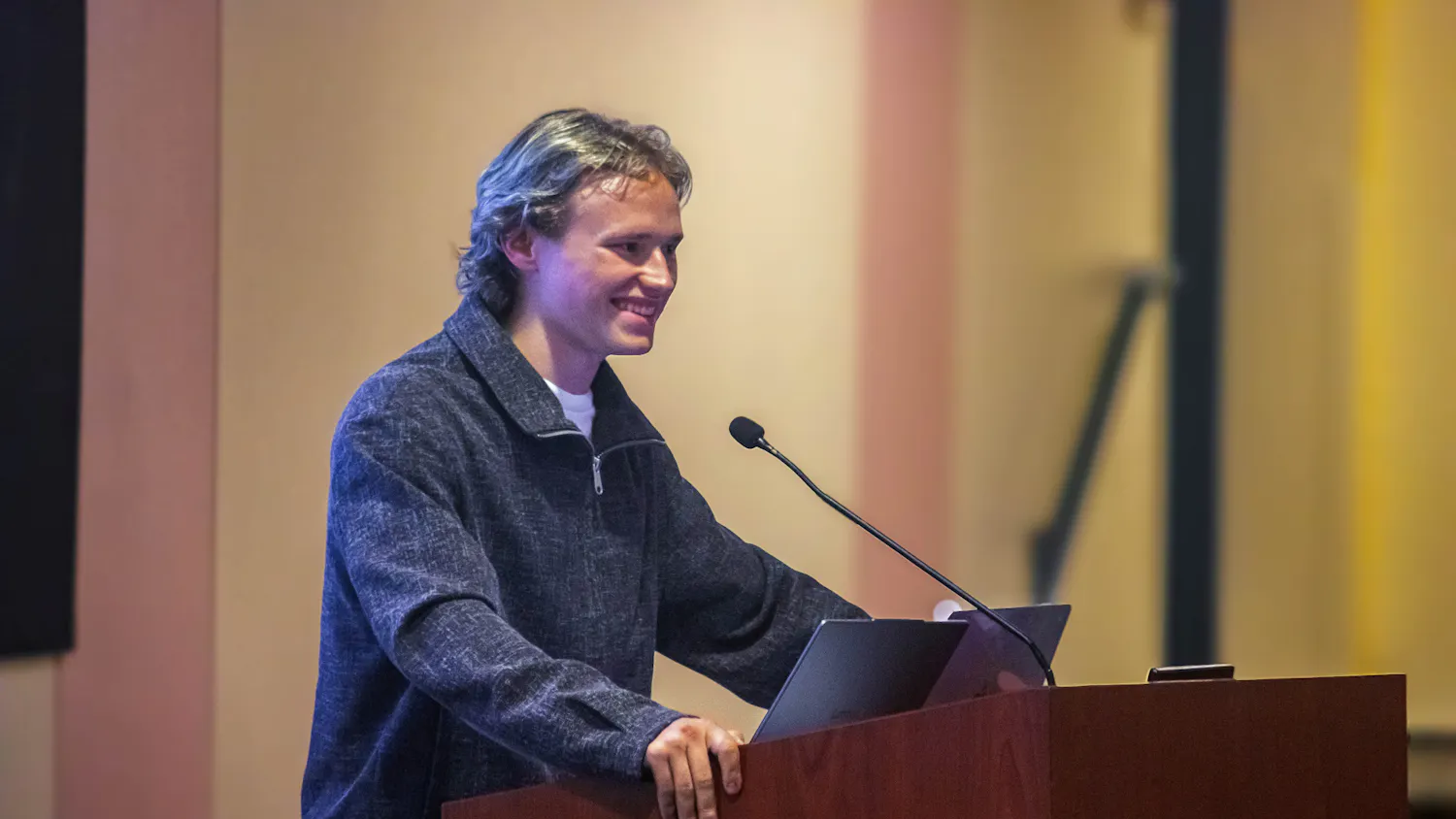
The University introduced the Meet Our Moment five-year strategic plan that is aimed at centering skill building, career development and integrating Washington D.C into every aspect of the University experience. “This moment should be about protecting mental health. This moment is to make sure people are well, so that they can continue to be sharp and do this important work in this world,” Benitez said.
Benitez teaches Strategies in Health Management, a student-run course where debates, interviews and group projects encourage students to explore different stress management strategies and engage with each other.
“The [students] want to hear about each other's lives, and then I can bring in the science, the case studies, what's happening now, and make it relevant to them,” she said. “They like learning from one another.”
Although many people have experienced stress, there are different types according to Comfort.
She said stress is positive when it has a purpose. It is a signal from our bodies that we are doing something important and that we care about.
“When you’re stressed about getting a degree — awesome. That’s the purpose,” said Comfort. “If you’re stressed because somebody might randomly shoot you, that’s a different kind of stress.”
Negative stress involves situations that individuals have no control over, or ones that may be dangerous, according to Comfort. She also believes stress is only useful when it is used to achieve a goal. Fear and anxiety are emotions and feelings that are not useful.
Comfort’s preferred ways to regulate both positive and negative stress are through exercise and breathing.
“Exercise is the best strategy, because it has the most compelling research regarding protecting your brain, building your immune system, building resilience and preparing your body for more challenges,” she said.
A second strategy is breathing. When Comfort teaches box breathing, she directs the first few rounds of breath and then lets students regulate to a pace that is most comfortable to them for the remaining rounds.
The technique involves breathing in for six seconds, holding for six seconds, exhaling for six seconds and holding again for six seconds. Repeating this pattern can help bring a sense of calm and relaxation by focusing on the breath.
In Benitez’s classroom, she utilizes journaling as a tool for reflection and learning. She said it’s a great way for her to get to know some of her more introverted students.
“[They] come alive when I read their journals,” Benitez said.
For students who are not enrolled in the class but want to journal as a form of reflection, Benitez suggests creating a routine around journaling.
“Our environment plays a tremendous role on your habit forming and how you feel,” she said. “So have a ritual, maybe five to 10 minutes, in a specific place. Light a candle, it will really get you back in that routine.”
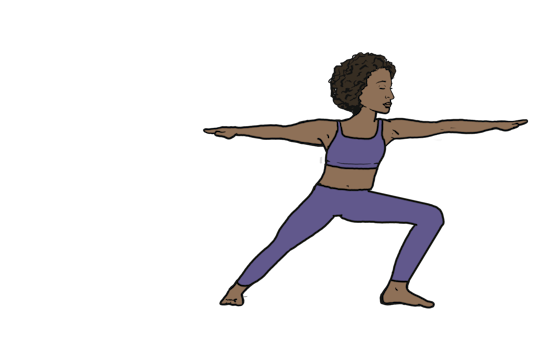
Brigid Rauch, who teaches Introduction to Yoga, recommends meditation as another stress management tool.
“All forms of meditation have to do with focusing on something,” she said. “You have a point of focus, and the whole point is to eventually stop your mind.”
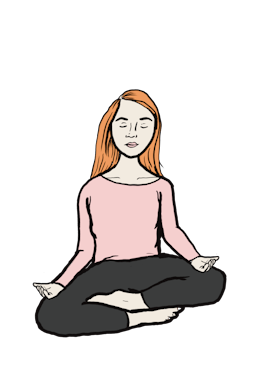
Meditation is a central part of the yoga practice. Rauch said it aligns with Dhyana, meaning uninterrupted focus and reflection, one of the limbs of yoga emphasized in her course.
Similar to practicing things like piano or ballet, Rauch said meditation is a constant practice. When you sit down to meditate, and your mind isn’t immediately calm, that does not mean you’re doing something wrong, according to Rauch. Instead, it’s a signal to keep going.
“[Yoga] is a spiritual practice,” Raunch said. “It’s very individual, and each person can find a practice that relates to their personal situation.”
College comes with many pressures, but through these classes and strategies, Benitez said students can begin to change the way they think about and respond to stress.
“If your cup’s not full,” she asked. “What are you pouring from?”
This article was edited by Sydney Hemmer, Jessica Ackerman and Walker Whalen. Copy editing done by Avery Grossman, Ryan Sieve and Ava Stuzin.
life@theeagleonline.com
