
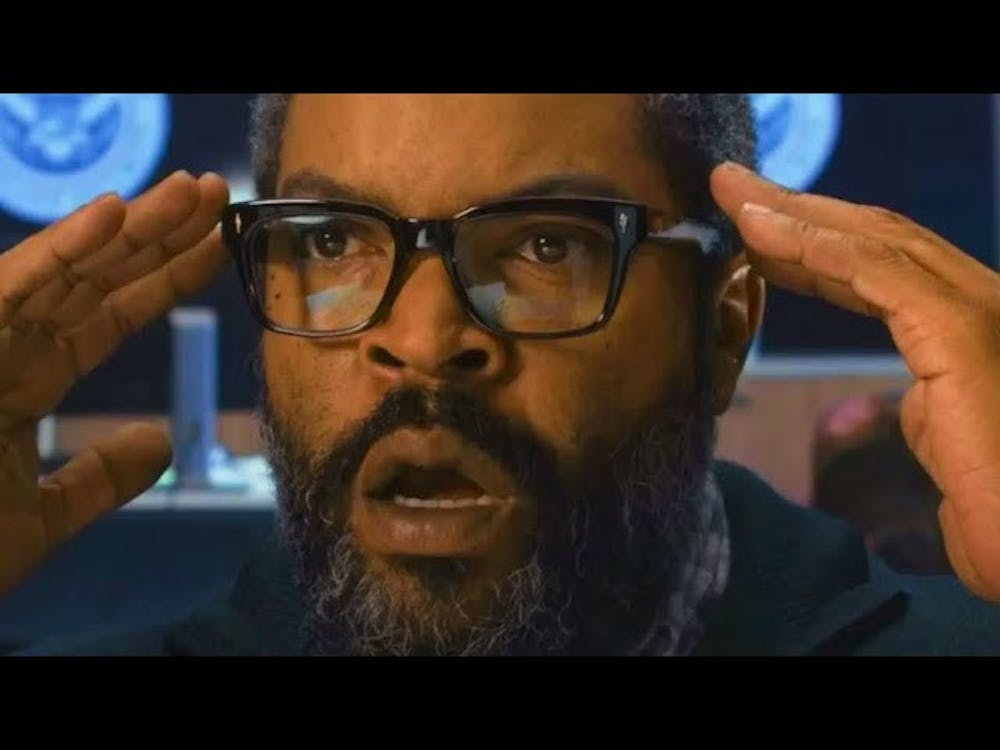
“War of the Worlds” (2025) is a film that exemplifies this decade more than any other. From its Zoom-based pandemic-style recording, to displays of modern internet-induced psychosis, to constant product placement, “War of the Worlds” is a film that could only have been written and released in the past six years.
The film plays on internet-users’ expectations to be in constant, immediate contact — to the point where if a loved one doesn't call or respond, it incites a great deal of paranoia.
“War of the Worlds” puts this fear on full display: the entire film is a Zoom call between the protagonist, Department of Homeland Security surveillance expert William Radford (Ice Cube), and his children during an alien invasion. Radford is never physically in the same place as his family, and makes scenes where his children are in danger feel incredibly tense and visceral.
The events in “War of the Worlds” bring one’s worst fears when dealing with a non-responsive loved one over the phone, to life. It takes psychosis and paranoia and makes it a reality.
“War of the Worlds” is also unique for its various, glaring product placements. The company that made the film, Amazon, is intertwined not just in the film’s visuals, but in its storyline: the alien robots wreaking havoc on Earth are here solely to corrupt data centers and hack into people’s Amazon cards. CIA director Donald Briggs (Clark Gregg) is aware of the robots’ scheme and does absolutely nothing to thwart it, as the federal government elites are conspiring against Amazon.
The Amazon-centric scene where Radford and his family’s mission to stop the alien invasion reaches its peak is the most ridiculous — and thoroughly entertaining — scene in the whole film.
At the start of the scene, Radford realizes he needs a rabbit virus stored on a flash drive and decides to ship it to DHS headquarters. The rabbit virus would infect the data centers that the alien robots use for food. Once it infects the data centers, the alien robots would abort their mission to steal people’s data and Amazon cart information.
An outlet at DHS headquarters would allow them to plug in the rabbit virus flash drive and infect the data centers. Radford explained his dilemma with the rabbit virus and the flash drive during a video call with his daughter and her boyfriend, Mark, the Amazon worker (Devon Bostick).



Thankfully, Mark has the perfect solution: Amazon Prime air drone service. “It’s the future of delivery,” he exclaims, piquing Radford’s interest.
Mark then walks Radford through a step-by-step explanation on how to log in and purchase a product on Amazon. Then, the most shocking action scene in modern cinema commences: Mark miraculously flies his drone through a sea of massive killer robots.
The only hiccup in the trip comes when the drone is shot down on its back, just to be picked up and sent back into flight by a homeless man Radford bribes with a $1,000 Amazon gift card. Thanks to the power of Amazon Prime Air, the planet can sleep soundly, safe from the alien robots, and with their Amazon carts still secure.
Many viewers consider this scene pure corporate slop. However, I would argue that it is entertaining in its absurdity, as it’s the first scene that “War of the Worlds” goes mask-off with its association with Amazon. The start of the scene is one of the moments where you think the film can’t get any more absurd and insane than it already was, and then it does. Amazon switches merely from something mentioned positively by characters in side-comments to the film’s savior.
The scene is terrific at creating tension as watching the Amazon drone fly through the maze of killer robots is just as riveting as it is hilarious.
“War of the Worlds” and especially its drone scene exemplify the current times we are living in brilliantly with its constant tension-inducing Zoom calls, its absurd notions of Amazon being the victim of government surveillance, or our only savior from an alien invasion. “War of the Worlds” is the perfect symphony of ironic and unironic enjoyment.
“War of the Worlds” is available on Amazon Prime Video (of course).
This article was edited by Alfie Pritchard, Jessica Ackerman and Walker Whalen. Copy editing done by Avery Grossman, Ryan Sieve and Ava Stuzin.
