
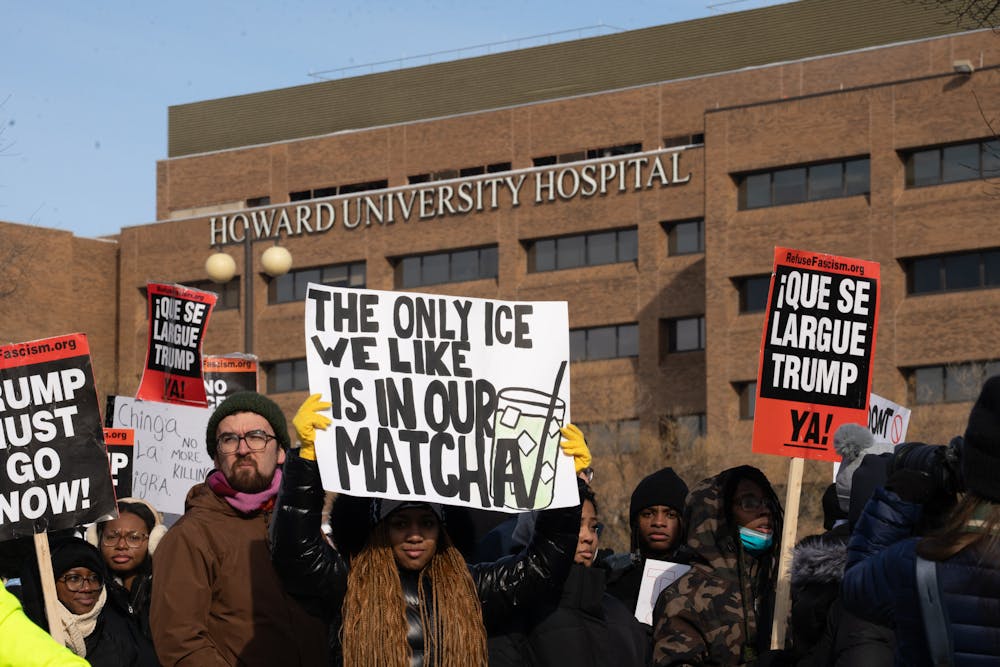
Increased violence across the nation between civilians and U.S. Immigration and Customs Enforcement officers brought Washington, D.C., students to Howard University’s campus in below freezing temperatures. On Jan. 30, hundreds of students and protestors engaged in a walkout and marched to the White House to demand an end to ICE.
At least eight individuals have died in ICE custody or at the hands of federal agents in 2026 thus far and the majority of those victims were people of color.
Student organizers opened their protest by sharing speeches and poems with central messages of co-solidarity with Black students and immigrant populations, many reiterating the words of renowned Black activists like Dr. Martin Luther King Jr. and Malcom X. One speaker, an unnamed member of the Black Panther Party, spoke to the crowd about the necessity to protect and arm oneself from a nation that does not protect Black and Brown people.
For Howard University freshman I’naya Hasty, the urge to protect oneself is what brought her to the protest.
“I’m not going to lie and say I wasn’t a bit scared today to come out obviously, with all the tensions that are rising,” Hasty said. “But being complacent and being neutral in a time like this and just being a social media protestor — I wanted to be able to overcome that and actually go outside and stop being complacent, stop being timid.”
Hasty wasn’t the only student to speak to the necessity of making it out to this protest.
“I feel like, especially within our youth, we need to encourage the idea of standing up for what you believe in and standing up even when others are still sitting,” Howard University freshman Tina Abdus said. “Because if you don’t, then who will?”
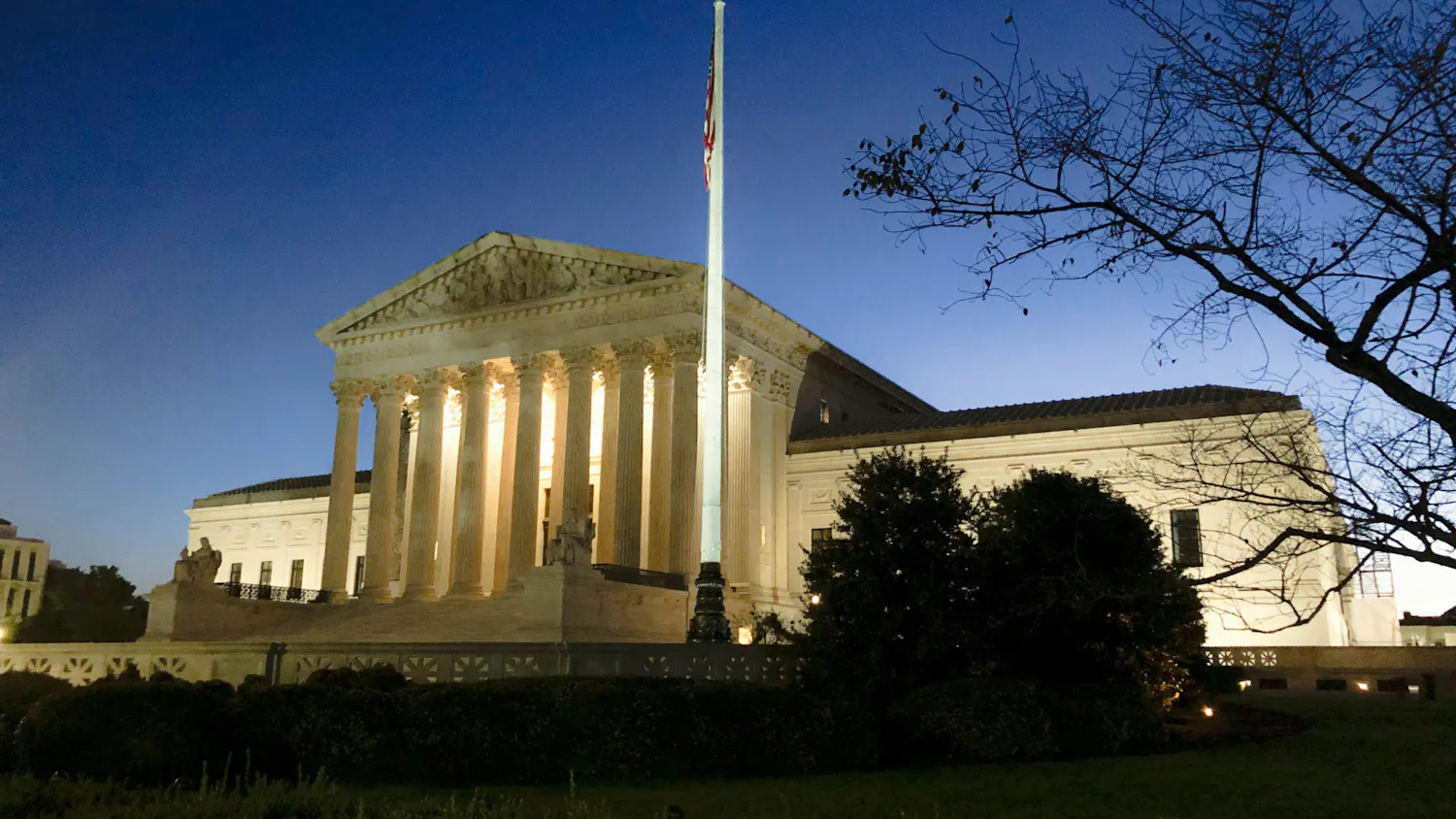

As participants departed from Howard University and began their march toward the White House, the group chanted, “Move ICE, get out the way.” Finally, stopping in front of Lafayette Square and facing the White House, students spoke about what compelled them to brave the cold for the cause.
For Mikaela Abraha, an American University freshman in the School of Public Affairs, the issue is personal.
“I’m a first-generation college student,” Abraha said. “My parents immigrated here in the ‘80s and ‘90s and they work so hard to have the American dream and give me and my brother the life that we deserve.”
Though their arrival at the White House signified the end of the protest, some students began an additional march to meet the Party for Socialism and Liberation’s protest gathering at the Gallery Place Metro. Leyla Abarca-Gresh, a freshman in SPA and the School of International Service, spoke to the apparent empowerment of the student movement.
“I’d like to add that we’ve, throughout history, seen the strength and success of student uprisings, and that’s how the world is going to be changed,” Abarca-Gresh said. “I urge everybody to, if you’re not already tapped in, start reading the news, and if you are tapped in, think about attending a protest.”
This article was edited by Gabrielle McNamee, Payton Anderson and Walker Whalen. Copy editing done by Avery Grossman, Arin Burrell, Paige Caron and Nicole Kariuki. Fact-checking done by Andrew Kummeth.
