
The following piece is an opinion and does not reflect the views of The Eagle and its staff. All opinions are edited for grammar, style and argument structure and fact-checked, but the opinions are the writer’s own.
In last year’s elections, over 40 million Gen Z Americans were eligible to vote. In the 2026 midterm elections, that number will likely be even greater, according to the same study. Yet, political campaigns sideline young voters when it comes to communicating policy.
Too often, campaigns make the costly mistake of believing that Gen Z voters are satisfied by a candidate doing a TikTok trend or being “brat.” Such attempts at winning over the younger portion of the electorate appear shallow. Young voters, too, care about policy — issues like the economy, housing costs, foreign affairs and healthcare — and not just about the candidate who can hop on the online trends the fastest.
Gen Z voters are often characterized as ill-informed or gullible in terms of policy and US political history. In a 2024 interview with MSNBC, former Secretary of State and 2016 presidential candidate Hillary Clinton referenced young Americans’ reactions to the genocide in Gaza saying, “They don’t know very much at all about the history of the Middle East, or, frankly, about history, in many areas of the world, including in our own country.”
Dismissive comments and oversimplifications of young voters are all too common. Many recent campaigns display this phenomenon. For example, Kamala HQ — former Vice President Kamala Harris’s youth-focused social media accounts during her 2024 presidential campaign — is often criticized for lacking substance and being too informal for an official presidential campaign’s communications.
On Nov. 6, two of the staffers behind the Kamala HQ accounts, American University alums Parker Butler and Arlie Shugaar, were interviewed for the Kamala HQ and Beyond event run by the Kennedy Political Union and the School of Communication.
I got the chance to ask the following: “Reflecting on everything you both did to build Kamala HQ, what would you do differently if you had the chance to do it again? Obviously, the campaign was not a normal timeline, etc., but how would you adjust the strategy specifically regarding some younger audiences who felt it was performative or lacking in policy?”
Butler responded, “The Democratic Party has a lot of work to do, including young people, right? I think your point about performativeness is well taken. It’s really important — the young people have a distrust of both political parties, naturally.”


Butler also emphasized that the Democratic Party needs to invest more time and effort into engaging voters online.
“I think we need to invest even more in social, and I think the way you do that, and the amount of content that you put out is really important.”
He reinforced that the Democratic Party is at the beginning of the “process of reforming how we communicate with voters in a way that meets where folks are this decade.” Highlighting the current disconnect and insincerity of Democratic social media strategies, Butler also claimed that it would take “years to win back” young men, especially Latino men who strayed from the party in 2024.
Kamala HQ has recently been compared to the much more effective digital strategy of New York City Mayor Zohran Mamdani. Unlike Harris, Mamdani’s digital content struck a highly difficult-to-achieve, near-perfect balance between trendy, relevant content and poignant policy information.
Butler spoke of Mamdani’s online genius and candidate authenticity.
“There's all different candidates out there, and everyone's gotta run a different strategy and speak in a way that's authentic.”
While Mamdani’s campaign was highly successful, it is not a one-size-fits-all blueprint. Candidates need to develop social strategies that align with their unique identities and values.
All this is not to say Kamala HQ totally missed the mark. It sparked significant online engagement, especially among young voters. However, campaigns need to do more than just follow the trends to engage younger voters; policy information, candidate viewpoints and governance plans are all things young voters care about and want to see online.
As young voters, we need to demand more of candidates; we are not shallow enough to be simply won over by whichever candidate follows the trends or is endorsed by Charli XCX. We are the next generation of adults, and we cannot settle for campaigns that assume we are only concerned with optics and not substantive policy.
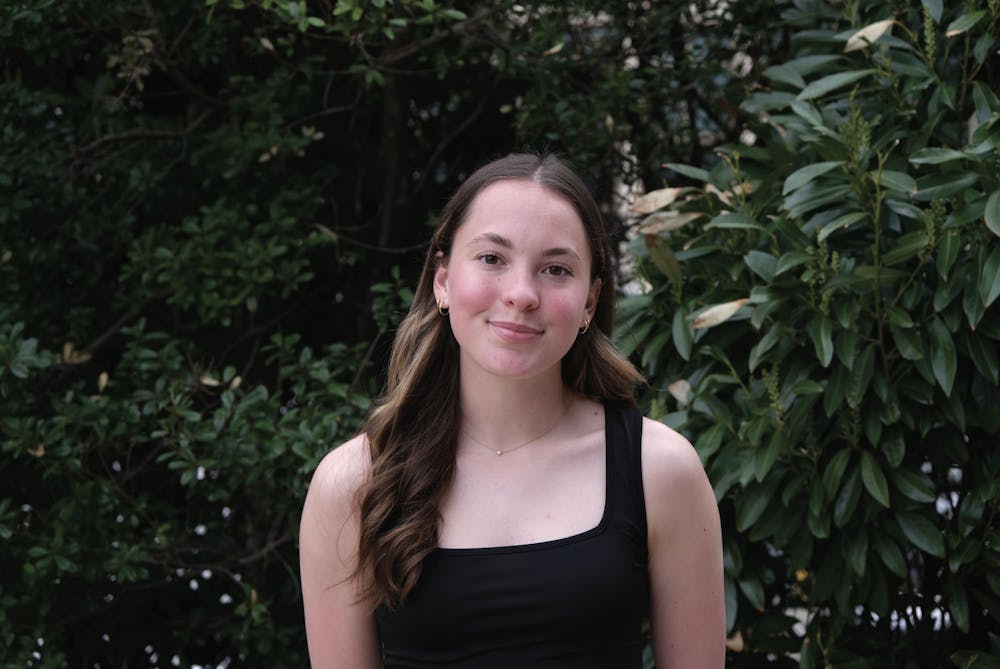
Addie DiPaolo is a senior in the School of Public Affairs and a columnist for The Eagle.
This article was edited by Quinn Volpe, Alana Parker and Walker Whalen. Copy editing done by Sabine Kanter-Huchting, Arin Burrell, Paige Caron and Andrew Kummeth. Fact-checking done by Aidan Crowe.
