
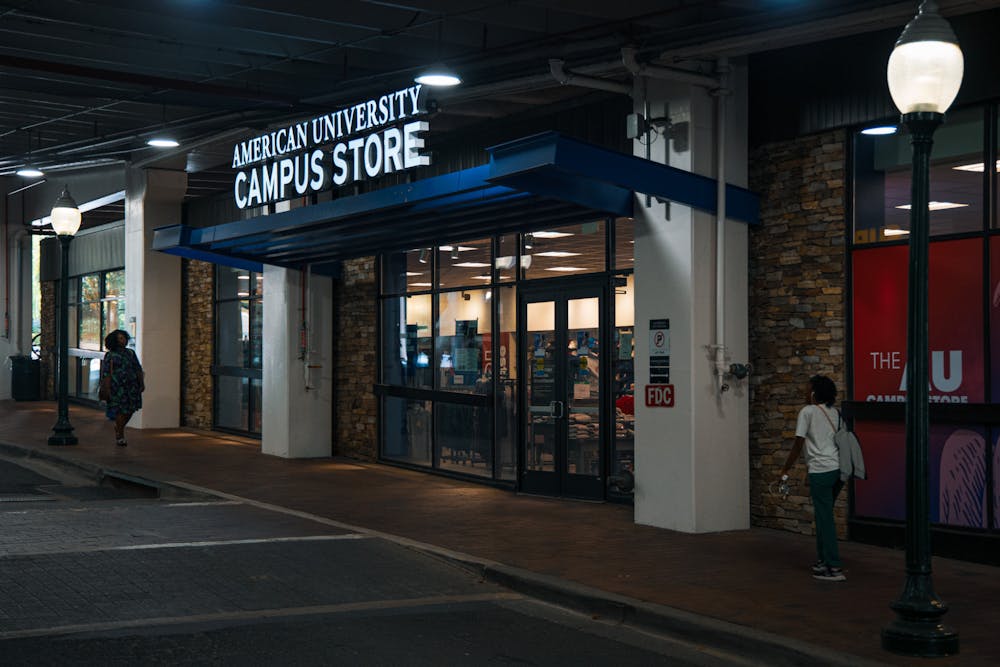
Students are reacting with confusion and frustration to the Eagle Access Course Materials program, which automatically provides students with the semester's reading materials for an added $324 to their bills.
Last April, acting Provost and Chief Academic Officer Vicky Wilkins announced that the University would be introducing the program, which sought to “ensure all students have affordable, convenient access to their required course materials.” Students were able to opt out of the program by Sep. 8, the add/drop class deadline. In the first three weeks of the program, students complained about broken websites, lack of communication and missing materials.
The program, which partners with Follett, the operator of the AU Campus Store, is intended to provide students with a single location, the website “Kortex,” where they can access all their course materials for a flat per-semester cost, according to the April email. The University of the District of Columbia has introduced a similar Course Access Textbook Program that is also partnered with Follett.
A charge of $324 listed under “Books and Materials” was automatically added to all 7,388 full-time undergraduate students' tuition bills for the fall semester, many of them unaware of the program’s existence. Mention of the exact cost for the service is nowhere in the April email or any following communication from the University.
The exact cost was determined by “student enrollment status and the university’s overall course material needs based on faculty specifications for required materials,” according to Assistant Vice President and Deputy Chief Communications Officer Elizabeth Deal in an emailed statement.
“This semester, over 70 percent of students participated in this new program and saved a total of $1.2 million compared to the retail price of new materials,” Deal wrote.
When asked about the choice to automatically enroll students in the program, Deal said that the program fee was added to students’ bills during the regular fall semester billing process to “ensure accuracy and timely posting.” She added that the program had the “flexibility” to allow students to opt out by the add/drop deadline.
Derrick Barnes, a junior in the School of Communication, already purchased his textbooks at a lower rate before he heard about the program.
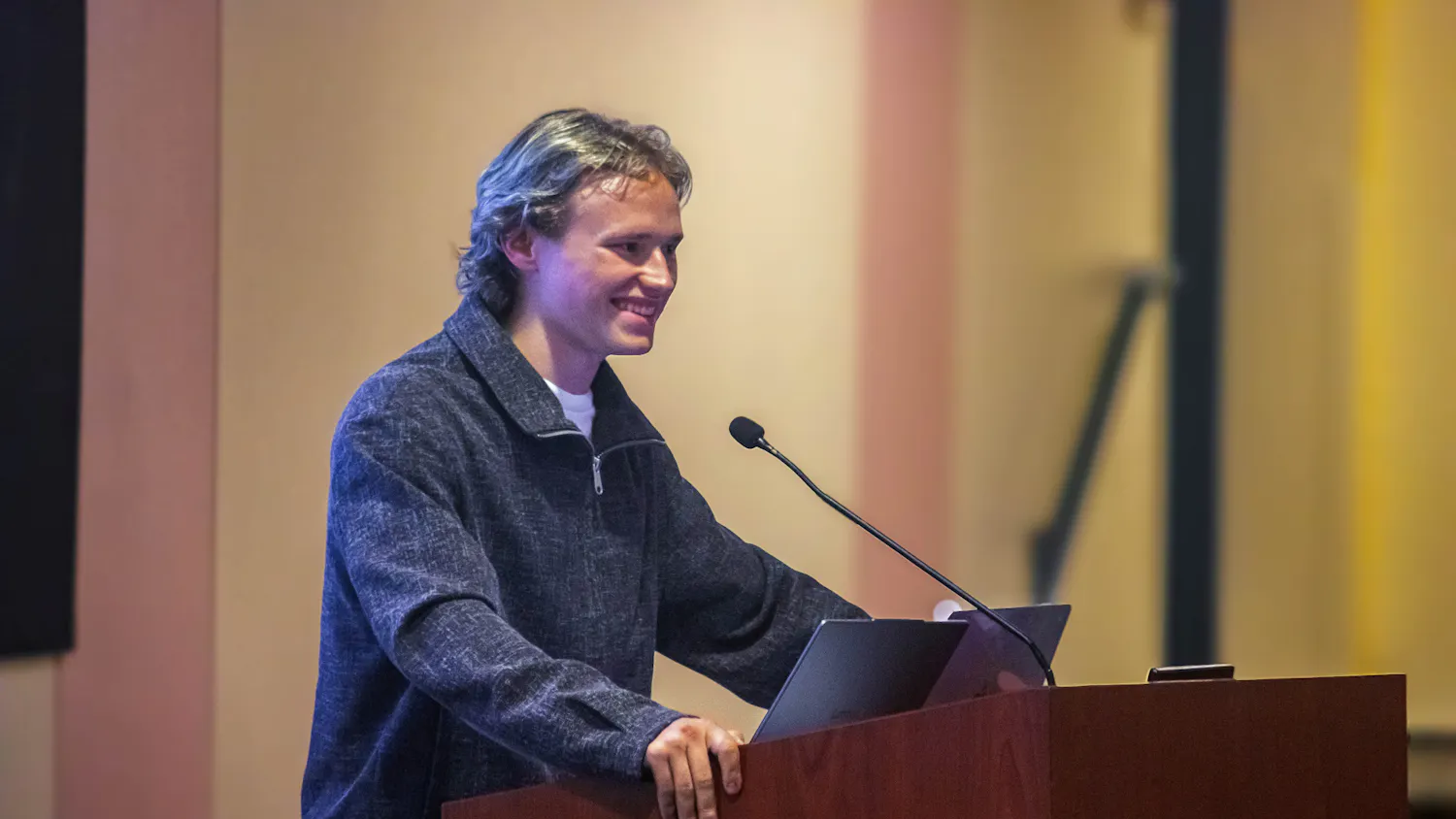

“Seeing that I am being charged for a service I am not using, it's unfair and unjust,” Barnes said.
Barnes hopes the University works to correct the lack of communication and he expects at least a refund because the program is so new.
In the April announcement, the University claimed that the service would save students up to 60 percent off retail costs for textbooks. The service also provides physical copies that are available for pickup from the campus store.
Some students, like Maya Hastings, a junior in the School of Public Affairs, said that for a period during the summer, the website where students were supposed to opt out was broken.
“When I went to the opt-out process, the website would just not load,” Hastings said.
Hastings first tried emailing the library but received no response. She then reached out over the phone and was connected with a student worker who was unable to help her.
After about a week, Hastings was able to successfully access the library website and opt out of the program, but waited an additional two weeks for the charge to be removed from her bill. She said the opt-out process itself was not intuitive even when the website worked.
“If it’s broken and it’s costing the students money that they could lose and possibly not get returned, it’s important for the University to have it figured out or at least have an effective way of contacting them to get it figured out,” Hastings said in reference to the website.
Hastings wasn’t the only student who had issues while opting out of the program. Luke Redetzke, a sophomore in the College of Arts & Sciences and the Kogod School of Business, said he tried opting out of the program two weeks before move-in but couldn’t access the site.
“I tried to call the program and I just couldn’t reach anyone,” Redetzke said.
According to a statement by the University, they were aware of, “technical challenges with the opt-out process” that occurred in Late July. They claim, “these issues were addressed quickly in collaboration with Follett and campus offices. All students who intended to opt out but encountered a problem were supported to ensure their accounts were corrected.”
Redetzke however, gave up opting out and assumed that the cost of the program would mirror what he usually paid for textbooks. He now estimates that the value of his textbooks supplied by the program wasn’t anywhere close to the $324 price tag.
Redetzke wished that the University had told him up front how much the program would cost before it was added to his bill.
When asked what their response was to students who had issues with the communication about the program the University said in a statement, “We recognize that with the launch of a new program, some students may have had questions or missed information. As stated above, we are committed to evaluating the program and improving how we share details going forward to ensure students fully understand the program and their options.”
It’s not just students who are having issues with the new program. Jacob Alejandro, a junior in the School of International Service, said his Spanish professor cannot get the correct textbooks for their class.
Alejandro said that the textbooks supplied to his class through the course materials program were intended for instructors and included all the answers to textbook questions.
“The professor told us not to use the book and she has been fighting with the library the past two weeks,” Alejandro added.
Alejandro himself opted out of the program with no issues, “It took me like five minutes max.” He believes the program could be beneficial for some majors but not others.
Javier Gonzalez, a sophomore in Kogod, opted out of the program when he returned to campus this semester, only learning about the charge when his friends mentioned it.
Gonzalez believes the University could’ve done better with communication.
“They could’ve made it a little more clear about what it was and what it entailed, and if we needed it,” he said.
This article was edited by Cara Halford, Abigail Hatting and Walker Whalen. Copy editing done by Sabien Kanter-Huchting and Ariana Kavoossi.
