

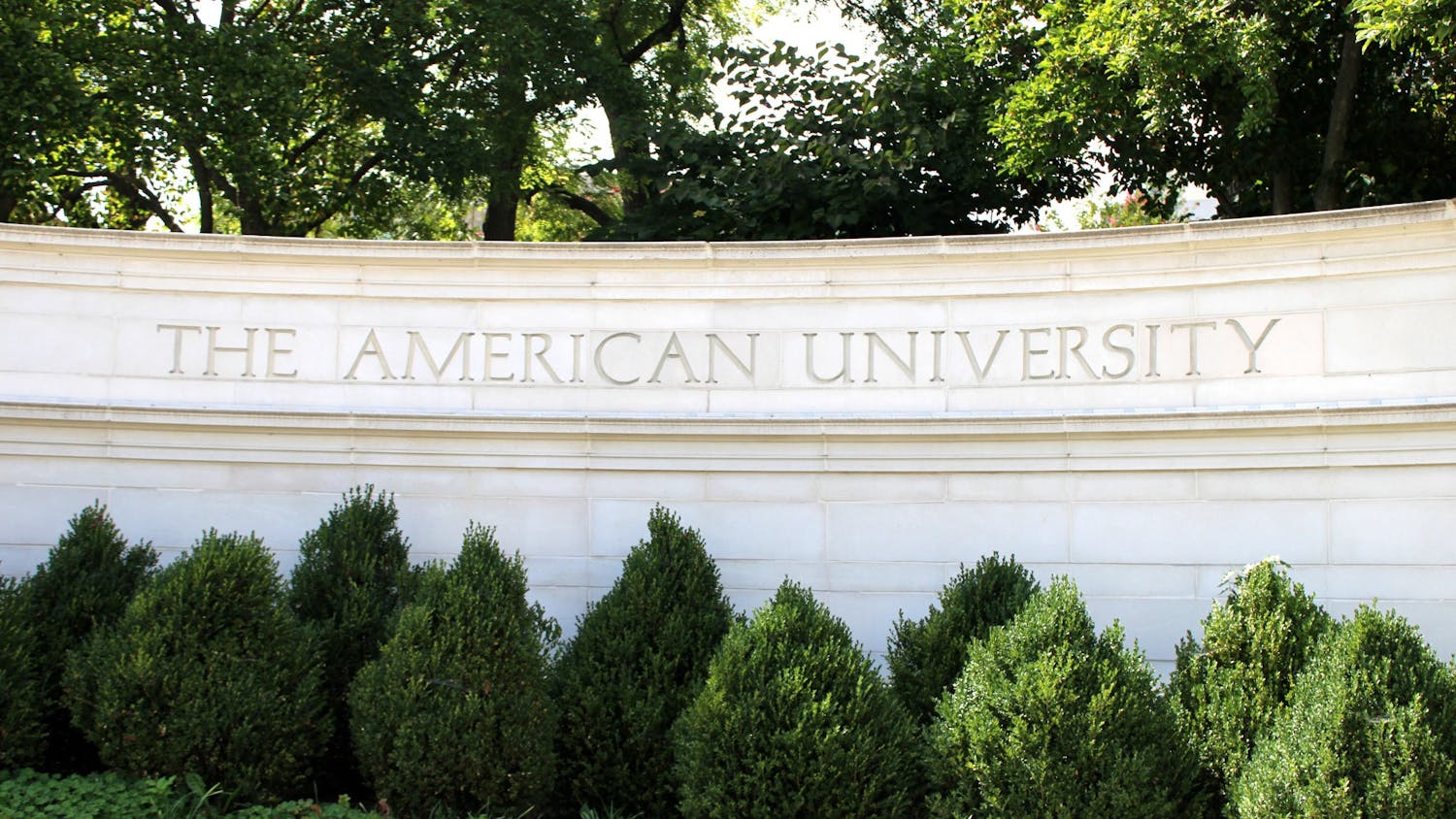
The Anti-Defamation League updated its campus antisemitism report card April 4, marking up American University’s grade from a “C” to a “B.”
The ADL is a national organization which was founded in 1913 and is committed to combating antisemitism and “protect[ing] democracy and ensur[ing] a just and inclusive society for all.”
ADL started its report cards in 2024 in response to the spike in antisemitic activity on college campuses according to Masha Zemtsov, ADL’s assistant director for education policy advocacy and national affairs in an interview with The Eagle . In 2024, the report card assessed 85 schools, which grew to 135 schools in 2025, according to Zemtsov.
The University received a “C” on the 2024 report card and originally received the same grade in 2025. It was one of 54 schools to work with ADL during their 100 day grace period and one of 19 schools to make the changes necessary to improve their grade. During this grace period, the University implemented antisemitism into its nondiscrimination policy, according to Zemtsov.
“American University did actually end up adopting a new policy, integrating antisemitism into their non discrimination policies, which is, to us, one of the most critical steps that a university can take to explicitly recognize antisemitism as a conduct that is prohibited on campus, and raise awareness of that to the entire campus community,” Zemtsov said.
During the evaluation process, ADL asks both campus administration and representatives of Jewish groups on campus to fill out a survey. ADL also conducts its own secondary research to verify the information being sent by universities.
ADL ranks schools based on three categories: publicly disclosed administrative actions, Jewish life on campus and campus conduct and climate concerns.
In its explanation for the original grade, ADL cited antisemitic vandalism and threats on AU’s campus, as well as a Student Government resolution supporting divestment from Israel. Anti-Zionism was cited as a major concern for AU’s grade. The University opposes the boycott, divestment and sanctions movement, according to a statement from Matt Bennett, AU’s vice president and chief communications officer.

In 2016 the International Holocaust Remembrance Alliance adopted a formal definition of antisemitism: “A certain perception of Jews, which may be expressed as hatred toward Jews. Rhetorical and physical manifestations of antisemitism are directed toward Jewish or non-Jewish individuals and/or their property, toward Jewish community institutions and religious facilities.”
ADL defines anti-Zionism as “opposition to Zionism, the movement for the self-determination and statehood of the Jewish people in their ancestral homeland, the land of Israel.”
The administration’s actions were ranked “above expectations” and Jewish life on campus was ranked “excellent,” while ADL said it found “high” campus conduct and climate concerns.
The conduct and climate category included five specific points:
- “Level of severe antisemitic and anti-Zionist incidents”: Medium
- “Level of other antisemitic and anti-Zionist incidents”: High
- “Level of hostile anti-Zionist student government activity”: High
- “Level of hostile anti-Zionist student groups”: High
- “Level of hostile anti-Zionist staff and faculty activity”: Medium
All but three points in the other two categories — publicly disclosed administrative actions and
Jewish life on campus met expectations: an advisory council to address antisemitism, mandatory antisemitism education for students and staff and clear time, place and manner policies.
Tomer Ben-Ezer, a senior in the College of Arts and Sciences, said he feels that AU is not doing enough to address antisemitism and that he would like to see more public statements from the University on the state of antisemitism on campus.
“I truly believe in the freedom of expression, you should have every right to express your views,” Ben-Ezer said. “I want the University to acknowledge what’s going on…I wish the University spoke more about the existing problems on this campus.”
Ben-Ezer also noted that he does not believe that the grade given by ADL is truly the grade that the University should have been given.
“A ‘B’ is a good grade at the end of the day and I don’t think it’s a ‘B’ yet,” Ben-Ezer said. “I think it’s a ‘C-minus.’ you should strive to get an A…again [the report card] should be a tool, but it’s not take all, believe all. Students who come here should listen to the Jewish students that are here.”
Ben-Ezer stressed the importance of prospective students talking to Jewish students who are currently on campus and getting in contact with either the Hillel, Chabad or both.
“The steps that American University took shows both the level of their commitment and the impact that the report card can have in terms of driving change and encouraging universities to take some of these critical policies and actions that really make a difference on campuses,” Zemtsov said. “Especially at this critical time.”
Ben-Ezer noted that while he does understand it is difficult to be an administrator and “play both cards,” he notes that, as a part of their jobs, administrators should be doing better.
“I’m happy I’m not in their shoes because it’s extremely difficult,” Ben-Ezer said. “But you know, they chose to be the administration of this university and they should be doing what they’re supposed to do. I do believe that they are heading the right way, but they still have a long way to go.”
This article was edited by Owen Auston-Babcock, Tyler Davis and Walker Whalen. Copy editing done by Olivia Citarella, Sabine Kanter-Huchting and Ella Rousseau.
administration@theeagleonline.com The Anti-Defamation League updated its campus antisemitism report card April 4, marking up American University’s grade from a “C” to a “B.”
The ADL is a national organization which was founded in 1913 and is committed to combating antisemitism and “protect[ing] democracy and ensur[ing] a just and inclusive society for all.”
ADL started its report cards in 2024 in response to the spike in antisemitic activity on college campuses according to Masha Zemtsov, ADL’s assistant director for education policy advocacy and national affairs in an interview with The Eagle . In 2024, the report card assessed 85 schools, which grew to 135 schools in 2025, according to Zemtsov.
The University received a “C” on the 2024 report card and originally received the same grade in 2025. It was one of 54 schools to work with ADL during their 100 day grace period and one of 19 schools to make the changes necessary to improve their grade. During this grace period, the University implemented antisemitism into its nondiscrimination policy, according to Zemtsov.
“American University did actually end up adopting a new policy, integrating antisemitism into their non discrimination policies, which is, to us, one of the most critical steps that a university can take to explicitly recognize antisemitism as a conduct that is prohibited on campus, and raise awareness of that to the entire campus community,” Zemtsov said.
During the evaluation process, ADL asks both campus administration and representatives of Jewish groups on campus to fill out a survey. ADL also conducts its own secondary research to verify the information being sent by universities.
ADL ranks schools based on three categories: publicly disclosed administrative actions, Jewish life on campus and campus conduct and climate concerns.
In its explanation for the original grade, ADL cited antisemitic vandalism and threats on AU’s campus, as well as a Student Government resolution supporting divestment from Israel. Anti-Zionism was cited as a major concern for AU’s grade. The University opposes the boycott, divestment and sanctions movement, according to a statement from Matt Bennett, AU’s vice president and chief communications officer.
In 2016 the International Holocaust Remembrance Alliance adopted a formal definition of antisemitism: “A certain perception of Jews, which may be expressed as hatred toward Jews. Rhetorical and physical manifestations of antisemitism are directed toward Jewish or non-Jewish individuals and/or their property, toward Jewish community institutions and religious facilities.”
ADL defines anti-Zionism as “opposition to Zionism, the movement for the self-determination and statehood of the Jewish people in their ancestral homeland, the land of Israel.”
The administration’s actions were ranked “above expectations” and Jewish life on campus was ranked “excellent,” while ADL said it found “high” campus conduct and climate concerns.
The conduct and climate category included five specific points:
- “Level of severe antisemitic and anti-Zionist incidents”: Medium
- “Level of other antisemitic and anti-Zionist incidents”: High
- “Level of hostile anti-Zionist student government activity”: High
- “Level of hostile anti-Zionist student groups”: High
- “Level of hostile anti-Zionist staff and faculty activity”: Medium
All but three points in the other two categories — publicly disclosed administrative actions and
Jewish life on campus met expectations: an advisory council to address antisemitism, mandatory antisemitism education for students and staff and clear time, place and manner policies.
Tomer Ben-Ezer, a senior in the College of Arts and Sciences, said he feels that AU is not doing enough to address antisemitism and that he would like to see more public statements from the University on the state of antisemitism on campus.
“I truly believe in the freedom of expression, you should have every right to express your views,” Ben-Ezer said. “I want the University to acknowledge what’s going on…I wish the University spoke more about the existing problems on this campus.”
Ben-Ezer also noted that he does not believe that the grade given by ADL is truly the grade that the University should have been given.
“A ‘B’ is a good grade at the end of the day and I don’t think it’s a ‘B’ yet,” Ben-Ezer said. “I think it’s a ‘C-minus.’ you should strive to get an A…again [the report card] should be a tool, but it’s not take all, believe all. Students who come here should listen to the Jewish students that are here.”
Ben-Ezer stressed the importance of prospective students talking to Jewish students who are currently on campus and getting in contact with either the Hillel, Chabad or both.
“The steps that American University took shows both the level of their commitment and the impact that the report card can have in terms of driving change and encouraging universities to take some of these critical policies and actions that really make a difference on campuses,” Zemtsov said. “Especially at this critical time.”
Ben-Ezer noted that while he does understand it is difficult to be an administrator and “play both cards,” he notes that, as a part of their jobs, administrators should be doing better.
“I’m happy I’m not in their shoes because it’s extremely difficult,” Ben-Ezer said. “But you know, they chose to be the administration of this university and they should be doing what they’re supposed to do. I do believe that they are heading the right way, but they still have a long way to go.”
This article was edited by Owen Auston-Babcock, Tyler Davis and Walker Whalen. Copy editing done by Olivia Citarella, Sabine Kanter-Huchting and Ella Rousseau.
