
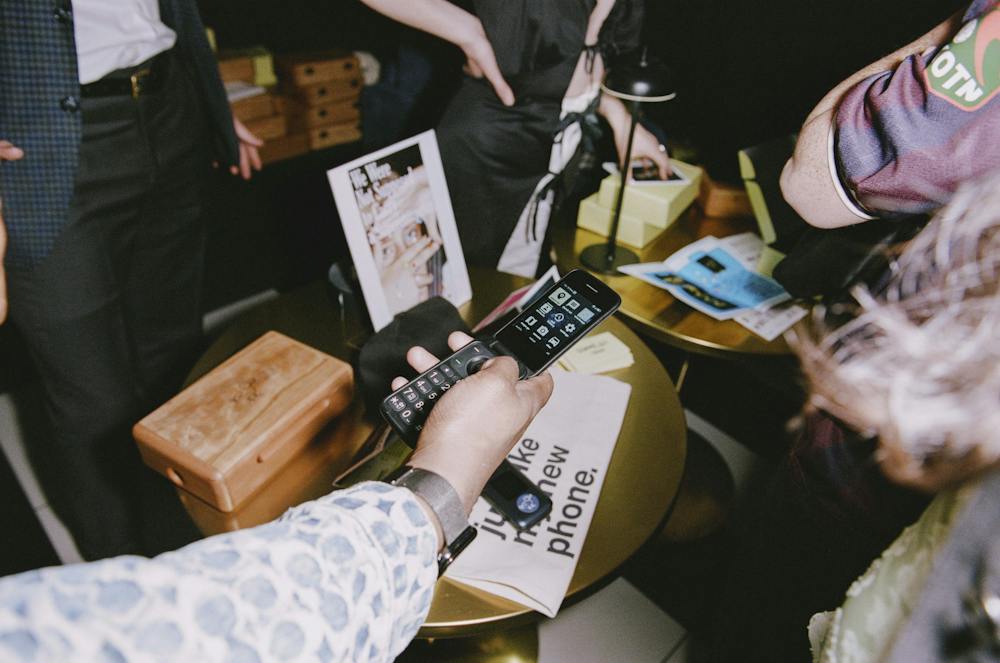
When Afreka Ebanks held a dumbphone for the first time last December, she immediately thought to herself, “why do I need a smartphone?”
Ebanks is the Director of Brand and Communications at Dumb.co, a new technology company founded in Washington D.C. selling “dumbphones” to those looking to live a more offline life. The company had its start in “Month Offline” meetups, a space for people looking to take a detox from the digital world. The program quickly gained traction with opportunities for communities nation-wide to participate in the challenge, and they now have initiatives on almost all Ivy League campuses.
The product can be used as a standalone device or a companion to the user’s smartphone through DumbOS software. Their devices offer the basic components of a modern phone such as: Apple Maps, Uber, messaging and calling, while eliminating other addictive aspects like social media apps and email. Users can further customize their experience with the addition of music streaming platforms, saved contacts and call forwarding.
According to an Open Public Health journal study, 85 percent of university students experience anxiety or distress without their smartphones. In a world dominated by technology, it is not an easy task to give up a smartphone completely. In response to such smartphone reliance, there has been a unique revival in analog activities, USA Today reports. This includes crafts, block parties and film cameras.
Dumb.co has also found a market through reclaiming the retro.
“I became really exhausted by the amount of time I felt that I had to spend on my phone,” Ebanks said. “So, holding the dumbphone in my hand and realizing its capabilities, I have reduced my screen time by so much, and I’ve given myself back so much agency over my life.”
Ebanks shared she had been “chronically online” since she was 11 years old. She recalled a moment when her younger brother asked why she’d stopped playing with him and how heartbreaking that was for her to hear. Ebanks notes that Gen Z is the last generation to have grown up in a world without smartphones while also being the first generation to be “digital natives.”
“Most of us grew up in an online world as well as the physical world,” she said.



Due to Gen Z’s unique situation, it can be challenging to stop phone use altogether, Ebanks acknowledged.
“Something that we end up reminding people is you don’t have to give up your smartphone,” she said. “We’re not purists.”
According to Ebanks, one of Dumb.co’s core values is human connection. While the crux of the company is the phone itself, Ebanks often reminds users that they care most about the lives being lived off the device.
“It’s about the life you get to live when you flip off your flip phone,” she said. “It’s about you being more creative, you hanging out with your friends and being more present, you having a better relationship with your [technology], if you feel like you might have an addiction to it.”
According to a study by YouGov, adults under 30 spend more time looking at screens than those above 30.
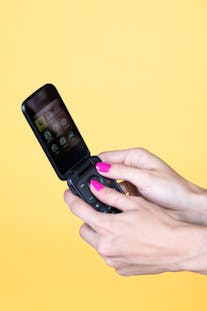
Riley Maida, a sophomore in the School of Public Affairs, wanted to change that. Maida used a flip phone during the summer, as she wanted to decrease her screen time as much as possible.
Maida noticed herself sleeping better as well as taking more time for her hobbies of reading and songwriting.
“If I’m bored, it’s easier to just pick up my phone and go on TikTok than to actually do something,” she said. “I feel like removing it from being a third arm, kind of helped to just realize you don’t really want to be on it as much as you are.”
For Maida, although switching to a flip phone full time would be ideal, given how necessary a smartphone is for many aspects of the current day to day, it would be an immense challenge to switch during work or school. Despite this, she found a solution.
“I’m really gonna try to stay off it going back to school, I’m going to bring my little box that says phone jail back with me and I’m going to try to keep it there when I don’t need it,” Maida said. “I’m kind of an out-of-sight, out-of-mind person. I don’t really want to be on my phone more than I want to be doing anything else. It’s just one step easier than most other things.”
This growing want for a more intentional relationship with the digital world can be seen beyond phone usage as well.
Ashley Stangel, a sophomore in the School of Communication, also acknowledges the importance of retro technology with a modern flair.
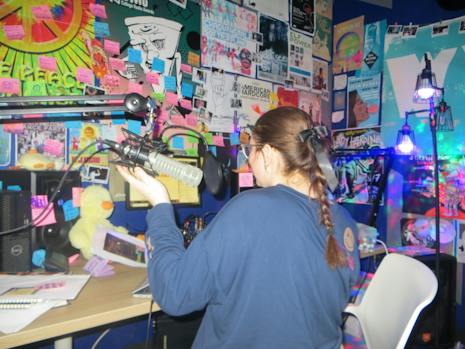
Stangel’s appreciation for music led her to begin hosting her own weekly radio show, The Soundboard, through WVAU, American University’s campus radio station.
She discovered WVAU at the University’s club fair and instantly fell in love with the idea. As a Disc Jockey for her show, she curates a specialized set every week to broadcast it to her listeners across the globe and comment on.
For Stangel, radio is an art form. She expressed dismay that Gen Z lacks favorite radio stations, unlike her parents and others in older generations.
“They all have a radio station they love and they’ve connected with because they connected with the person behind the radio,” she said. “That’s something you just don’t get with streaming.”
During her first few shows, Stangel faced a learning curve with the equipment in the studio. She shared that the process of broadcasting her show includes adjusting sound levels, calculating delays and muting different microphones. Despite the technology being so different from the simple set up of Apple Music or Spotify, Stangel praised the station for keeping it this way.
“I really give WVAU so much credit for sticking to what is basically the more-modernized version of the same equipment that’s been around for many years,” she said.
Dumb.co targets a student audience as well. “There’s this phrase that we have that we like to say, which is the fun percent,” Ebanks said. “[It’s] a play on what battery percentage you are at. When you’re having that much fun, you don’t know what percent your phone’s on.”
This article was edited by Olivia Wood, Cara Halford and Gabrielle McNamee. Copy editing done by Avery Grossman and Arin Burrell. Fact-checking done by Luca Palma Poth.
features@theeagleonline.com
