
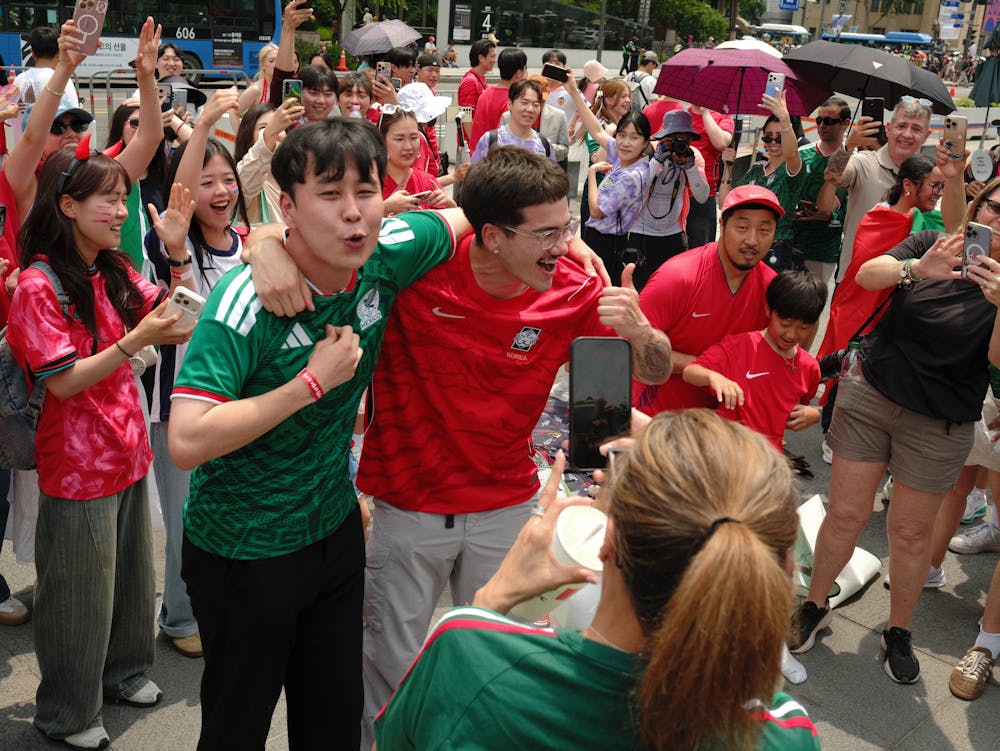
Though the 2026 FIFA World Cup kicked off June 11, political tension, price gouging and safety concerns have cast a cloud over the world’s biggest sporting event.
When the 2026 World Cup bid was given to the United States, Mexico and Canada in a historic three country bid effort, Jake Didinsky, president of the American Outlaws D.C. Chapter, couldn’t have been more excited. In the leadup to the tournament, the excitement turned into a series of logistical nightmares.
“There’s a whole shit-ton of political differences — you’re going to have to keep everybody safe and it’s going to be spread out and all under the name of peace and kumbaya and all that nonsense,” Didinsky said. “And once you start to understand all of that, you look at our country and you think, oh shit, we are woefully underprepared for this.”
Since President Donald Trump took office a year and a half ago, a large focus of his administration has centered around controlling illegal migration. Across the nation, Immigration and Customs Enforcement officers’ actions have divided communities and families. For many soccer fans, the conversation shifted from tournament optics to reckoning with who would be allowed in the United States.
In January, the Department of State issued an indefinite pause on visa processings for 75 countries, 17 of whom were countries that had qualified for the World Cup. While fans from these countries can still apply for tourist visas, the administration has made it clear that they’re not encouraged to stay.
In response to expected high demand for the visas, the FIFA Priority Appointment Scheduling System (PASS) program was opened in January for fans applying for tourist visas who otherwise wouldn’t get an appointment. Still, the State Department has said that a FIFA PASS appointment does not guarantee entry into the country — even for those who have already purchased tickets for the games.
Fans of qualified countries are also not receiving the same benefits as they did in previous tournaments. This year, according to Didinsky, signing up for the supporters’ ticket lottery meant you had to purchase whatever tickets were allocated, no matter how expensive. A credit card number was required to be entered into the system for the lottery.
Karim Azzam, a rising junior in the School of Public Affairs and a supporter of the Moroccan national team, said that at least five of his family members have decided not to come to the U.S. in reaction to the administration’s policies.


“I have some family members that are planning on coming, and they are in fact very nervous about coming down here,” Azzam said. “They know that I’m really into the political field, so they always ask me what’s going on and if it would be smart for them to come to the United States for the World Cup and a lot of them are very, very worried.”
Karim later told The Eagle that one of his cousins was denied entry into the U.S. after spending over $3,000 on tickets and hotel accommodations.
Including Morocco, a record breaking 10 nations from the Confederation of African Football qualified for this summer’s tournament. Nine of the countries are on the Trump administration’s indefinite visa pause, with South Africa being the exception. Five of them were originally subjected to an entry bond between $5,000 to $15,000, however fans traveling into the United States for the purpose of the World Cup are exempt. But the idea of subjecting certain fans to bonds received immense criticism.
“It’s not like we’re putting a burden on France who can’t afford these bonds — we’re putting it on countries that are struggling economically just because the president has a view on them that isn’t quite desirable,” Samuel Alvarez, a rising junior in SPA, said. “FIFA is all about unity, it says, but then we have non unequal access to the country.”
Fans are not the only ones affected. The Iranian national team, which plays all its opening matches in the United States, was forced to move their main training camp from Tucson, Arizona to Tijuana, Mexico. The team has been told it must leave the United States immediately following games on matchdays. Multiple key staff members, including the Iran Football Federation’s secretary-general, were denied entry to the U.S.
Iran is the first country to compete in a World Cup while at war with the host nation.
On top of immigration controversies, price gauging has dominated the headlines when it comes to this summer’s tournament. The cheapest tickets for this year’s final on July 19 in East Rutherford, New Jersey opened at $5,785. In comparison, the cheapest category of tickets at the Qatar World Cup final four years ago cost around $600.
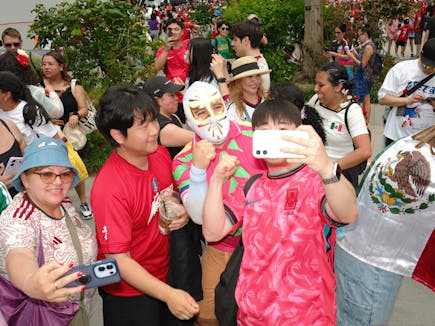
Kwaku Nuamah, a professor in the School of International Service, said that he is paying nearly $2,000 to take his son to a Ghana group stage match in Philadelphia. While Nuamah stressed the importance of showing his 14 year-old son Ghanaian sporting culture, he referred to the prices as “exorbitant.”
“Soccer is a game for the underprivileged. It’s a game for poor people. It’s a game for everybody,” Nuamah said. “And so when we erect these high financial barriers in addition to immigration barriers, we are saying to the people who love the game, you cannot come to the games because you don’t have money or you don’t have power.”
Tickets are not the only financial barrier traveling fans have to overcome. The average hotel room cost in American host cities rose from $315 to over $1,000 per night during the first week of the tournament. In a host city like New York City, where the stadium is only accessible via car and limited public transportation, train tickets increased by nearly 12 times the regular fare.
In what was supposed to be a major economic boom for the United States, there are growing concerns that the tournament will fall short of FIFA’s expectations. A report by the American Hotel & Lodging Association found that hotel bookings are far lower than what was predicted in almost every host city.
The FIFA PASS program has also indicated that demand is significantly lower than expected for the tournament, revealing that only about 16,000 applications have been received by the Department of State.
“I hope FIFA learns from this stuff,” Nuamah said. “You take [the World Cup] to a place where people don’t have passion for the game because there’s money over there, and then you have a government that is pushing ideologies and philosophies that undercast what you say you stand for.”
Even with excitement starting to grow in Washington, D.C., and fan fests beginning to pop up around the city, the matches are still subdued even for the most die-hard fans. For Didinsky, who missed a week of classes after the U.S. failed to qualify for the 2018 World Cup, the stress of this summer’s tournament has him feeling a similar sense of dread.
“There are so many issues you can look at regarding this World Cup, and it really does suck, because it has almost taken away any joy I even have in the game,” Didinsky said. “I’ll be hosting watch parties, and I’ll be cheering, the vocals will be there, and I’ll put on a brave face, but my heart, it’s gone.”
This article was edited by Cara Halford and Gabrielle McNamee. Copy editing by Avery Grossman, Arin Burrell and Mattie Lupo. Fact-checking done by Luca Palma Poth.
