
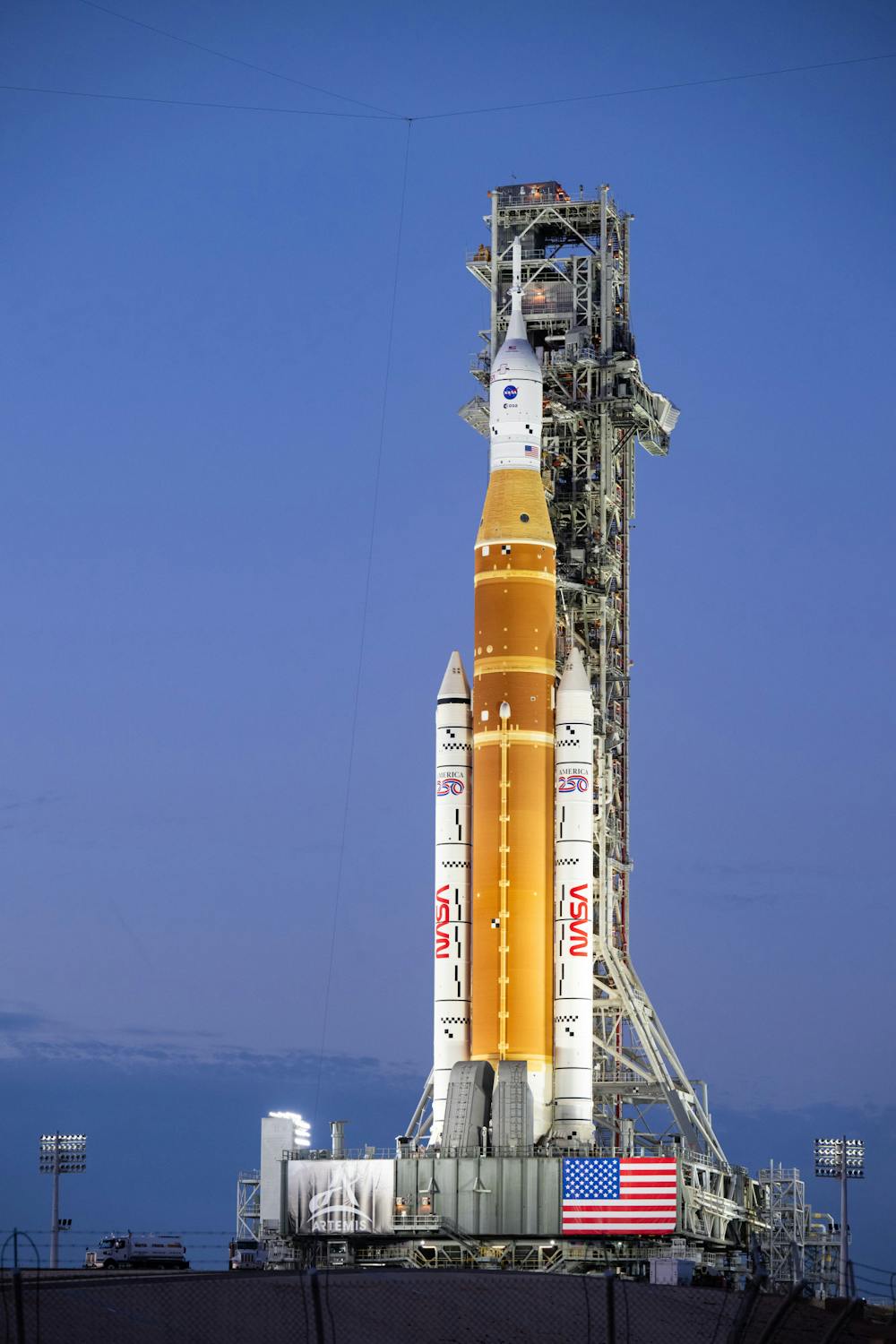
A group of American University students banded together to track the Artemis II as it made its 10-day crewed journey around the moon from April 2-11.
The students, led by mathematics professor Michael Robinson, constructed equipment at the University’s Airlie Farm in Warrenton, Va. that helped them track the spaceship’s journey. The University was one of only eight across the world, and five in the United States, that were selected by NASA to participate in the program.
Each global volunteer sent NASA a proposal stating their tracking capabilities, which Robinson said was especially challenging since the University is not known for its engineering and science programs.
“We were very open with NASA from the outset,” Robinson said. “We didn’t have the capability to do this last fall, but we’d like to build up the capability to do it now. If you give us the motivation and information we need to attempt the tracking, we will do that.”
The University has been classified as an R1 research institution since February 2025. Ella Bianco, a team member and junior studying physics in the College of Arts and Sciences, said this status alone opens up more opportunities for the University’s physics department.
“It’s an undergraduate department, but it’s an R1 university at the same time,” Bianco said. “So there is a lot of research that happens actively on campus, and most of those jobs are actually done by undergraduate students.”
Robinson said his proposal highlighted the unique educational experience for the students who would be involved in the project.
“We may not successfully even see the spacecraft,” Robinson said. “But that’s okay, because we will learn how to do this, and it will be an excellent educational experience for all involved. And NASA thought that was great, and that was why we were selected.”


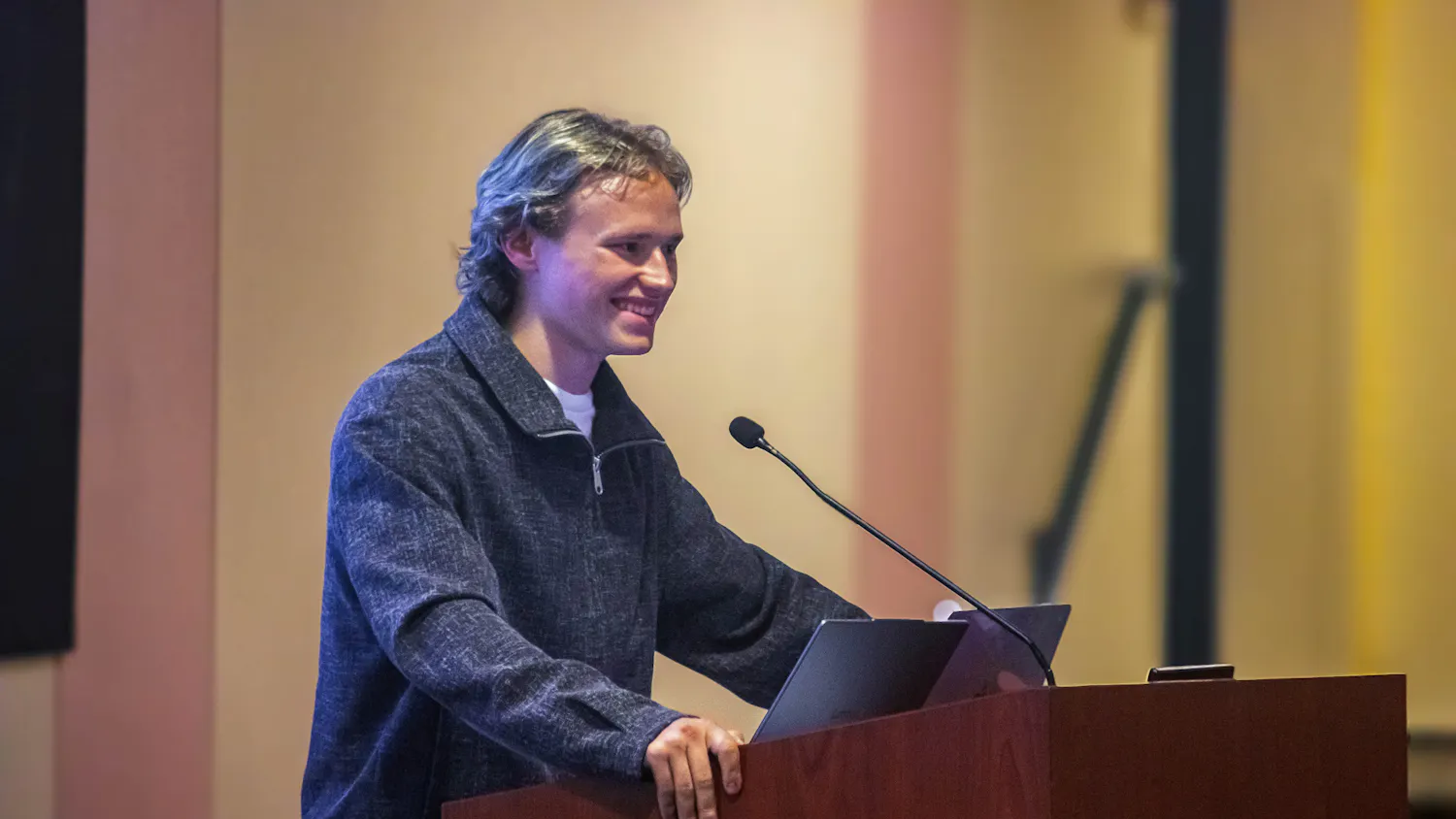
The next step was to construct the equipment that enabled them to track the spacecraft.
The University already has equipment that acts as radio telescopes, and students used these to monitor solar flares. These contain radio transmitters which send telemetry data and communications factors back to Earth. Robinson said NASA was interested in knowing if these signals, which are not intended to track spacecraft, could be used for that purpose.
Robinson and students gathered and assembled equipment, including a high-precision clock and a 2.5 meter radio dish. In the months leading up to the launch, they assembled the material at Airlie until April 2 — the day they could first catch a glimpse.
Ankur Purao, a senior studying physics in CAS, acted as the project manager. He said he was very proud of the team’s results and its dedication to the project.
“Our observation window was from 11 p.m. to 5 a.m. on a Thursday night,” Purao said. “So having people be so interested and dedicated to push themselves to do that was pretty awesome, and I’m happy that we were able to really work on this project and contribute.”
However, the process was far from seamless.
“I had to tie the antenna to the focus point with a shoestring,” Naomi Morris, a freshman studying physics in CAS, said. “It worked pretty well, surprisingly.”
But Morris said the team, which constructed the dish together and then broke into separate roles, had a strong camaraderie and worked effectively with each other.
“I’m just very proud of how we were able to make a lot out of seemingly nothing,” Morris said.
Toby Wieland, a junior studying mathematics in CAS, said the team was notably diverse in majors, which he said allowed everyone to contribute something unique to the project.
“Everybody works so well together, we were all learning from each other,” Wieland said. “And I think most importantly, it was incredibly welcoming to everyone.”
Shafaq Yousaf, a freshman studying physics in CAS, said she was taken aback by how Robinson worked to ensure that she felt included in the project.
Being a freshman and having only taken Physics 110, she was unsure of how she would be able to best contribute. But, she said Dr. Robinson played a huge role every time she had a question, and would often chime in with his own suggestions.
Bianco also said Robinson’s selflessness and overall experience was of great use to the team. She noted that his ability to make students want to learn more was a main reason why the project was successful.
“He is just so friendly and so knowledgeable and so passionate,” Bianco said. He naturally sparks so much inspiration to learn more about math and physics.”
This article was edited by Natalie Hausmann, Payton Anderson and Gabrielle McNamee. Copy editing done by Avery Grossman and Mattie Lupo. Fact-checking done by Andrew Kummeth.
