

American University Student Government Executive Board elections are right around the corner. This election, three candidates are running for president, four for vice president, three for comptroller and one for secretary. Students are invited to cast their ballots between Monday, March 2 and Friday, March 6.
Presidential candidates Aasiyah Beamon, Carly Castaldy and Asher Heisten answer questions about their qualifications, policy agenda and campaign.
Note: Some quotes have been edited for clarity
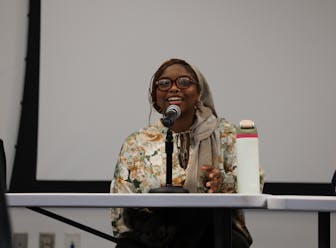
Question: What do you hope to accomplish as AUSG President?
Aasiyah Beamon (College of Arts and Sciences): I really want to bridge the gap between AUSG and the other Registered Student Organizations. I think there’s a huge informational and community gap where people think student government is an external source, when we really are just another student organization on campus. I want to emphasize that and bring fun back to AUSG while continuing to promote relationships with other student organizations. I would do that through working with the vice president, comptroller and secretary to make sure all the things we do are transparent and we are being held accountable for the things we’ve been elected for, while also serving the student body as a regular organization.
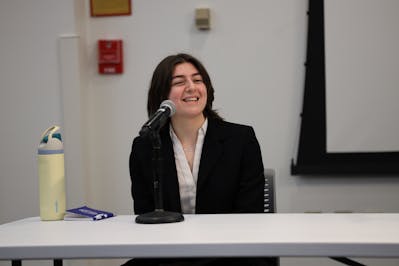
Carly Castaldy (School of Public Affairs): I think I would do a good job helping students communicate what they want and need from administration. The president has to act as the liaison between students and admin, because most students don’t have access to actually talk to these individuals who decide so many things that affect us, so my goal would be to reach out to as many students as I can. I’d talk to student leaders and RSOs and go to them to ask what I can do to help. I want to talk to them and what they say they need, then go to admin and figure out the best pathway to make those things happen.

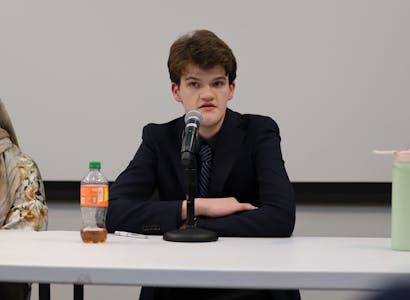
Asher Heisten (School of Public Affairs): I think it’s pretty safe to say that AU students have had a lot of issues in the last couple years. I’ve had an opportunity to see those issues both internally and externally, because I’ve been a student who is in AUSG as a senator at one point, but I’ve been a student outside of AUSG. I’ve had that perspective to see what it is that is going on and where AUSG’s failing in engaging with the community. AUSG really needs to do a lot more in terms of outreach and engaging with students across this campus, outside of the election season. What that means is having constant communication with clubs and organizations and really making AUSG a place that supports students and isn’t just passing resolutions that usually go nowhere and administrators barely even read. I plan on appointing people in my cabinet, where it would be their job to engage with clubs and organizations. That would include political clubs, life clubs, student sports and greek life as well.
Question: What experience do you have, in AUSG and outside of it, that qualify you for the role?
Beamon: On campus, I’m the professional mentorship coordinator for Sister Sister, which is an organization that focuses on mentorship for young Black women. I am also the president of our Under Represented Students in STEM Club, and then I’m the fellows director with Students for Change which works on programming for different intersectional feminist frameworks. Additionally, I’m the events coordinator for the Muslim Student Association and the outreach coordinator for The Market, which is AU’s food pantry. In Student Government, I am a CAS senator and the equity and Title IV chair and finance vice chair. I do quite a bit on campus and I think that those things bridge the gap of access and accountability when it comes to AUSG and other organizations. I want us to function as a synchronous body to work together to do what we say we’re going to do. The work I’ve done has helped me build those connections. Out of every big club on campus I could say I have at least one contact from every single one. That’s what I think will propel me going forward into this presidency.
Castaldy: In my freshman year, I was elected as a senator-at-large. When I was a senator, I was elected chair of the Committee on Inclusivity, Diversity, Equity and Accessibility. I helped people with legislation and advocated on their behalf to the administration. I used to have bi-weekly meetings with Dr. Friday, who is the vice president of Inclusive Excellence. Following that, I resigned as a senator so I could help with the elections. The elections administrator at the time wanted to run for office, so I was trained to do the elections and ran them. It was probably one of the most stressful three weeks of my life ,but everything ended up okay. That was a time when I had a lot on my plate, I had a lot to organize and manage but I had a great team of support and it was an example of working with CSI and admin. Outside of SG, I haven’t been on executive boards of any clubs ,but I’ve had multiple on-campus jobs. That’s kind of how I’ve connected to the campus. I started at The Bridge early on in my sophomore year and have been there ever since. It’s given me an opportunity to connect with people. I’m a shift manager so I help manage the staff and I help to guide things. I would say I have a lot of experience with overseeing and assisting other people and I think as president,it’s a lot of communicating and assisting. The president is one person and a team of four people and it’s really important that we support one another.
Heisten: I was a senator-at-large for a year and a half. In that position, I became the vice chair and then the chair for what was then the Committee on Campus and Student Life. Some of the stuff I worked on was the free speech issues that came across our desk. Sylvia Burwell sent up a memorandum on Jan. 25 2024 that banned indoor protest, chalking and flyering. I was a co-sponsor in the investigation that opposed that and an outspoken advocate for the referendum. I was also one of the students at John Alger’s welcome ceremony as a part of that protest, which was specifically a violation of school policy, and AUSG encountered a suspension. Over the summer, Alger got rid of that memorandum, yet the fall after they were trying to reinstate some of those things. I acknowledged that, I brought that up in the Student Government Senate, and I sponsored a resolution against that which got very far. We had a conversation with the administration one morning, and they took out the free speech restrictions that were in those new policies. Additionally, when arming AUPD was a question posed to the community, I sponsored a referendum against it. That eventually led to AUPD not being armed. This was obviously in partnership with a bunch of other activists and organizers. Outside of AUSG, I was on the e-board for the American Civil Liberties Union and I have been an activist and organizer with AU Rise Up.
Question: What makes your policy agenda unique, and how will it benefit the greater student body?
Beamon: When it comes to transparency, I really want to make sure that people know what it is that AUSG does and know how to contact me. As president, you have the ability to appoint members of your cabinet and I really want someone who would be specifically in the president’s cabinet that would work closely with the secretary on posting what the president’s doing regularly on social media. Currently, the president goes and updates the senate on what’s going on, but I want to update the student body and ask if there is anything additional they want the president to be doing. One of the other things that I want to do is instead of a town hall every semester, I want to do them at least once a month. They would be events in collaboration with different organizations,such as affinity groups. Currently, it’s Black History Month so I’d like to partner with all the organizations that focus on Black identity to do a town hall to talk about everything that's happening at AU as it pertains to the Black community. Let’s have a conversation about that, play games, make bracelets, etc. I’m here for you. I’m here as an advocate for you so I want to be in community with the people who I’m advocating for.
Castaldy: I think the most important thing for a president is for them to be adaptable. I have ideas, some specific examples for AU Dining would be working on the meal plans. I would love to rework that system. I know this is a possibility based on my discussions with admin, it just needs to be focused on but I think we can improve it. AU made it a requirement for second year students to live on campus this year, and I would love to work with the Residence and Housing Association and HRL to support all our students, specifically our second-year students who may have not been planning to live here,but now they have to. We should be giving them as much support as we can. I can have all the ideas in the world going into this,but what matters is that I’m going to listen to everyone else and see what they think needs work. I can’t predict the future, it’s a possibility that there’s going to be a big issue that’s going to come up sometime next year. We’re a very active student body. I would need to put whatever plans I have aside so I can support the students and see what they need.
Heisten: We need to be out there supporting students. That’s what a student government should be. I want to focus on the quality of life on our campus. One of the main issues here right now are the fire alarms in the freshman dorms and that’s something that really needs to be addressed. I have a few proposals for that. I believe AUPD should be scouting more often to make sure there isn’t an actual fire or address it themselves if it’s not something massive. In addition, I want to focus on dining hours and encourage AU Dining to expand them so that the Terrace Dining Room is open and accessible to students more hours a day, as well as providing students with 24-hour healthy options.
Question: Are there any problems with AUSG you hope to address as president and how will you do so?
Beamon: I would say there’s two main things. The first one being I think people don’t understand the function of AUSG. I want to better solidify what the function is and how to be personable with not only the student body, but with other people who are in AUSG. I want it to be one community because we all are here for each other. We all are trying to do work for students and it’s important that we all come together. The other thing is I want to be clearer on what it is we’re doing, how we are doing it and how we intend to navigate future problems. They’ve done town halls in the past and things like that, but I really want there to be a better way for students to get in direct contact with the president because as is it is now, the senate’s function is advocacy and they pass resolutions, but I think that there’s advocacy that the president should and can be doing regardless of whether or not the senate is passing resolutions. We don’t currently have a mechanism for people to just go up and be like, “Hey, you’re the president, fix this.” I just want people to feel like they can have that kind of relationship with the president and the rest of the executive board.
Castaldy: I think AUSG is almost an echo chamber. People who are student government get really caught up in what they are doing in student government that they kind of forget they’re representing everyone else on campus. Again, I can have all the ideas in my head but they won’t be all the ideas of the students on this campus. We always have to be listening and I think there is a huge disconnect there. I also think for student government to be effective, unfortunately, based on the situation we are in we are owned by the University and we work and exist in a power structure. We can’t actually do anything without the administration’s support. In the past there have been struggles with that relationship. It’s important to walk the line between pushing them towards our goals and outright pissing them off.
Heisten: The main issue is that AUSG doesn’t have the buy-in of students. We have very low turn out, people are rarely engaging. When we propose things to the administration, it isn’t fully representative of the entire student body. AUSG needs to invest a lot more time and energy into supporting and engaging with the community so that they can get that buy-in and have that leverage when going into conversations with the administration. How we do that is by addressing the issues that are the most relevant on campus, not by addressing top-level issues that only a small group of campus care about but the things that affect everyone’s daily life. Also, just building community and school spirit. It’s spending our money to support clubs and organizations in their own initiatives. It shouldn’t be one or two senators or the president who wants to address an issue and expect student organizations to follow along. What it should be is that student clubs and organizations propose something and AUSG steps in to help facilitate that conversation between admin and that student organization.
Question: Do you have any final thoughts?
Beamon: I want everyone to feel like they can come to me and for me to be able to go to people and to reach out to the community. I want to see a government that can work not only functionally, but also working for the student body. I would say that's my biggest thing.
Castaldy: I want to establish those lines of communication between the student body and AUSG that have been ruptured. I think AU is a great place. I really love it here and I know not everyone has had that experience, but I want to make it better and I want people to feel comfortable here.
Heisten: I think that there are a lot of issues with AU and its involvement in national politics right now that need to be addressed. We have a lot of connections to Epstein, with a professor who is going through a non-transparent investigation. But we also received tuition money to pay for a student to go to American University about 10-15 years ago. I do not believe that AU should have that money anymore, either by donating that money to an external organization or by investing it in the survivor bill of rights at AU. The University keeps saying we don’t have the money for that but we do and it should be spent that way.
This article was edited by Natalie Hausmann, Payton Anderson and Walker Whalen. Copy editing done by Avery Grossman, Jaden Maitland Anderson, Mattie Lupo and Ava Stuzin.
