
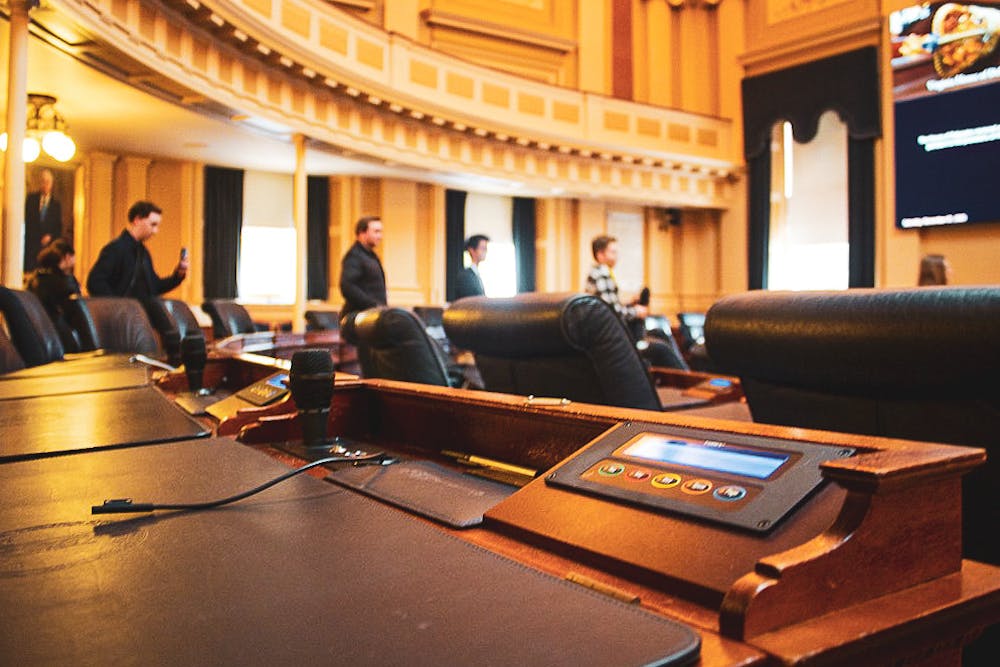
The “Battleground State” class, a joint course in the School of Public Affairs and the School of Communication, will return in fall 2026, taking American University students to experience political journalism firsthand in the upcoming Michigan midterm elections, including its races for U.S. Senate and Governor.
Led by Professors Betsy Fischer Martin, Molly O’Rourke and Lynne Perri, the course selects 24 students through an application process to learn about Michigan’s politics and experience political reporting from the election field.
“It’s one thing to read about it. It’s another thing to be there and see it,” said Fischer Martin, a senior executive in SPA and director of the Women & Politics Institute. “Students aren’t just studying an election from the classroom, they’re really learning how it kind of feels on the ground in a big state that has a lot of stakes.”
The course features an in-class focus on the state’s political context and on-the-ground journalism skills. The students also travel to the state for a fieldwork trip to interview voters and learn more about campaign communications work.
“As an international, it was fascinating to see a U.S. election up close,” said George Smith, a Political Communications graduate student who participated in the Virginia Battleground class. “I really think U.S. democracy is alive and beating in a way that others across the world aren’t, because people are passionate about their politics and they go out to vote.”
Fischer Martin, O’Rourke and Perri also bring in guest speakers to provide students with opportunities to do real-time reporting through partnerships with newspapers like the Washington Post, writing vignettes about voters on election day.
Often, the media narrative of the race is different than actually talking to voters on the ground, said Max Morse-deBrier, a senior in SPA who participated in the New Hampshire and Virginia courses. “People are [willing] to tell you sort of their life stories and sort of tell you about why they’re voting for someone, they’re sort of eager to do it,” Morse-deBrier said.


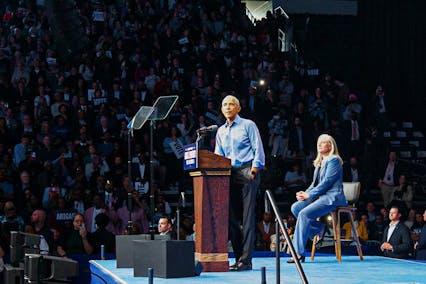
Maimon and Smith mentioned unique learning experiences during the five days of fieldwork, such as hearing Obama speak, Morse-deBrier’s experience being on the set of NBC’s Meet the Press and learning from campaign managers of the competitive gubernatorial races in New Hampshire and Virginia.
According to Jonathan Casaverde Maimon, a Political Communications graduate student and participant in the Virginia class, talking to voters helped him realize that, at the end of the day, all people care about the same issues.
“We’re going about it in different ways, but what we care about and what we want to change is the same,” Casaverde Maimon said.
“It’s important that our students [are] able, in a professional setting, to set their political opinions aside for the moment and observe from sort of a non-partisan aspect,” Fischer Martin said.
The class requires an application process, and Fischer Martin says they are looking for students who are self-starters and enthusiastic. Once chosen, applicants will be flown to the state over election day, which is paid for by donors.
“We’re really grateful for the ability to do that … so that no student has to feel like they can’t afford to come,” Fischer Martin said.
The fall 2026 Michigan fieldwork will run from Oct. 30 to Nov. 4.
This article was edited by Natalie Hausmann, Payton Anderson and Walker Whalen. Copy editing done by Avery Grossman, Ava Stuzin and Mattie Lupo.
