
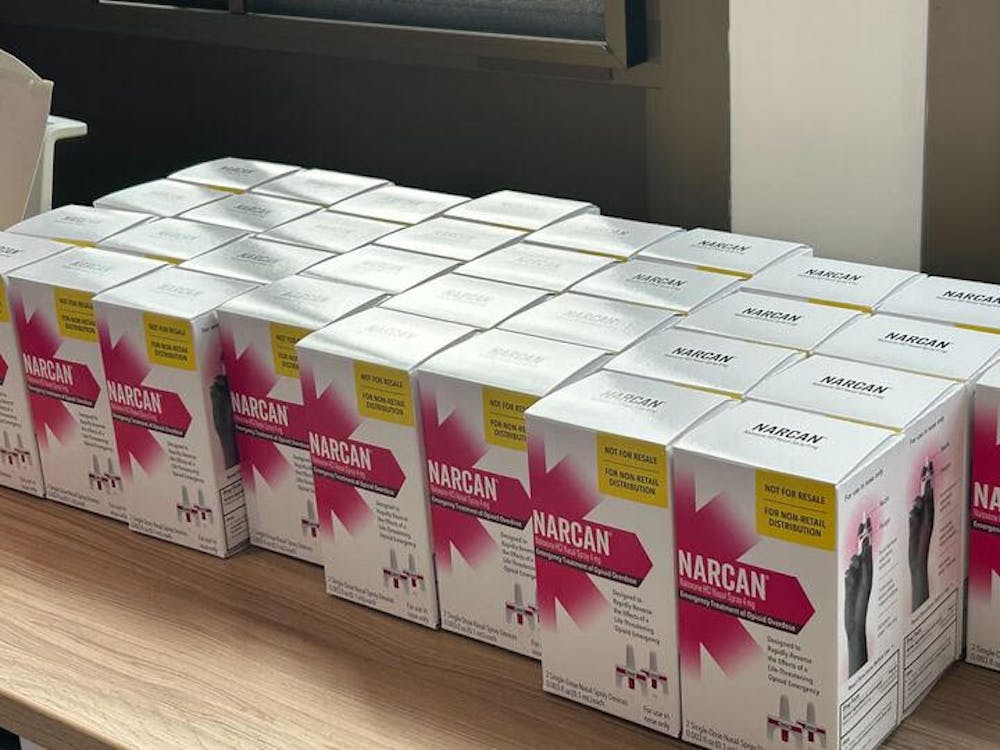
On Wednesday, Oct. 29, the American University Center for Well-Being Programs and Psychological Services hosted a NARCAN training event open to all students. The goal of the program was to educate students on how to recognize and reverse an opioid overdose.
“Saving a life is so much more important than anything else,” said certified Naloxone instructor Lyndsey Murray.
The event began with a definition of opioids and a list of substances that fall into the category. Murray then explained how to identify signs of an overdose to ensure attendees could determine what situations might necessitate the use of Naloxone, which is commonly referred to as the brand-name NARCAN.
An instructional video played during the event listed the signs of a potential overdose. These might include cold, clammy skin, very small, tight pupils, infrequent breathing, non-responsive to shaking and blue lips or fingertips.
Following the video, Murray demonstrated how to administer NARCAN. The process involves checking for responsiveness, which can be done via a sternal rub, calling 911 and using the first of two included doses in each narcan package by spraying the medication into one of the victim’s nostrils.
If the person remains unresponsive, she advised attendees to use the second dosage in the other nostril. Afterward, she said to perform rescue breathing every five seconds. Chest compressions are not needed, as an opioid overdose affects the respiratory system, causing the person to stop breathing.
After the instructional presentation, students were given Naloxone kits, fentanyl testing strips, informational flyers and booklets. They were also encouraged to practice overdose response procedures on a test dummy.
A short quiz concluded the session and participants who completed it received a digital certificate addressed to the attendees. JR Denson, Alcohol and Other Drugs Prevention Specialist at the Center for Well-Being, said he hoped students would leave with "encouragement to act.”


D.C., has seen a significant 46 percent increase in opioid-related dealths from 2018 to 2024, according to the office of the chief medical examiner of the District of Columbia — with a growing number of deaths linked to fentanyl.
NARCAN is accessible to everyone under D.C.’s Opioid Overdose Law, which protects anyone carrying or administering Naloxone. If an overdose occurs and emergency services are called, the Good Samaritan law protects all parties — even if illicit substances are present.
Narcan is available for pick up in 30 pharmacies across all eight wards of D.C., with no cost or ID required. An additional option is LivelongDC’s delivery program, where narcan can be delivered at any specified D.C. address.
“Having the knowledge, the abilities and hopefully the courage to step in and do something is important and it’s a big deal,” Denson said.
If you or someone you know is struggling with substance use, there are resources linked below.
National Overdose Prevention Line
American University Center for Well-being
This article was edited by Sydney Hemmer, Jessica Ackerman and Walker Whalen. Copy editing done by Sabine Kanter-Huchting, Arin Burrell, Paige Caron, Andrew Kummeth and Ryan Sieve. Fact-checking done by Aidan Crowe.
