

From the Newsstands: This article appeared in The Eagle’s December 2025 print edition which can be viewed here.
The following piece is an opinion and does not reflect the views of The Eagle and its staff. All opinions are edited for grammar, style and argument structure and fact-checked, but the opinions are the writer’s own.
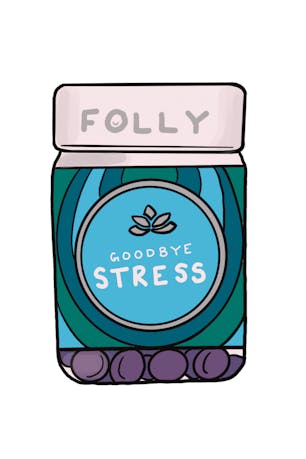
Detox teas. DIY Ozempic. Elderberry gummies at Eagle Express. Questionable wellness ‘solutions’ bolster a behemoth industry with a market size Fortune Business Insights predicts exceeding $3.3 billion by 2032 — fueled in part by a youth loneliness crisis.
Former U.S. Surgeon General Vivek Murthy declared loneliness and isolation an epidemic and major public health concern in 2023 — acknowledging a new trend posing dire psychological consequences.
Lonely people are more vulnerable to mental illnesses like anxiety and depression. And contrary to the community many internet spaces purport to provide, loneliness impacts around 1 in 3 U.S. adults aged 18-25.
Clearly, this is something young people cannot find in their online affinity, begging the question: what are they finding?
In short, billions of dollars of market conditioning.



Unsurprisingly, sad and lonely young people do not want to remain sad and lonely. The beauty and wellness industry capitalizes on this desire by marketing appearance and wellness improvement products as social solutions.
Hypercurated content begs a comparison to a favorite influencer, heightening individual insecurity. The dejected and lonely become lonely consumers, with algorithm-enforced insecurity shaping their purchases.
Internal shopping features on social media streamline this, enabling scrollers to address bad skin, bloat and anxiety in one TikTok shop order.
This convenience feeds the algorithm while allowing scrollers to remain in the isolation of their bedroom.
This is harmful and often utterly useless.
Per the Newport Institute, psychological research urges the lonely to curb social media use, get adequate sleep, exercise more and expand their social circles. Psychological research does not direct the lonely to TikTok Shop apple cider vinegar gummies.
There is also economic hurt. Buying specialty skincare products does not relieve isolation or its symptoms. Rather, it diverts users from the real work true wellness requires.
Social media apps are not the only substantiators; look no further than AU’s campus.
It is unlikely that any student seeks out “MultiVites” or elderberry supplements at Eagle Express. But it is telling of how pervasive medical mythology is, and how little we consider our personal proximity and involvement in the market.
Whatever the cause, young people must consider how they can extend comfort to those struggling with loneliness. Bringing belonging to one another may teach us to give ourselves grace, concurrently starving an industry that feeds off insecurity. We may then have some money for other things at Eagle Express.
Harry Walton is a sophomore in the School of Public Affairs and a columnist for The Eagle.
This article was edited by Quinn Volpe, Alana Parker and Walker Whalen. Copy editing done by Sabine Kanter-Huchting, Paige Caron and Andrew Kummeth. Fact-checking done by Aidan Crowe.
