
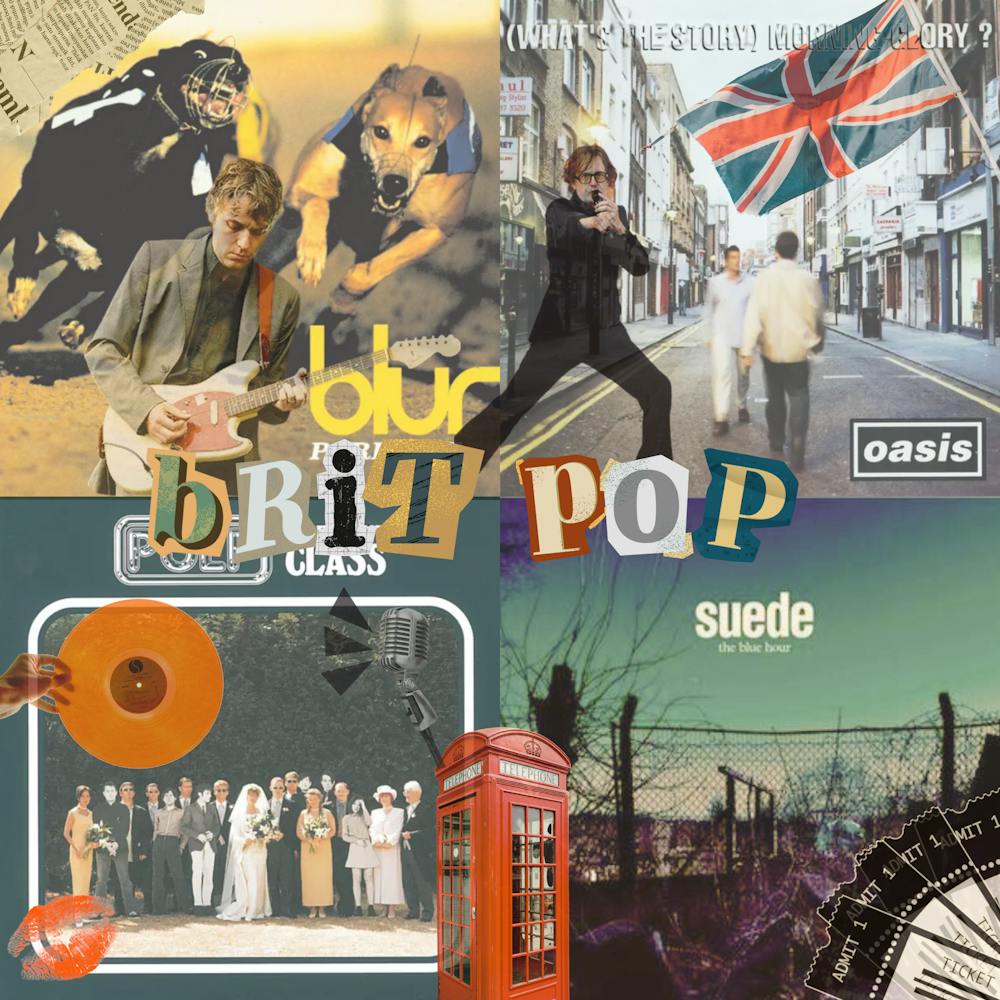
Inspired by the guitar-based pop-rock music established by The Beatles, Britpop leans into U.K. culture and its roots — providing relatable lyrics, catchy hooks and a light-hearted tone.
Radio, rock and roll
When television began to infiltrate American media in the 1950s, radio stations and producers scrambled for a new way to market their medium. Popular genres at the time included hillbilly and rhythm and blues. But for radio to stay afloat, artists Elvis Presley and Chuck Berry decided to combine the two, resulting in sweet soul singing, bumping beats, and the title of rock n’ roll.
Iconic artists such as The Beatles, talented guitarist Jimi Hendrix and prolific singer-songwriter Bob Dylan took after Presley and Berry. Although they weren’t considered rock, their music similarly carried classic elements of folk and pop, and Americans were obsessed. A new transatlantic cultural door had opened between the United Kingdom and the United States.
The pipeline: British Invasion to Britpop
The gradual salience of British rock and pop music in America was sometimes referred to as the “second coming” of the Brits since the American Revolution.
After the Beatles continued to send hits overseas, bands like The Rolling Stones, The Kinks and The Who popped up in the greater London area.
This plentiful period of British rock is referred to as the “beat boom.” As music developed, technological effects created a new genre of pop known as synth-pop. Bands such as New Order, Duran Duran and The Police led this so-called British invasion.



The dawn of Britpop did not come until the late 20th century, coined by select music journalist Stuart Maconie. It was regarded as a return to British rock n’ roll roots — again calling upon influence from The Beatles’ signature folk style, but also incorporating alternative rock, glam rock and punk rock.
The main players
Britpop arose as a genre in the 1990s, and there were a clear few bands who stood to be the most successful. Among these are Blur, Oasis, Pulp and The London Suede; nicknamed “the big four.”
Blur was formed in London in 1988, headed by lead singer Damon Albarn.The band drew inspiration from The Kinks and early Pink Floyd. While their first few records sold slowly, their third album, “Parklife,” excited not only British charts, but American listeners as well.
The disco-esque “Girls & Boys” was the first single to come off this album, reaching No. 5 in the U.K. and 59 in the States. “Parklife” won five Brit Awards, including Best Album and Best Band, and is a defining album of the Britpop genre.
In 1995, a feud between Blur and Oasis arose, referred to as “The Battle of Britpop.” A single from each band was released on the same day, “Country House” by Blur and “Roll With It” by Oasis. The two songs ended up charting at No. 1 and 2, with Blur coming out on top. Blur won the battle but not the war, since Oasis’s future albums gained more traction at home and abroad.
Another Blur song worth mentioning is the 1997 hit “Song 2,” which has racked up over one billion streams on Spotify since the band’s decline. The track was meant to be a parody of Nirvana’s “Smells Like Teen Spirit” and the American grunge trend in the ‘90s, which was quite opposite of Britpop’s high-spirited and youthful feel.
Starting with strong drums, Albarn then comes in on lead vocals with a “woo-hoo” as the bass begins, creating a punk and almost garage-band vibe. What was meant to be a joke became Blur’s legacy in the States, charting at 6th on Billboard’s Top 100 Chart.
Once Oasis realized their “rivals” meant business, the band knew they had to hit back harder with a new release. The post-pop-battle album was titled: “(What’s The Story) Morning Glory?” This recording is arguably Britpop’s most poignant piece, selling a record-breaking 345,000 copies its first week. Not only did it have success in the homeland, but the album went platinum four times across the Atlantic.
The song “Don’t Look Back In Anger,” named after David Bowie’s “Look Back in Anger,” is said to be their biggest hit. Written by co-lead vocalist, lead guitarist, and primary songwriter Noel Gallagher, the track took inspiration from the Mott The Hoople hit “All the Young Dudes” and John Lennon’s “Imagine.”
“Don’t Look Back In Anger” is supposed to be about “looking forward instead of looking back,” according to Gallagher. The mention of “Sally” in this song was thought to have significant meaning, but it was instead inspired by Gallagher’s brother, Liam Gallagher, the other lead vocalist of Oasis. He overheard Noel strumming and singing this new tune, mishearing the lyrics as “so Sally can wait.” When he questioned his brother about it, Gallagher decided to add the line to the piece, and the rest is history.
“Wonderwall” is another beloved number from Oasis, charting its highest at No. 2 in Britain. Inspired again by a Beatle, George Harrison’s first solo album “Wonderwall Music,” provided the title for this piece. It was written originally about Gallagher’s betrothed, but once they split, he claimed it was actually an imaginary friend “saving you from yourself.” It remains relevant to fans worldwide, becoming the first song from the ‘90s to reach one billion streams on Spotify.
The Britpop band Pulp formed in Sheffield, England in the late 1970s. They broke into the genre between 1994-95 with the albums “His N Hers” and “Different Class,” but are best known for their song “Common People,” which tells the story of wealthy individuals yearning to experience impoverished life.
Suede debuted with their self-titled album “Suede” in 1989, topping U.K. charts as the fastest-selling debut album in over a decade. “Coming up,” their third album, is considered their greatest, containing hits including “Beautiful Ones” and “Trash.” Though the band tried to escape the Britpop label and branch out beyond genres, they are widely considered to have paved the way for the musical movement.
The impact of these bands was not only reflected on the charts but on future groups; Coldplay, Travis and Snow Patrol all seem to draw major inspiration from the genre. Britpop will forever be remembered as music for the British youth — solidifying their identity and culture while spreading it throughout the world.
Looking to dive in? Here are a few songs we’ve curated to get you started: Britpop Playlist.
This article was edited by Jessica Ackerman, Marina Zaczkiewicz and Walker Whalen. Copy editing done by Olivia Citarella, Emma Brown and Ella Rousseau.
