
For prospective political science and international relations students — and anyone who wants to live in a vibrant city — D.C. is ideal. It is, however, a city steeped in “wonk culture.”
Often, individuality and self-worth slip to the back of our minds.
“Wonk culture” is the social environment that stresses the importance of involvement, including internships, fellowships, volunteer positions and/or anything meant to fill out your LinkedIn. While these are all good experiences for college students, the culture behind them exaggerates their importance, which can make many students feel bad about themselves.
At American University, about 87 percent of students acquire an internship within their four years. Additionally, 91 percent of post-graduate AU students are working, in graduate school or both within six months after graduation. These prominent statistics set a certain standard on campus. Internships and other traditional professional development pathways become the main indicators of individual success.
When we find ourselves knee-deep in this sentiment, it is easy to value ourselves relative to peers’ accomplishments instead of focusing on our individual merits. But to retain or rediscover our individuality and self-worth, we must make time to learn about ourselves as humans.
Everyone has heard from an older friend or family member, “College is the best four years of your life!” and “College is where you find yourself!” While these phrases are exhausted, they hold truth. It’s your first time existing as a truly independent person out in the world where you’re free to find your own niches and make your own mistakes.
When entering a new space, it is easy to feel pressure to conform. Because of this, it is crucial that students find avenues to explore their own interests. One of these avenues is finding hobbies to help counteract the bustle of wonk culture.
Of adults who reported very good or excellent mental health, 71 percent engaged in creative activities. Conversely, of the adults who reported good mental health and poor mental health, only 50 percent and 46 percent engaged in creative activities, respectively. Engaging in creative hobbies not only betters your mental health, but allows students to discover themselves outside the monotony of D.C. culture.


D.C. can be very uniform: if you step on the metro any given weekday morning, you’ll witness a sea of suits, backpacks and briefcases exiting at Capitol South or Metro Center. As an observer, the homogeneity just feeds into the idea that there is a “correct” trajectory. And while people rave about Hillternships, they rarely ever notice smaller opportunities — like creative projects, volunteering or non-profit work — which puts pressure on students to “do D.C.” the “right” way.
If working on Capitol Hill is a goal, of course students should go for it — why not capitalize on one of the more unique resources D.C. schools provide? But once students tie up their value in these accomplishments, they end up just checking boxes, deviating from the true purpose of college.
Moreover, individuality and professional development aren’t mutually exclusive. If you’re finding specific issues, positions or jobs you are genuinely interested in pursuing and learning more about, it does not matter how they compare to those of your peers. In the long run, smaller, more meaningful opportunities will give you more than positions achieved for the sole purpose of social desirability.
The University’s Career Center has numerous resources to help when you need career guidance. However, the emphasis the University places on career readiness is overwhelming for students who don’t know what they want to do yet.
During forced information sessions, students are surrounded by the words “resume,” “cover letter” and “interview prep” right before the counselor says to have a relaxing weekend. The success stories the Career Center tells often follow similar trajectories, further reinforcing that there are “correct” ways to be involved.
The next time you find yourself comparing your resume to your friend’s or spiraling about a career that is probably 4+ years away, take a minute to reflect on your individual goals, what you want your future to look like and the characteristics that make you a singular candidate for anything you should pursue.
Slowing down can — and, sometimes, definitely should — also look like taking a break from the job search altogether. As ambitious students, it can be hard to recognize this. Take a breath, then take a walk. Go get coffee with a friend. Watch the sunrise on the National Mall. Listen to your favorite album.
Even the nation’s capital rests every once in a while. You should too.
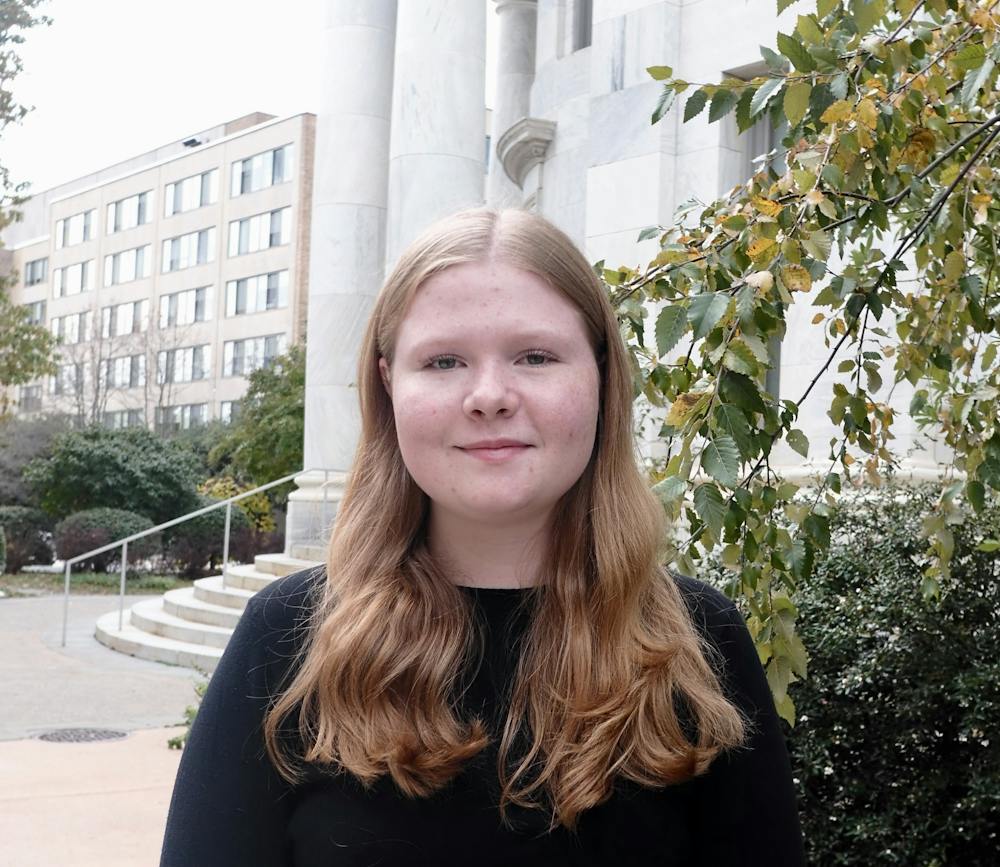
Siobhan Stubbe is a sophomore in the School of Public Affairs and a columnist for The Eagle.
This article was edited by Ava DiGiacomo, Harry Walton and Gabrielle McNamee. Copy editing by Avery Grossman, Mattie Lupo, Nicole Kariuki and Jaden Maitland Anderson. Fact-checking done by Josie Burnette.
