
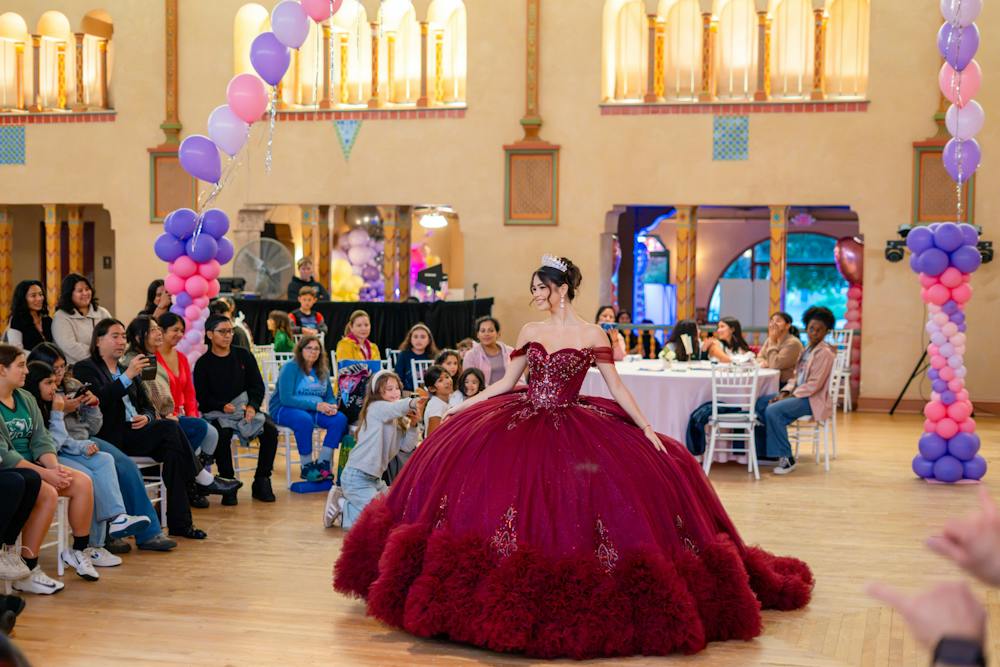
On Oct. 11, the Smithsonian National Museum of the American Latino hosted its Latino Heritage Festival: Quinceañera Traditions & Coming of Age. The event featured a live mariachi band, story time, dancing and even a fashion show, creating a space for the D.C. community to learn and experience many aspects of the tradition.
Abigail Vergara, a 17-year-old from Dallas, celebrated her quinceañera and its traditions two and a half years ago. Now, she travels around the United States for quinceañera expos. These expos provide resources to vendors, professional dancers and more.
Vergara was excited to be near D.C. to celebrate the tradition.
“Who would have thought we would have been here?” she said.
She was also enthusiastic about sharing the importance of quinceañera expos and similar events with other young girls.
“We have young girls come into our expos, and they want to be models, or they want to model for certain boutiques, certain dresses,” Vergara said. “It helps a lot of girls get out of their comfort zone.”
Quinceañeras are a significant coming-of-age tradition within Hispanic and Latino communities, marking the transition from childhood to womanhood for 15-year-old girls. The word quinceañera itself translates to “15-year-old girl.”
Dating back to Indigenous Mesoamerican communities, the tradition has continued to evolve across the United States as Hispanic and Latino communities integrated. The tradition includes elegant dresses, ceremonies, dancing and symbolic elements.


One component of the celebration is the changing of the shoes. It physically symbolizes the step from a young girl into a young woman. In this special moment, a Quinceañera’s father, or another male figure important to her, changes her shoes from flats or sneakers to high heels. Some ceremonies like the last doll and tiara changes or attending Catholic mass are just a few other symbolic elements of the day.
Vergara said that girls between ages 12 and 15 are beginning to find themselves with help from the community around them. Quinceañeras are one important example of the Hispanic and Latino community coming to celebrate and support them in this journey.
“We want people to understand why we go above and beyond. Some girls go above and beyond because they do good in school … and their parents want to celebrate them,” she said.
For other attendees, the Quinceañera Festival was a way to plan for their future celebrations. Tallulah Jones, a 13-year-old, came to the event with her mother Karen Santiago, both of whom share Puerto Rican heritage. Jones’ quinceañera is only two years away.
“I know we are in a very diverse area, and she has friends that are from all over the world, and they have different coming-of-age ceremonies, and I think it’s good to have one of those to mark this passage of time and this moment,” Santiago said.
Jones wants to make her own traditions. As a musician, she wants to add a musical performance to her quinceañera.
Jones said that the celebration is an opportunity to “stay a little more in touch with a part of my family and a part of me that I acknowledge but don't get a chance to explore very much.”
Claudia Barahona, a D.C. native with El Salvadoran heritage, attended the event with her young daughter.
“I had a quince, and so I thought it would be fun to also bring her and learn a little bit about that history and experience,” Barahona said. “She just experienced her first quince, so she’s very excited about the whole quince experience.”
Barahona’s daughter was one of many young children who listened to “My Sister’s Quinceañera” during the festival’s storytime.
“What we’ve seen is that young people appreciate the ability to see their stories in the books that they read,” Emily Key, the assistant director of learning and public engagement for the National Museum of the American Latino, said.
The festival also included cupcake decorating, dancing lessons and crafts for families. Jean and Louisa Oberti embraced their parents’ French and Uruguayan heritage during the festival.
“It’s cool,” Louisa said. “It’s a lot of pink and purple poofy dresses.”
Colorful quinceañera dresses lined the walls of the venue and were later modeled. The event also included dancing lessons and performances from The Washington Ballet. The night concluded with Sol and Rumba’s Latin band.
Key said that the event allowed the museum to showcase Latin American community stories in person, connecting the community through interactive elements and bringing the Smithsonian to them.
“I think it’s an ability for us to showcase the stories of our community in live and in person and also showcase the different community businesses that put these kinds of things together for our communities,” Key said. “So, the quinceañera business is not just a cultural heritage business; it’s also a small business that helps unite our communities together and be represented.”
This article was edited by Isabella Polak, Cara Halford and Gabrielle McNamee. Copy editing done by Avery Grossman, Arin Burrell, Abigail Jose, Mattie Lupo and Jaden Maitland Anderson. Fact-checking done by Josie Burnette.
communityengagement@theeagleonline.com
