
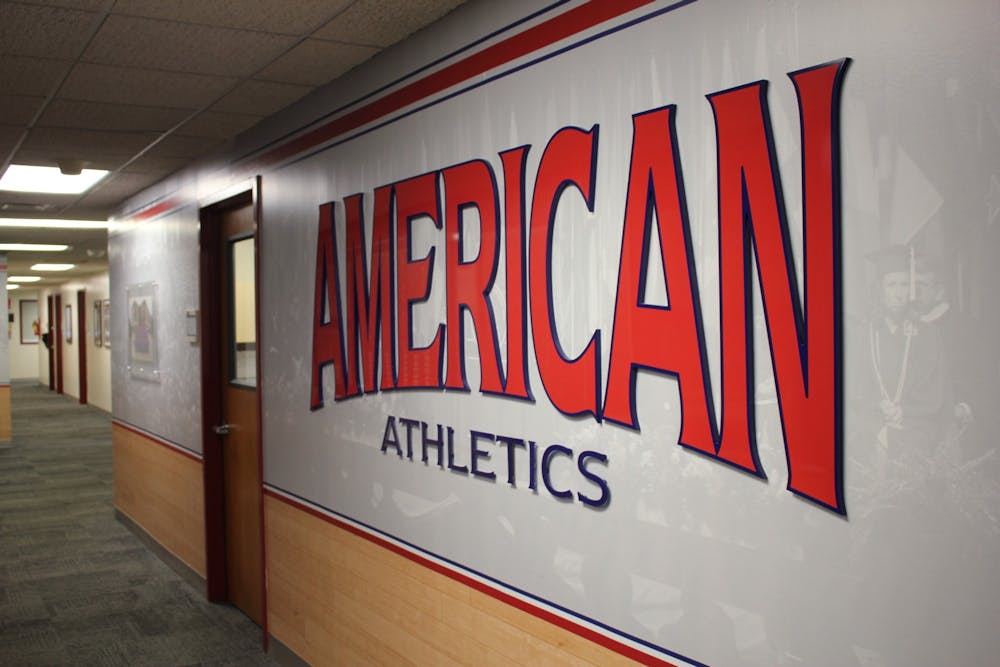
Since the National Collegiate Athletic Association implemented a policy allowing athletes to profit from their name, image and likeness in 2021, NIL has become a buzzword across college sports. In May 2024, the NCAA voted to settle a lawsuit, House v. National Collegiate Athletic Association, by agreeing to a model allowing universities to compensate Division I athletes who’ve played since 2016.
Along with its Patriot League counterparts, the Ivy League and the service academies, American University opted out of the House settlement, meaning athletes are not directly paid by the university. Instead, the University’s approach to NIL has been future-focused and community-driven, according to Associate Athletic Director/External Relations David Bierwirth and Assistant Athletic Director for Compliance Kari DeHof.
One way Eagles capitalize on their name, image and likeness is through Athlete’s Thread, a platform where they can sell American gear bearing their name. Consistent with the Patriot League’s branding as a conference of scholar-athletes, Bierwirth said the department’s focus is on athletes’ success in their sport and their studies.
“One of the things we’re trying to do is just also educate and support student-athletes in understanding business opportunities,” Bierwirth said.
Participants must manage the relationship with Athlete’s Thread themselves, developing experience in contract negotiation, sales and social media promotion. As such, the Athletics Department is not privy to revenue made from athletes’ participation in this program.
For a mid-major program such as American, “local and regional is really the name of the NIL game for our students,” according to DeHof.
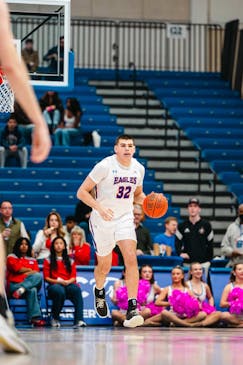
The 2021 implementation of NIL rules also marked the first time athletes could return to their local community and host youth sports camps as individuals outside of their university. Julen Iturbe, a sophomore forward on the men’s basketball team, partners with DL6 Sports, an athletics facility in his home state of South Carolina.


“It’s an awesome opportunity just to see a smile on [the young athletes’] faces and then trying to help them learn from someone who’s been there and been in their shoes,” Iturbe said.
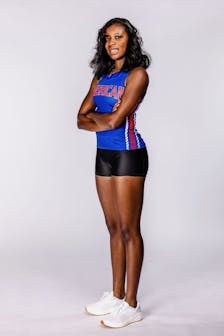
DeHof also shared that the new legislation allows athletes to explore and develop their personal brand off the field or court through partnerships aligning with their core values. For Tamara Dorval, a sophomore on the track and field team, this means collaborating with brands that uplift women and promote practicing good habits.
“I wanted to make sure the company that I wear on my body represents how I go out in the world and how I want people to perceive me and get my influence,” Dorval said.
Her experiences as a brand ambassador parlay into her small business, Tips with T, where she offers skill and fitness training for athletes of all ages. Her goal is to create a safer, more empowering alternative to predatory fitness programs. In addition to serving as the business’ head coach, she manages administrative operations and social media presence and has grown her business through referrals and word-of-mouth.
Both athletes said that by working with brands they learned to take charge and try new things, a sentiment that applies to athletics, academics and professional life. As a marketing major, Iturbe drew parallels to the business world when offering advice for other college athletes interested in NIL deals.
“Put yourself out there as much as possible,” Iturbe said. “You’ll never know what it’ll do for you down the line.”
This article was edited by Matthias Jaylen Sandoval, Jack Stashower and Walker Whalen. Copy editing done by Avery Grossman, Mattie Lupo and Ryan Sieve.
