
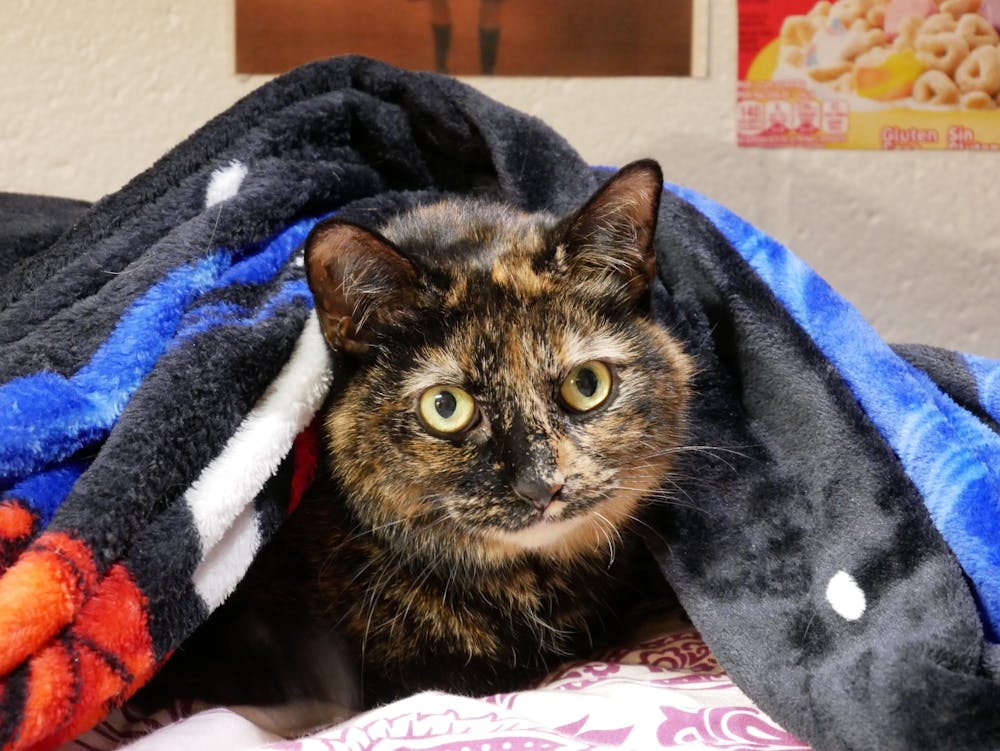
On any given morning in the residence halls, a cat watches students cross the quad from a window and a dog waits by the door for a walk before class.
Inside several dorm rooms, food bowls and carriers sit beside twin XL beds and wooden desks — signs that some students are not living alone. Many students have registered both service and emotional support animals through the American University’s accommodation process, which allows them to live on campus in residence halls.
For the students who rely on them, these animals are essential to their daily routines and treatment plans, bringing responsibility and comfort into the dorms.
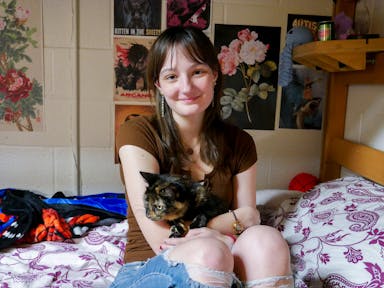
When freshman Maggie Beeson had her roommate leave to study abroad for the semester, she said the dorm room felt particularly empty.
“I have trouble being alone, so I figured it would be easier if I had an animal,” Beeson said. “I had been thinking about it for a while, and I’ve grown up with animals my whole life, so it felt right to bring my cat along.”
Beeson brought her cat, Lizzie, to campus as an emotional support animal. After completing the required accommodation process, Lizzie officially moved into Anderson Residence Hall.
“I play with her, drag a string around the room for her to chase, and put out her wet food,” Beeson said. “She explores the room and watches people in the LAC Quad from the window. If you’re walking in that area, you’re probably being watched.”


Beeson’s day now begins and ends with her cat; Lizzie sleeps at her feet and sometimes crawls under the covers in the early morning. Between classes, Beeson stops by her room to check on Lizzie, and this small visit often greatly shifts her mood.
“I’ll think I’m doing fine, and then I come back and give her a kiss or cuddle her,” she said. “And I feel so much better. Even if I don’t think I need it, it helps.”
However, the presence of an ESA makes situations like fire alarms particularly stressful. If in the building, Beeson has to put Lizzie into a carrier and guide her through the chaotic crowded hallways. But moments like these also show that Lizzie is not just in the dorms for fun.
“They are fun, but the main reason they’re there is for treatment. It took a lot of effort to bring Lizzie with me,” Beeson said. “It’s not easy, and it’s not that I just have her because I want her. She has a job.”
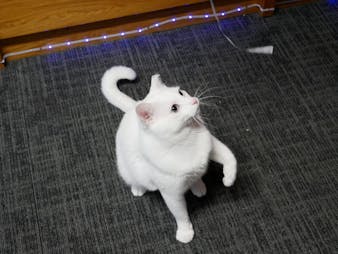
Ny’Asia Lindsay, a freshman in the School of Communication, brought her dog, Bear, to live with her in Hughes Hall for similar reasons.
For students like Lindsay, ESAs are sources of connection, making starting conversations and building relationships easier. While these animals are there to support their owners, they also invite discussion, bringing interactions that might not have happened otherwise.
“I love being able to say my dog is here,” Lindsay said. “People associate me with him, and I love that. Everyone asks, ‘Where’s Bear?’ He’s not just my dog, he’s part of how people know me. We’re a package deal.”
For Emaya Rush, a freshman in the College of Arts and Sciences, bringing her cat Sage across the country from her home in Arizona was crucial in making her transition easier. Rush said it was more than worth the effort to go through the process to get the ESA certification.
“It’s not always easy to get the accommodation, but if you know it will help your transition, it’s important to stick through the process,” Rush said. “The last thing you want is to try to follow the ‘normal’ path and end up hurting your college experience because you didn’t choose what works best for you.”
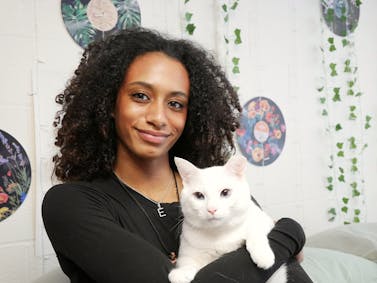
Rush said she also had to learn balance and not rely on Sage for everything, building independence and confidence with his support. She even put his name on her door, something that sparks conversations in the hallway, and introduced her to neighbors she might not have otherwise met.
“It also helps other people who couldn’t bring their pets or who have lost pets,” Rush said. “People tell me all the time that they miss their cat, and seeing him makes them happy. That’s really rewarding.”
Across campus, emotional support animals are more than just pets. For Beeson, it means always having a companion awaiting her at the end of the day. For Lindsay, it means having her best friend nearby in times of stress. For Rush, it means having a piece of home from across the country. Together, these animals have become integral in their humans’ routines, quietly helping them navigate life in college.
This article was edited by Olive Redd, Payton Anderson and Walker Whalen. Copy editing done by Avery Grossman, Mattie Lupo and Ava Stuzin.
features@theeagleonline.com
