
From the Newsstands: This article appeared in The Eagle’s December 2025 print edition which can be viewed here.
With AU’s ambitious goal to achieve zero waste by 2030, students and staff take everyday actions that make sustainability a commitment rather than a buzzword.
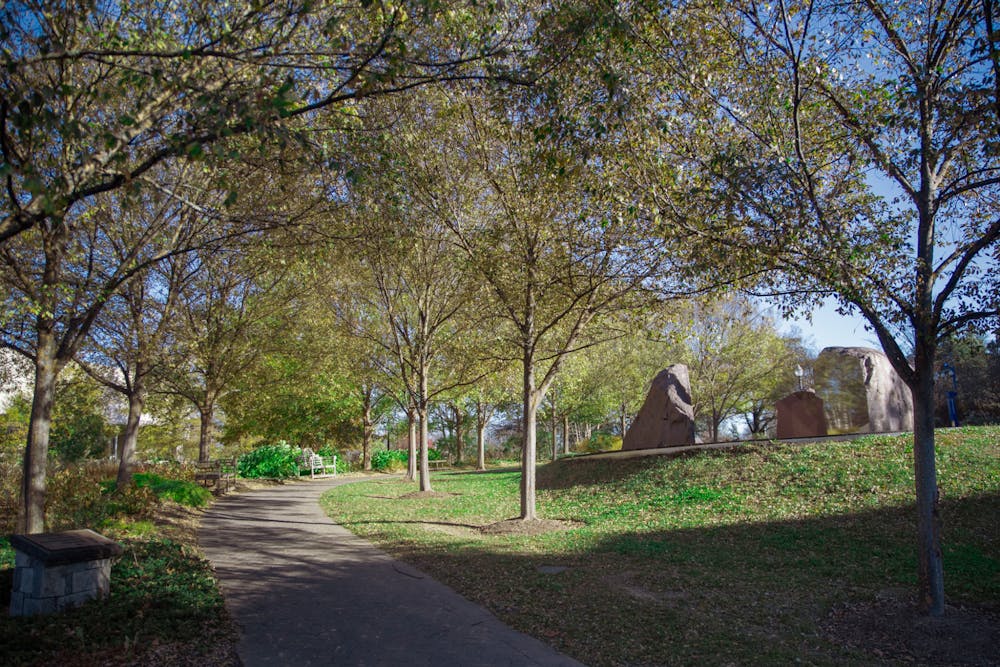
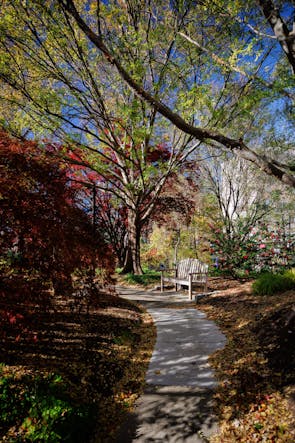
AU’s gardening class is cultivating a hands-on relationship with sustainability by engaging in eco-friendly practices.

“The best way to nurture your relationship with the Earth and Mother Nature is to start a garden,” Sky Chaus said, the course’s teaching assistant and a senior in the College of Arts and Sciences.
Chaus said experiential learning shifts students’ perspectives toward seeing sustainability as an ongoing practice rooted in everyday choices.
“They come to class happy and enthusiastic about their plants growing,” they said. “They’re sharing knowledge, building community, and thinking about sustainability in new ways.”
The class covers composting, waste diversion and the differences between industrial and backyard composting — key considerations for reducing waste.


“We talk about what is and isn’t compostable, and why the University can compost certain materials while the community garden can’t,” Chaus said. “It helps students understand what zero waste actually looks like in practice.”
Every week, students grow edible and medicinal crops, preserve seeds and manage soil quality. The social aspects of agriculture, including food security and foraging, are also discussed.
“The garden is a beautiful symbol of resilience,” Chaus said. “It lets students reconnect with food — learning how to grow produce in small spaces and understanding the work that goes into it.”
Sustainability at AU also takes root in familiar locations, like The Bridge Cafe.
“All of our cups, lids, and straws are compostable, and we use glass milk containers instead of plastic,” said Dalvin Perez, a senior in the Kogod School of Business and assistant general manager at the cafe. “We compost our coffee grounds, tea leaves and even hibiscus from our drinks.”
However, Perez said there is limited awareness of the University’s zero-waste goal.
“I learned about the 2030 goal through my introduction to nutrition class,” he said. “For students who aren’t taking sustainability-focused courses, that knowledge might never reach them.”
He said faculty engagement plays a critical role in encouraging sustainable behavior. Perez credited AU’s Green Teaching Program, which honors professors who embrace practices like energy conservation and paperless classrooms.
“More professors should follow that model. It makes sustainability part of the learning experience,” Perez said.
Both Chaus and Perez said that long-term progress requires a cultural shift centered on accessibility, education and student engagement.
“Accessibility to knowledge and funds is one of the biggest barriers,” Chaus said. “It can be difficult for students to make environmentally friendly choices when sustainable options cost more or when they don’t have the information. That’s why classes like ours matter — they make sustainability tangible.”
This article was edited by Conor Gillingham, Jessica Ackerman and Walker Whalen. Copy editing done by Sabine Kanter-Huchting, Arin Burrell, Paige Caron and Andrew Kummeth.
