

From the Newsstands: This article appeared in The Eagle’s December 2025 print edition which can be viewed here.
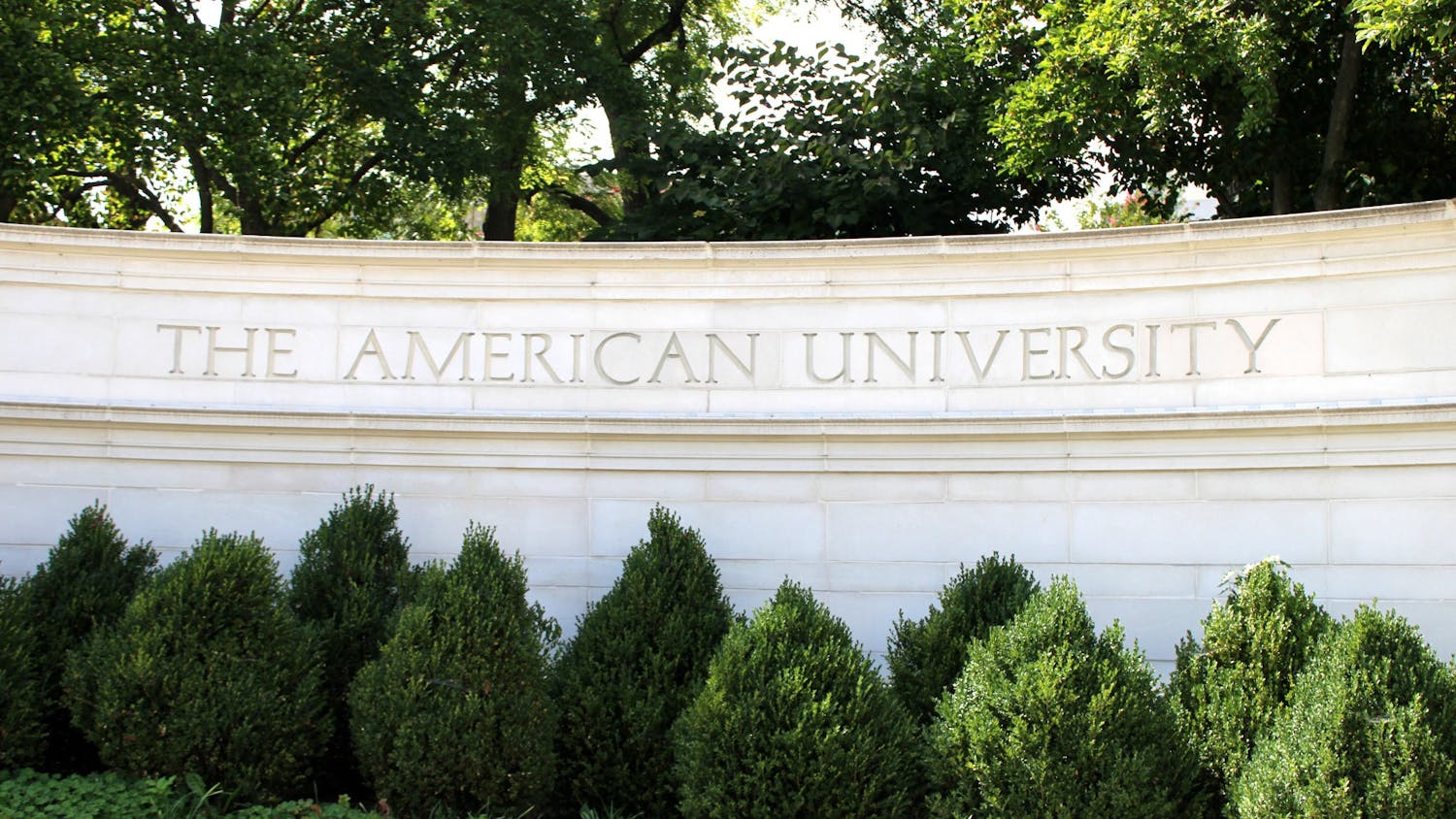
American University, a relatively small school in NCAA Division I athletics, uses different methods when creating non-conference schedules for each sport.
Some teams at American have packed their schedules playing the top teams in the country, while others play against comparable opponents.
I looked at some of American’s teams’ most recent schedules and spoke with coaches to gain insight into how their team crafts their schedule.
“Some people use scheduling to get as many wins as you possibly can, like cupcakes and you just want to feel good about now,” men’s basketball associate head coach Nate Bollinger said.
While this is a good method for teams that just want to stay high in the rankings before conference play, this is not a good idea for teams like American because it does not give players a challenge before the games become harder during the playoff push. For a smaller school like American to compete in basketball games in March, they have to build themselves up against stronger competition earlier in the season.
In basketball, one of the biggest sports for the NCAA, bigger teams often pay other teams to play them. American uses this as an opportunity to play games against some of the best competition in the country and to raise money for the AU Athletic Department.
Last season, the Eagles traveled to the University of North Carolina for a game against the Tar Heels, which has won multiple national championships and plays in one of the largest, most well-renowned arenas in the country. According to the Fayetteville Reporter, UNC typically pays opponents like American upwards of $80,000. This money helps the team fund the men’s basketball as well as other programs within athletics and the University.


American once again scheduled competitive games this upcoming season against Virginia, Wake Forest and Rutgers. These can be quite the experience for players as they get to compete in substantial environments, but they often lose by a considerable amount.
“We know the percentages aren’t on our side, but you want to win every game,” Bollinger said.
Sometimes, a team can schedule a mix of competition, but it does not always reflect in results. This was evident on the women’s basketball team last season, which finished with no wins in non-conference play and only one win in Patriot League play.
https://datawrapper.dwcdn.net/KHi9x/1/
Other times, teams will consistently schedule some of the best teams in the country. This is the case with American’s field hockey team, which plays many of the country’s top teams every season. In the fall of 2025, they faced four top-25 ranked teams: Duke, University of Pennsylvania, James Madison and Virginia Commonwealth University.
“We’re always trying to play teams from Power Four conferences, teams that have been in the NCAA tournament the previous season, and put ourselves on a trajectory so that we can compete not only against the best, but be ready for postseason play,” head field hockey coach Steve Jennings said.
https://datawrapper.dwcdn.net/S0nKG/4/
I believe this is the most effective method of scheduling because of the results that it has produced over the past few decades. Since the Eagles joined the Patriot League in 2001, field hockey has won 16 regular-season championships, more than any team at American except for volleyball (17).
Another fun part of scheduling can be travel. As a D1 athletics school, some teams get the privilege of traveling to places far from D.C. Just this fall, the American men’s soccer team traveled over 2,000 miles to play two games in Southern California. Fans can travel along with these teams for the fun experience as well.
https://datawrapper.dwcdn.net/pnJiS/4/
Teams can also learn from each other and themselves when creating their schedules. It’s about figuring out what works best for the team. Some programs at American are set in their ways because of previous success, while others clearly have some work to do.
Athletes deserve to play in competitive games to grow, and fans deserve to watch their teams succeed against those top teams. This is partially because those games can be more entertaining in the moment, but also because they can create opportunities to put American on the national stage.
AU Athletics must ensure that their teams create their schedules wisely, and if the results are not successful, then changes are needed.
Now, I am not writing this to criticize any teams. In today’s world of college sports, it has become increasingly difficult to schedule games based on any previous knowledge you have on an opponent.
The increasing use of the transfer portal makes creating a schedule even more difficult. A team may not look anything like it has in previous years, especially with bigger schools.
At American, teams should continue to utilize the surrounding competition, both the good and the bad. While the occasional long-distance trip can be good, a school with a smaller budget can get a lot out of local competition. In the D.C. and Baltimore areas alone, there are 11 other D1 schools that AU teams can compete against.
“We try to be very strategic about where we’re playing games,” Bollinger said.
Most, if not all, teams at American do a good job creating their schedules with the resources they are given. They just need to figure out how to get consistently positive results from it once it’s time for Patriot League play.
This article was edited by Matthias Jaylen Sandoval, Connor Sturniolo, Penelope Jennings and Walker Whalen. Copy editing done by Sabine Kanter-Huchting, Avery Grossman, Audrey Smith and Ava Stuzin. Fact-checking done by Aidan Crowe.
