
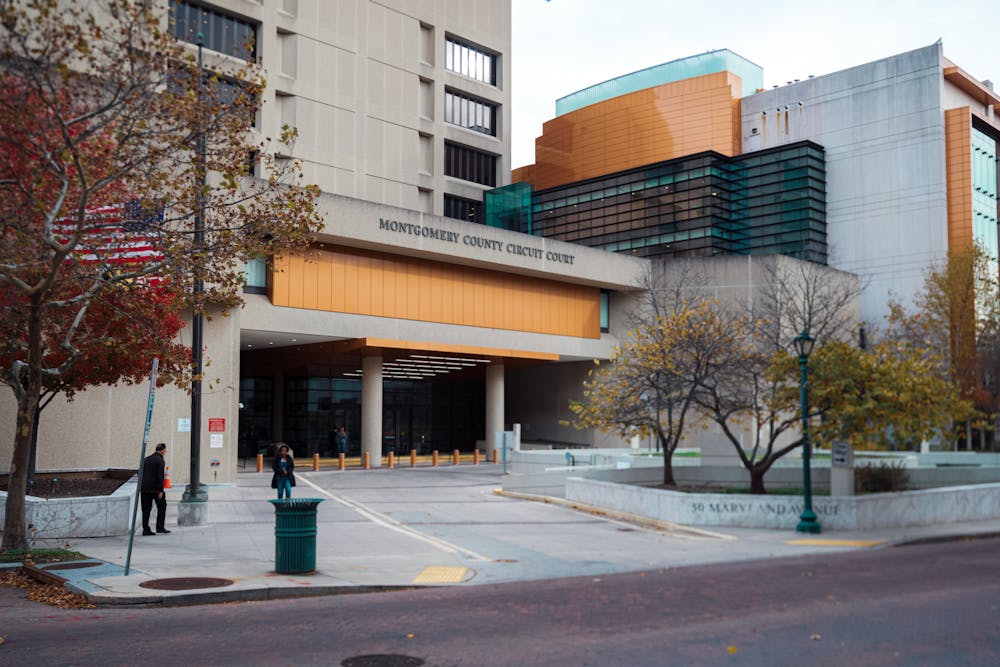
On Oct. 25, 2010, a beloved member of the American University community was found beaten and asphyxiated in her Bethesda home. The death of Professor Sue Ann Marcum left the AU community, and all who knew her, in shock and deep mourning.
For 15 years, the case remained unsolved.
But now, a man accused of her murder was convicted of second-degree murder on Oct. 30 by a Montgomery County jury. He faces 35 years in prison and will be sentenced on Feb. 6, 2026.
Sue Ann Marcum was a “strong-willed woman”
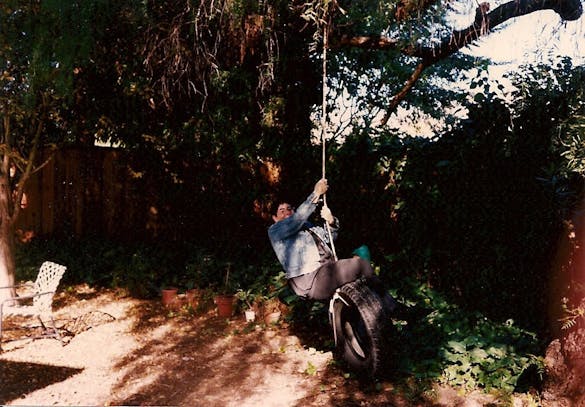
Marcum was not only a professor at the Kogod School of Business, but also a three-time recipient of the Kogod Professor of the Year Award. She was an AU alumna, earning her bachelor’s degree in 1979 and a master’s degree in taxation in 1987.
In 2006, Marcum established a scholarship to support AU alumni pursuing a master’s degree in accounting. The scholarship was renamed in 2010 in honor of Marcum. The Sue Marcum Scholarship Fund is still active today.
During the trial, Marcum’s friends and family took the stand, many describing her as a “strong-willed woman,” according to the defense’s closing arguments.



“My sister was a very giving free spirit. It’s not that she went off wildly on her own. It’s that she was her own person,” Alan Marcum, Sue Marcum’s brother, said in an interview with The Eagle.
Alan was 15 months older than Sue and recalled their age gap feeling like an eternity as a child. The two ran in very different social circles and had diverging interests. Despite this, one thing was for certain in Alan and Sue’s lives: their family was always close.
“We didn’t just have family dinners once a week. We didn’t just have family dinners basically every night. We had family lunches,” Alan said. “The four of us were together for breakfast, lunch, and dinner every day, sitting in the kitchen of our home.”
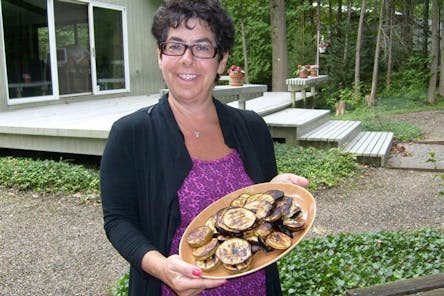
Alan recalled a time when Sue flew out from her home in the D.C. area to meet him in Silicon Valley, California, after his internship, and they drove across the entire country together. For 60 hours, it was just the two of them in the close quarters of Alan’s car — and as he remembers it, they got along very well the whole way.
Not only was Sue close with her family, but she also formed strong connections with her students at AU.
“She cared about the students in her class as students, as learners, as people, and invested herself into their lives,” Alan said. “She cared about what they were learning and who they were becoming, and helped them become better people. And that was her superpower as a teacher.”
In 2010, The Eagle published an obituary for Marcum that included reflections and quotes from her friends, family, students and colleagues. Marcum was beloved by the AU community and many shared anecdotes of her passion for teaching in her obituary.
“She just loved what she did so much, and it was such an inspiration for everybody, even if you don’t like accounting, it just gives you some point of how to look at life and how to take things that you like to the next level,” Einar Bar Shira, a former Kogod student, said in the obituary.
“Jorge Landeros is a master manipulator”
Jorge Landeros lived in Guadalajara, Mexico, under the alias “León Ferrara” and evaded authorities for over a decade, according to El País Mexico. Throughout this time, Landeros was a yoga instructor and on the FBI’s “Most Wanted List.”
Landeros met Marcum in 2001 and became her Spanish tutor, then her yoga instructor and eventually a close friend and at times, a romantic partner.
Marcum and Landeros had known each other for nine years before her murder in 2010. During that time, Marcum became “enamored” with Landeros, according to the prosecution. He was in many ways her “guiding light” and “confidant.”
In 2008, Marcum and Landeros planned to do day trading, which involves buying and selling securities such as stocks within the same day. Marcum invested $250,000 into a joint investment account. Later, Landeros was named a suspect in Marcum’s murder when the police discovered he was the sole beneficiary of a life insurance policy Marcum created.
The prosecution team — led by Senior Assistant State’s Attorney at Montgomery Country, Maryland, Debbie Feinstein, and Ryan Wechsler — argued that Landeros exploited Marcum’s kindness and love. Feinstein said that he used her for her finances and “when she had nothing left to give him, he killed her.”
During the trial, prosecutors presented evidence that showed Landeros had spent years taking money from Marcum and putting it into a brokerage account he controlled.
Marcum sent various emails to Landeros expressing the stress about her financial situation.
“While I knew I took a risk in getting into the investments with you, I always had faith that you would give it your best effort,” Marcum said in one of her emails.
On Nov. 3, 2008, she wrote, “I’m making myself sick trying to figure out how to pay the mortgage,” referring to the financial strain she faced in keeping up with payments on her home in Vienna, Virginia.
Marcum expressed confusion in these emails regarding why Landeros was unwilling to help her in her financial situation. By April 2009, emails show she had grown even more distressed, writing that she wanted “out of the whole situation.”
In June 2009, Marcum began considering moving to Maryland and into the home where she was later murdered.
The Internal Revenue Service sent a letter to Marcum two months before the murder stating that she owed more than $15 million in taxes, $3 million of which were penalties. Prosecutors argued that this is what likely led to their encounter and the day of her murder.
“My sister was not a fool. She was intelligent, she was strong-willed and yet she fell for the scheme that was presented to her by the person who eventually murdered her,” Alan said. “Anyone can fall for something like that.”
Prosecutors told the jury that it will never be fully clear what happened that night, but in Feinstein's words, “we do know the defendant attacked Sue Marcum and then engaged in a cold, calculated cover-up.”
Oct. 25, 2010
There are two sharply contrasting versions of what unfolded on the night of Oct. 24, 2010 and the morning of Oct. 25 — one depicting a cold, carefully planned murder, the other suggesting a burglary that spiraled violently out of control.
Prosecutors said that on the night of Oct. 24, 2010, Landeros went to Marcum’s home in Bethesda, where the two shared a drink before he struck her with a tequila bottle and then strangled her. After killing her, he allegedly ransacked the residence in an effort to make the crime appear to be a burglary gone wrong.
Conversely, the defense argued that Marcum's murder was the tragic result of a botched burglary. They maintained that Landeros had no involvement in the killing and emphasized that there was no evidence placing Landeros in Maryland on Oct. 25, 2010.
On the morning of Oct. 25, 2010, Larry March, a friend and former boyfriend of Marcum, grew suspicious when she did not answer his calls. Normally, Marcum would serve as his “wake-up call” each morning, but on this day, there was silence.
After repeated attempts to reach her, he decided to drive to her home in Maryland and use a spare key to enter. It was then that he discovered Marcum dead at the bottom of her staircase and called 911.
As for Landeros, he fled to Mexico, where he holds dual citizenship and changed his name. He spent 12 years on the run but was arrested and brought back to the United States in December 2022.
The trial
The trial commenced on Oct. 21, 2025 and concluded on Oct. 30, 2025. Over the course of the proceedings, more than two dozen witnesses took the stand, while jurors engaged in lengthy deliberations amid tense courtroom arguments.
Throughout the proceedings, Landeros maintained his plea of not guilty, and the defense spent those days attempting to prevent the prosecution from proving guilt beyond a reasonable doubt.
Among those who testified was Sgt. Lawrence Haley of the Montgomery County Police Department. Haley was the lead detective for the case from October 2010 to the beginning of January 2011.
He told the jury that at first, all evidence suggested a burglary. It wasn’t until he discovered that Landeros was Marcum’s sole beneficiary that his view began to shift. When DNA results later linked Landeros to the scene, Haley said he began to look more closely into him.
Electronics, including a television and laptops, were missing from Marcum’s home. Marcum’s car was also stolen and later found in D.C., being driven by 18-year-old DeAndrew Hamlin. However, none of the stolen items were found inside the vehicle when police recovered it and investigators did not find Hamlin’s DNA in the home.
Multiple forensic experts took the stand as well. They discussed how DNA evidence had confirmed that Landeros had been inside Marcum’s home and left traces of DNA on her fingernails and throughout the residence.
Meghan Brennan, one of Landeros’ defense attorney’s, said that even though Landeros’ DNA was found at the scene, it does not mean that he was there the night of Oct. 24, 2010. DNA evidence does not specify the time or date that the DNA was transferred.
“It is offensive,” Brennan began in her closing remarks. “The state has had this case for 15 years and can’t get the facts right.”
Brennan was referring not only to what the defense described as a flawed investigation, but also to mistakes made during the prosecution’s closing argument.
In Feinstein’s summation, the State presented a slideshow that included incorrect figures about how much Marcum owed the IRS and mistakenly listed the date of her murder as Oct. 25, 2025 instead of 2010.
In the defense’s remarks, they repeatedly challenged Sgt. Haley and the homicide unit’s investigation. Brennan questioned why significant evidence was not collected and tested from the scene, including the hair and blood found on Marcum’s face and on the surrounding walls.
She emphasized that, in Sgt. Haley’s testimony, he acknowledged this, saying, “I would have preferred to collect it.”
Ultimately, after almost eight hours of deliberation, the evidence presented led the jury to declare Landeros guilty of second-degree murder, despite the prosecution’s push for a first-degree charge.

Alan attended the entire trial with his family by his side. He said that the second-degree conviction was disappointing but not surprising. Despite his disappointment, he commended the prosecution for the evidence and story they uncovered and shared to the jury.
“It was heartwarming to have my family there for support. I was very pleased to see the kind of interest that was shown in the case,” Alan said. “I'm very glad that he won't be able to do this to anyone else ever again, or at least not for a very long time.”
Alan hopes his sister will be remembered in two ways — both as a loving, dedicated teacher, friend and sister, and also as a “cautionary tale.”
“Despite how strong and how intelligent and how independent she was, she still became enamored of this person and was susceptible to his scheme,” Alan said.
This article was edited by Gabrielle McNamee, Abigail Hatting and Walker Whalen. Copy editing done by Sabine Kanter-Huchting, Emma Brown, Avery Grossman, Audrey Smith and Ava Stuzin. Fact-checking done by Aidan Crowe.
