
On the streets of D.C., many people experiencing homelessness don’t know where to find shelters, which is a problem compounded by public ignorance and shrinking nonprofit funding that threatens essential services.
According to CNN, about 15 percent of D.C.’s homeless population live on the streets. Nonprofit leaders suggest safety and shelter regulations are what keep them away from seeking temporary or permanent housing.
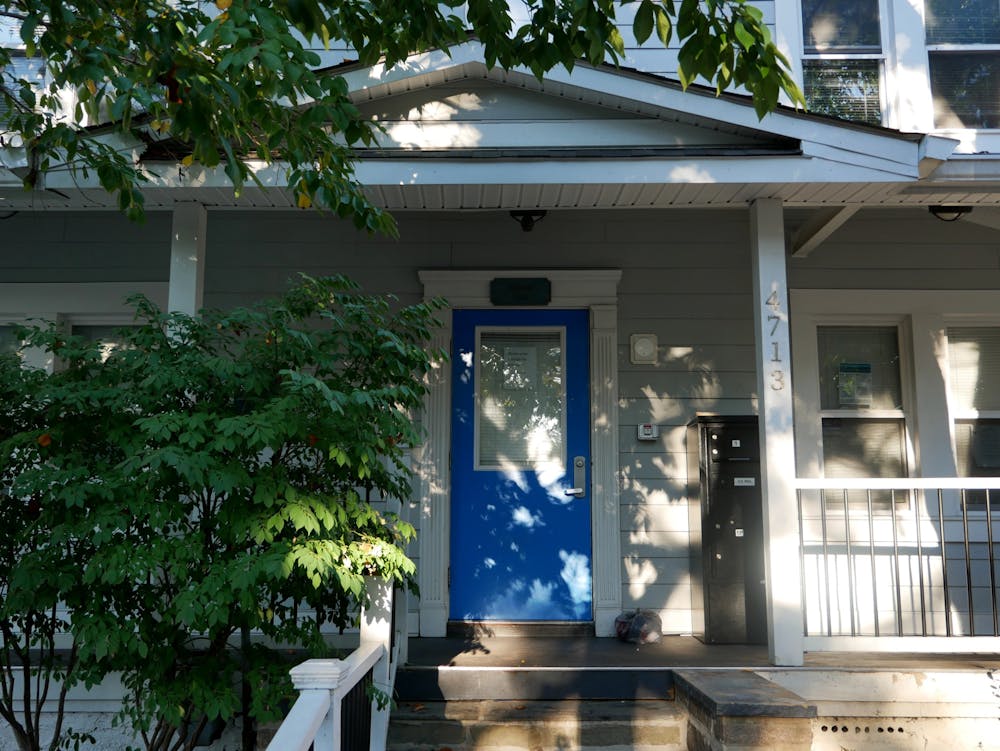
Sophia Palmer, house manager for the Coalition for the Homeless at the Park Road Transitional Program in Columbia Heights, said many homeless people in D.C. are unaware of where to access resources such as shelters.
Many people experiencing homelessness avoid shelters due to safety concerns and fears for their personal belongings. Recent nonprofit budget cuts have further strained shelters, limiting the services they can provide.
Northwest D.C. is home to multiple universities, the White House and many national monuments. Despite the area's housing institutions and national landmarks, this diverse area of the capital hosts a considerable number of homeless people, according to Palmer.
“There’s a lot of homeless people in this area, from Adams Morgan to Georgia Avenue,” Palmer said. “It’s a lot. They’re sleeping at Metro Stations.”
The Point-In-Time count is an annual one-night count of sheltered and unsheltered people experiencing homelessness, carried out by volunteers and staff who survey participants to collect data on their demographics and needs. The 2025 PIT count was conducted on Jan. 29.
The count concluded that, while most of the country saw an increase in their homeless population, D.C.’s homeless population decreased by 9 percent from 2024, with about 5,100 people in shelters or on the street. D.C. also recorded an 18.1 percent decline in family homelessness and a 4.5 percent decrease among unaccompanied individuals.

Despite the decline in D.C.’s homeless population, individuals who work at homeless shelters still consider it a crisis as many people remain on the street.
Palmer argued that American society is not in a position to judge the homeless population because they navigate life with different mindsets.
“It’s not that they don’t want to be in a shelter, it’s the mind frame of ‘someone might steal your items’ or [having to follow] rules and regulations,” Palmer said. “So they would rather be on the street than inside a facility.”
Palmer described this as a form of “chronic homelessness,” in which people have lived on the streets for so long that they no longer want to enter a facility.
Chris Rutledge, the vice president of external affairs for Friendship Place, a housing service provider, discussed a similar concept regarding safety and comfort in shelters.
“People just don’t feel safe in a large congregate facility,” Rutledge said. “[For] [people] who are on the street, there’s just a degree of safety they feel in that world.”
Paula Essex, case manager of the Catholic Charities Archdiocese of Washington said a percentage of homeless individuals don’t seek out shelters because of how they have been treated, but there is also a lack of knowledge.
“It’s just the way some of them have been treated; they prefer to be out on the street,” Essex said. “And then you probably have a population that doesn’t even know about shelters such as [Mt. Carmel House].”
Mt. Carmel House is a permanent housing program for single women with 21 individual rooms. She said they tend to be at full occupancy all the time.
Rutledge argued that shelters themselves bear much of the responsibility for making homeless people feel comfortable enough to seek their services. He added that choosing whether to enter a shelter is ultimately a “very personal decision.”
Essex echoed Rutledge’s sentiments and emphasized the importance of compassionate outreach for bringing more people into shelters.
“There’s not enough empathy taken into consideration,” Essex said. “They have had a lot of trauma in their lives since they were young.”
Concerns about safety and protecting personal belongings are not the only factors that keep homeless people from using shelters.
“The waitlist is very long and a lot of stuff is getting cut, a lot of programs are getting cut,” Palmer said.
Palmer added that, in her eyes, the recent U.S. government shutdown, which began on Oct. 1 due to ongoing disagreements over funding of government services, has only worsened this preexisting issue.
“This is a nonprofit organization, we get hit first,” Palmer said. “Before the shutdown, there were budget cuts in housing. There were budget cuts in federal agencies. The budget cuts really hurt… it hurts our clients.”
Essex said their organization has heard rumors about losing their grant from the U.S. Department of Housing and Urban Development. While she said funding is secure for 2025, the upcoming years for shelters could be vulnerable.
Palmer said homelessness is a “revolving door,” especially when much of the nation's homeless population navigates to D.C.
Many homeless people come to D.C. seeking help after experiencing a disaster, Palmer said, which can strain resources available to permanent residents.
“They’re a permanent resident here and they’re trying to work their way in the system to make it, but then outsiders could come and get a full ride,” Palmer said. “That kind of pushes back what’s already going on in D.C. [and] another reason why people are stuck in programs.”
This article is part of our 2025 contribution to the D.C. Homeless Crisis Reporting Project in collaboration with other local newsrooms. The collective works will be published throughout the week at bit.ly/DCHCRP.
This article was edited by Gabrielle McNamee, Abigail Hatting and Walker Whalen. Copy editing done by Sabine Kanter-Huchting, Arin Burrell, Andrew Kummeth, Ariana Kavoossi and Ryan Sieve. Fact checking done by Aidan Crowe.
