
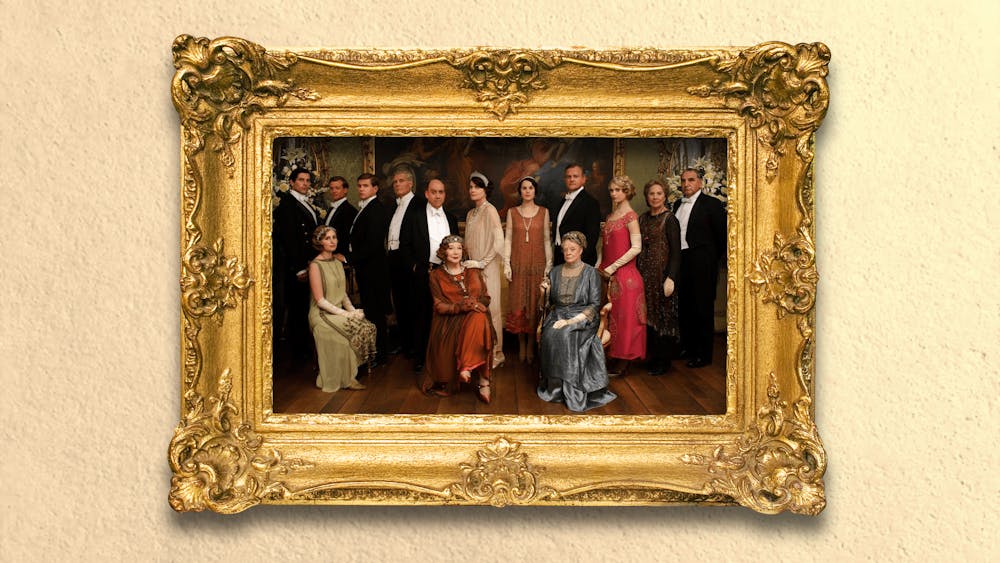
From “Sherlock” and “Doctor Who” to “Downton Abbey,” British dramas have been a staple of entertainment in the U.S. for decades. “Downton Abbey,” with its charming accents, blend of drama and dry English humour, and elegant costume design, speaks for itself.
The show, which aired in late 2009 on Carnival, follows the Crawleys, an aristocratic English family. The patriarch of the family, Robert (Hugh Bonneville), a.k.a. Lord Grantham, runs the estate. The rest of the main ensemble consists of his wife, Cora (Elizabeth McGovern); his mother, Violet (Maggie Smith); his eldest daughter, Mary (Michelle Dockery); and his loyal head butler, Mr. Carson (Jim Carter). The cast is rounded out by the many staff of the estate, including cooks, maids, servants, and butlers.
After six television seasons, five Christmas specials, and now three films, the Crawleys’ saga came to one grand conclusion on Sept. 12. The final film is set in 1930, nearly 18 years after the first season takes place. With an aging cast and characters, it was inevitable that the vast network of storylines would come to a close.
“The Grand Finale” focuses on change and how to cope with it in a family where order and tradition had usually set a precedent. The movie follows three main storylines: Mary’s recent and abrupt divorce, the Crawleys’ declining wealth, and the arrival of Cora’s American brother, Harold (Paul Giamatti).
Downton has always excelled in costumes and cinematography. Here, the added budget of a feature film is used in all the right places. The period-accurate dresses ground the film in its late 1920s and ‘30s reinterpretation. This, paired with the use of both grandiose and intimate filming styles, makes one feel simultaneously a part of the family while also a visitor — as if the camera is inviting viewers to admire the sprawling beauty of the Jacobethan architecture of the Abbey.
The film begins with Harold and his charismatic assistant/financial advisor, Gus Sambrook (Alessandro Nivola), arriving in England to discuss finances with the Crawleys. Since Cora and Harold hail from immense American wealth, and Harold now oversees all the finances, there is a great deal of bookkeeping to manage. What starts as a celebration of siblings reuniting becomes a confession as Harold reveals he has lost nearly half of his family's wealth through mismanagement.
With regards to Mary, divorce was a strict taboo and a stain on one's social status at this time in upper-class English society. Mary, now faced with universal blacklisting from her closest friends and peers, is surrounded by social shame and scandal. However, she stands strong to her morals and defends her decision to love whom she pleases.
While Mary’s divorce plagues the English elite’s consciousness, another pressing issue is the Crawleys’ financial problems. With the family losing money, as well as the global economy of the 1930s suffering severely, the future seems dark. In most cases, “Downton Abbey” takes a plotline like this and uses it more as a metaphor for our moral characters than as an important plot development. Downton and the Crawleys are starting to fall behind in a world that is moving faster than they are. As England modernizes, the typical traditions, while still present, are fading from necessity into performativity.


Through Mary, Robert, and Cora’s storylines, we are shown people realizing that they must forge their own paths forward. By letting go of what they know, whether it be romantic or economic status, they truly become their own people.
The movie is made all the more special by Dame Maggie Smith, who passed away in September 2024 and devoted her life to acting. Her wit and wry smile shone in “Downton Abbey,” having appeared in every single television episode. May she rest in peace.
This article was edited by Alfie Pritchard, Jessica Ackerman, and Walker Whalen. Copy editing done by Sabine Kanter-Huchting, Arin Burrell, Paige Caron, Ariana Kavoossi, Andrew Kummeth, and Ryan Sieve.
