
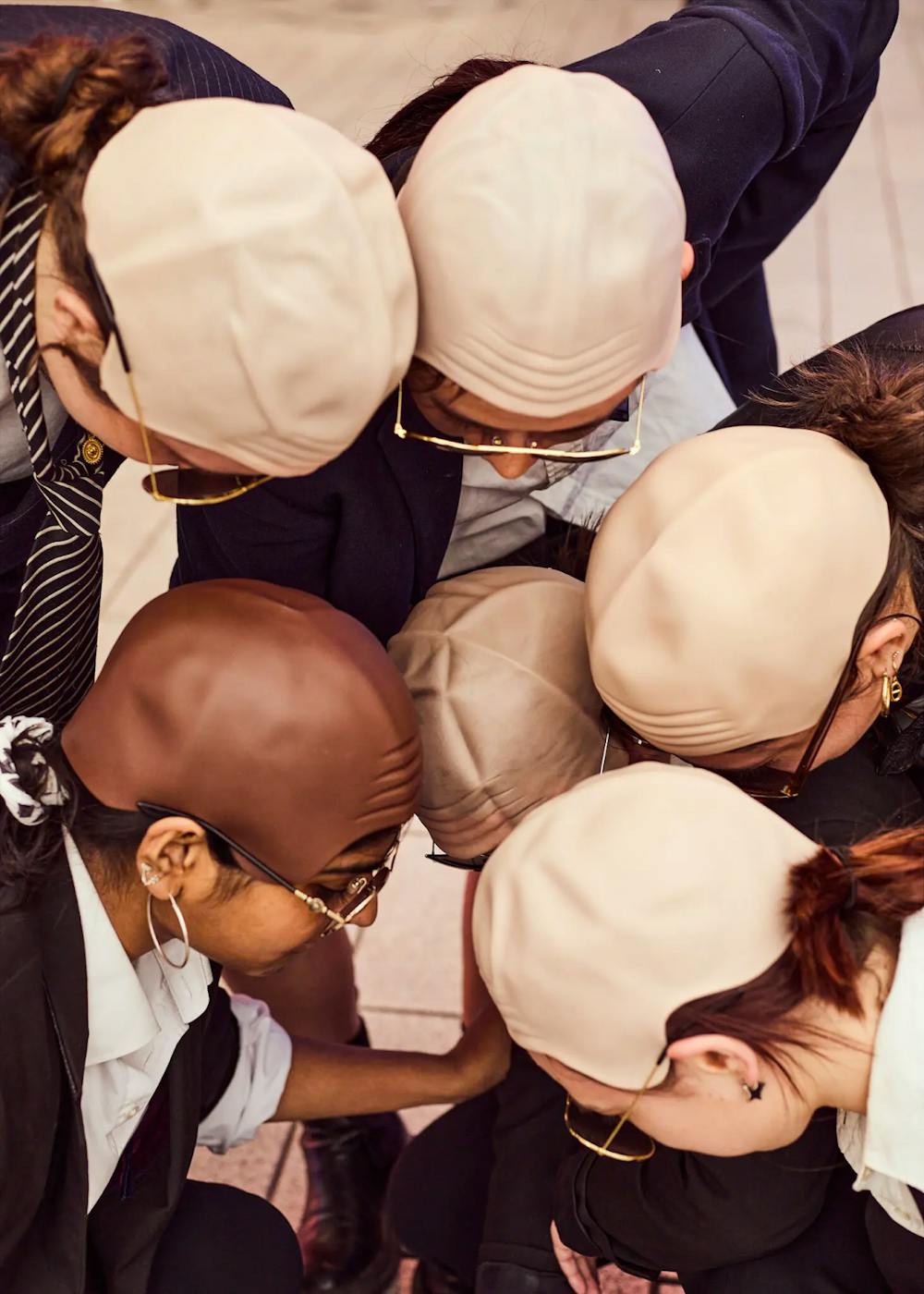
Pitbull fans flocked to his concerts this June dressed exactly like him: bald caps, black sunglasses, pressed white shirts, with black pants and a suit jacket to match. While this is a more extreme example, concert fashion styled to match the artist has recently grown in popularity — amplified by social media. It’s not just Pitbull, Taylor Swift’s Eras Tour became a living time capsule, with fans dressing up for each of her eras and Tate McRae fans dressing up in micro shorts and jerseys to match her concert style.
(Credit: New York Times)
Dressing up for concerts isn’t new — whether in head-to-toe merch or full cosplay, it has always been one of the best parts of a concert. But, tours like Beyoncé’s “Cowboy Carter,” Taylor Swift’s “Eras” and Sabrina Carpenter’s “Short n’ Sweet” have brands and artists alike capitalizing on the concert outfit.
Fast fashion brands and other major companies are also capitalizing on this phenomenon. Levi’s and Nike collaborate directly with artists, while mass-market companies like Shein and Fashion Nova produce dupes, tour outfits and artist merch.
While music has always had an influence on fashion, we are seeing the concert, or rather the music-artist tour, influencing fashion in unprecedented ways.
Take Tate McRae’s sporty-chic concert aesthetic. What began as a quirky performance look, unique to McRae’s upbringing in a sports household, has now turned into an unofficial concert uniform that her fans follow to a T. This is further encouraged now that she sells jerseys on her merch site and reposts videos of fans wearing them.
Ilani Diaz, a junior in the College of Arts and Sciences, said, “I went to a Tyler [The Creator] concert in April, and it was pretty much just cream as the central thing, so like everybody had different concepts, but K-Pop? Y’all got it down.”
Diaz recently attended the K-pop group Tomorrow x Together’s show at Capital One Arena on Sept. 28. During K-pop concerts, artists will often wear the merch they’re selling at the concert to show it off and encourage people to buy it.


Artists today, like companies, are selling more merchandise than before streaming culture took over. They’re selling an experience, a lifestyle and a feeling. It’s a feeling you can only get when you go to their concert dressed up like them, surrounded by hundreds doing the same.
The All Things Go Music Festival in Columbia, Maryland, marked the end of the summer music festival season. The festival relies on the idea of being “Boomfy’s Besties” throughout the weekend and fosters the close-knit community focused on women and LGBT musical acts.
Images posted on the All Things Go Instagram throughout the festival weekend included attendees’ outfits. Some focused on one headliner artist as their outfit inspiration, such as Noah Kahan, writing or stitching lyrics onto shirts or pants. There were also many who went with general alternative styles to fit the theme of the festival and many music genres of the event.
When asked about her general style for music festivals, Diaz offered this advice:
“A lot of music festivals are usually in the summer, right?” she said. “So it's about doing something that's comfortable, because you're going to be out there for hours. Wear shorts, a cute top and accessorize a lot to make up for the lack of clothes."
Coupled with the rise of social media and microtrends, fashion and music are continuously being blurred with personal expression, community and the artists themselves. It’s often difficult to tell where individual style and expression ends and where current fashion trends begin, but a community-based aesthetic in fashion and artist-based subcultures are blossoming at concerts.
When it comes to balancing an artist’s concert themes and Diaz’s personal style, she added that it’s “a mix of both, I definitely keep the concept and like the theme in mind when I'm picking an outfit, but I also try to make it personal and fit myself into it too.”
This article was edited by Sydney Hemmer, Jessica Ackerman. Copy editing done by Sabine Kanter-Huchting, Arin Burrell, Andrew Kummeth, Ariana Kavoossi and Ryan Sieve. Fact-checking done by Aidan Crowe.
