
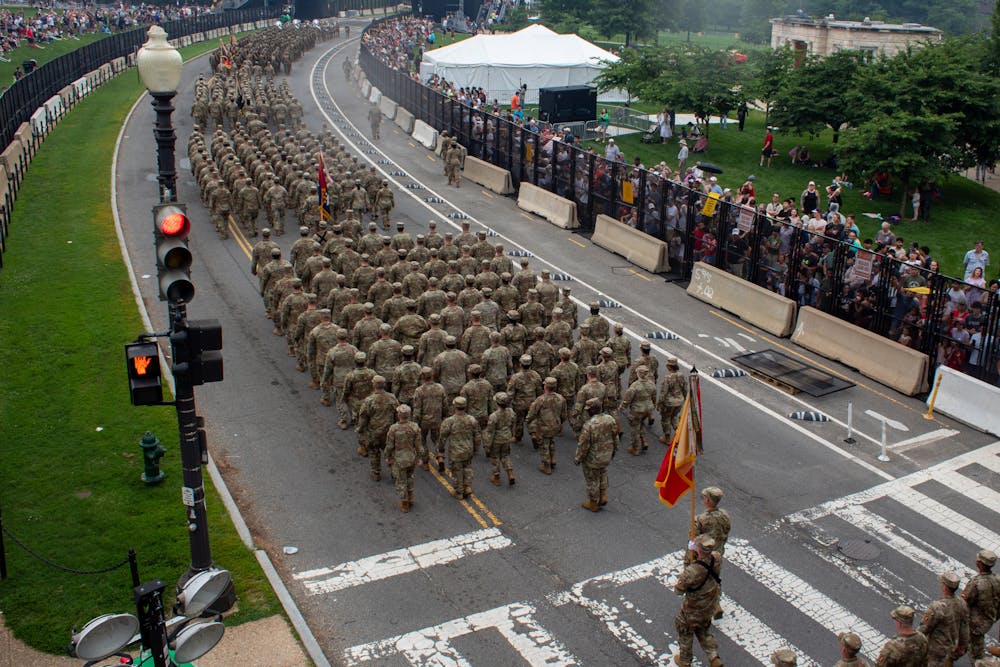
On a day meant to celebrate service and sacrifice, the streets of the nation’s capital became a battleground of symbols, slogans and ideology.
The United States Army’s 250th anniversary was marked by a military parade that stirred both pride and protest, drew thousands to D.C. and triggered ripple effects across the country.
More than 6,000 soldiers, 128 armored vehicles and a coordinated flyover of military aircrafts thundered down Constitution Avenue. Marching bands echoed patriotic hymns while ceremonial units performed drills before packed stands. Fireworks exploded above the Ellipse to close a tightly choreographed spectacle designed to honor the nation’s fighting forces.
Below the surface of salutes and celebration, dissent simmered. For some, the parade honored duty and devotion, while others saw it as the militarization of civic life and a growing political cult of personality.
“It’s a small circle of ultra-wealthy men, often from tech and finance, who have outsized influence over how our economy works, how our politics are shaped, and how decisions are made. They’re unelected, unaccountable and dangerously close to absolute power,” said Lindsey Kameron, a feminist and human rights advocate from Northern Virginia.
Capitol Police arrested around 60 demonstrators on June 13 after a protest near the U.S. Capitol escalated into a tense standoff just ahead of the Army’s 250th Anniversary Parade.
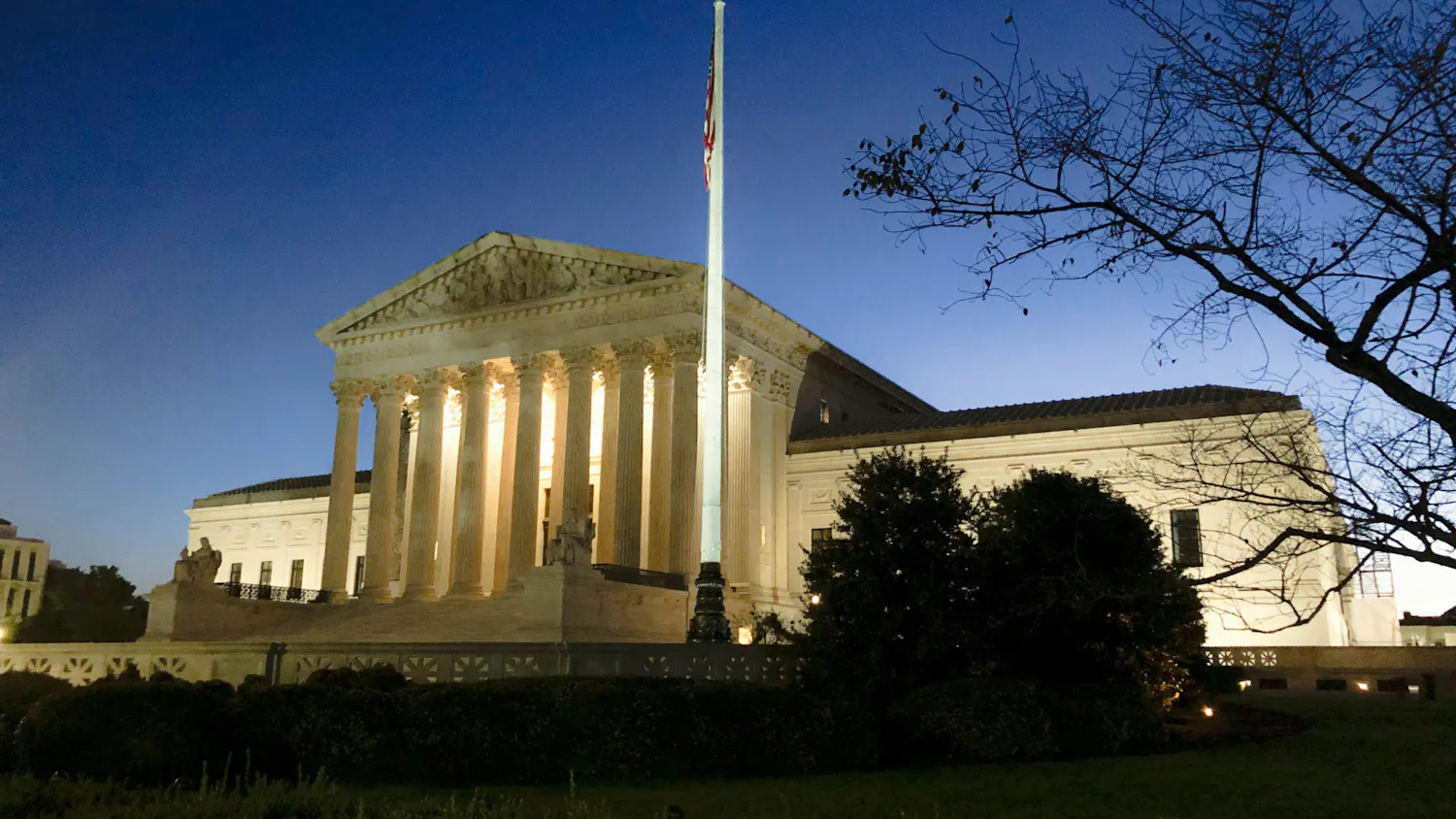
The group — made up of veterans, activists and military families — breached a barricade near the Capitol Rotunda steps following a rally at the Supreme Court, demanding that parade funds be redirected to healthcare and housing.
Among those detained was an 87-year-old Vietnam veteran using a walker, whose arrest sparked outrage and viral attention. Charges included unlawful demonstration, crossing police lines and resisting arrest.

A stage set for conflict
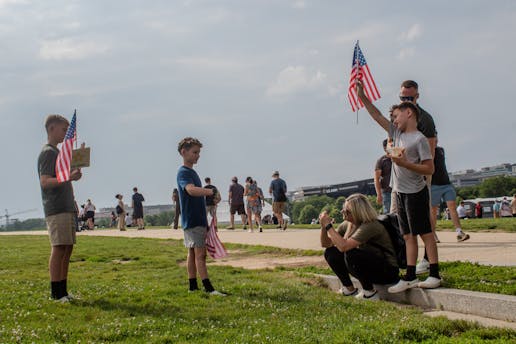
June 14 was chosen deliberately for the parade as it is Flag Day, the anniversary of the adoption of the stars and stripes.
It was also the birthday of President Donald Trump, who viewed the event from a specially constructed stand near the White House. The convergence of these themes — military honor, national symbolism and presidential visibility — ignited both fervor and fury.
“This is a celebration of America’s greatness,” Trump told the assembled crowd. “Other countries showcase their strength. Why shouldn’t we?”
That message resonated with many in attendance, including Chris Cotone, a senior associate at DAGER Technology, LLC from Leesburg, Virginia. A veteran himself, Catone expressed admiration for the event.
“Every meaningful celebration has a cost,” he said. “This one honors the sacrifice behind our freedom. That’s worth recognizing.”
Colby Outlaw, a Gen Z attendee from Tampa, Florida, stood nearby wearing a bright red “Make America Great Again” cap, unapologetic in his admiration for Trump.
“The men who sacrificed and died for this country paved the way for someone like me to stand here today,” he said. “I’m not ashamed of who I support or what I believe in.”
For Outlaw, the parade represented more than policy or partisanship; it was a symbol of deep gratitude and generational pride.
Thunder and backlash
The parade’s estimated $45 million cost became a lightning rod for criticism. While defenders called it an investment in morale and heritage, opponents said the funding could have gone to veteran care, housing and healthcare.
The “No Kings” movement had at least 1,500 demonstrations scheduled in response to the parade, with crowds chanting “Democracy, not dictatorship” and “Power to the people.” D.C. saw its share of dissent as protesters lined the streets not far from the parade route.
Waving a sign that read “No Kings and No Broligarchy,” Kameron gave voice to a new and biting critique of modern power structures.
“Broligarchy is the new oligarchy — only now it’s tech billionaires in hoodies instead of suits,” Kameron told a reporter from The Eagle.
Kameron cited the close relationship between Donald Trump and Elon Musk as a case in point.
“The bro bond between Trump and Musk is a shining example of this unchecked power structure,” she said. “They’re shaping narratives, policies, and public discourse in ways that cut out the average American. It’s corrosive to democracy.”
Veterans in resistance
Many of the sharpest criticisms came not from activists but from veterans.
Rob Riggott, an aircraft maintenance technician from Northern Virginia and a former service member, stood shoulder-to-shoulder with fellow veterans protesting near the National Mall.
“This isn’t about disrespecting service,” Riggott said. “This is about defending the integrity of that service. The military’s being used as a stage prop. Flag-waving without accountability isn’t patriotism — it’s pageantry.”
Riggott went further, pointing to the evolution of the U.S. Army since the Cold War.
He said the Army changed dramatically after the Soviet Union fell, shifting from a defined role in defending the nation and leading globally to being pulled into constant wars and symbolic political gestures.
“We’re not meant to serve politics,” he added, “And we shouldn’t be turned into a tool for it.”
Also present at the demonstrations was Kenneth Bristow, a 65-year-old Air Force veteran and constitutional advocate from South Carolina, who traveled to Washington to defend what he calls the nation’s “moral and civic foundation.”
Bristow, who served as an Air Force electrician from 1978 to 1982, stood holding a sign and offering criticism of both political parties.
“I’m not here for Trump or Biden — I’m here for the Constitution,” he said.
A self-taught engineer and inventor, Bristow has long advocated for systemic reform and innovation, but says red tape and discrimination have shut out veterans like him from opportunity.
He detailed how union restrictions in D.C. blocked him from working as an electrician even after military service, which he sees as emblematic of wider inequity.
“I gave my service, educated myself, and still found the door slammed shut,” Bristow said.
Jacquelyn Salas, a U.S. Army veteran from New Mexico, stood with other demonstrators near the route chanting and holding signs. Salas aimed the pro-Trump sentiment among parade participants, arguing that “real patriotism” must stand for equality and reject authoritarianism.
“I’m a real patriot,” Salas said. “Patriots don’t think with a fascist, narcissistic mindset. Patriots don’t cheer when the military is used to enforce immigration crackdowns.”
Salas held a sign reading “Draft dodgers don’t deserve a military parade,” accompanied by a depiction of Trump being punched by Wonder Woman. She expressed frustration that, despite voting for Kamala Harris in the 2024 election, Trump had returned to office, calling his second term “a shame to our democracy.”
Economic pain vs. public pageantry
Like Kameron and Riggott, Lorien MacAuley, an Agriculture and Sustainability Specialist from Montgomery County, Maryland, arrived armed with a sign and a purpose.
“This isn’t just about the tanks. It’s about who’s struggling and who’s benefiting,” she said. “While military hardware rolls through D.C., millions of Americans are choosing between paying rent and putting food on the table. How can we talk about national pride when basic dignity is out of reach for so many?” MacAuley said.
Security across the district was intense. Thousands of federal agents, surveillance drones, anti-scale fencing and tightly controlled checkpoints sealed much of the downtown core. Access was limited, and sections near the Washington Monument — originally expected to draw over 200,000 attendees — remained surprisingly empty.
MacAuley criticized the administration’s economic agenda as skewed in favor of corporations and the elite.
“What I see is the government serving the very top — cutting taxes for billionaires while working people can’t afford childcare or healthcare,” MacAuley said. “Parading military power while ignoring human need is not patriotism. It’s neglect dressed in red, white, and blue.”
Maryland resident and former healthcare worker Franklin Calderon shared MacAuley’s anger. Wearing a T-shirt and holding a sign emblazoned with anti-Trump slogans, Calderon said the administration’s economic and immigration policies had upended lives, including his own.
“I was a licensed healthcare worker until I got laid off,” he said. “It’s not just healthcare — people across industries are losing jobs under this administration. And then they come out here to celebrate?”
Calderon called the timing of the parade “insulting,” citing ongoing immigration enforcement and job losses.
“This isn’t patriotism,” he said. “It’s propaganda.”
D.C. resident Robert Pittman and a friend stood among the crowd holding signs reading “Loyal to the Constitution” and “Immigrants Make America Great.” Pittman said he attended the event to deliver a message to parade attendees who he views as overlooking serious constitutional concerns.
“Immigrants are the backbone of this economy,” Pittman told The Eagle. “They bring life to our communities, and what Trump is doing not only harms that — it disrespects the Constitution itself.”
Pittman accused the Trump administration of undermining economic stability and American values through immigration policies he called “anti-democratic.” He said his goal was to remind participants that true patriotism includes defending the rights of all people, regardless of citizenship status.
Support from service members
In contrast, active-duty soldier Matthew Williamson attended the parade in uniform and welcomed the festive atmosphere. He described the event as a much-needed opportunity for unity.
“With everything happening in the world, it was good to see people come together and celebrate the Army’s history,” Williamson said. “This day reminds us of our shared service and sacrifice, and that matters now more than ever.”
Abdullah Muhammad stood firm in his convictions as he marched alongside his 11-year-old son during the celebration.
A military veteran and longtime resident of the D.C. metropolitan area, Muhammad attended the parade not only to commemorate the Army’s historic milestone, but to spend quality time with his son on the eve of Father’s Day.
Wearing an American flag and Army graphic shirt, a matching cap and an American flag pin, he beamed with pride and described the moment as “a teaching opportunity” grounded in tradition, personal values and love of country.
“I love this country. I served this country. And I’m raising my son to do the same,” said Muhammad, who works for Lindsay Roofing Services and Repair, a contracting firm operating in D.C., Maryland and Virginia.
Muhammad said he supports the U.S. Immigration and Customs Enforcement and argued that the nation’s economy is being strained by both legal and illegal immigration.
“I know some say immigrants strengthen the economy, but the way I see it, people born here are being overlooked while others get benefits they haven’t earned,” he said.
He acknowledged that his views may be unpopular in some circles, especially as a Black single father, but said that doesn’t deter him.
“Being Black doesn’t mean I have to think one way. I think for myself — and I teach my son to do the same,” Muhammad said.
Muhammad said he voted for Trump in 2024, citing promises to secure the border and empower ICE to carry out immigration enforcement.
As flags waved and fighter jets soared overhead, Muhammad and his son stood side-by-side, their presence a personal testament to pride, patriotism and the complexities of identity in modern America.
“This is our home,” he said. “And we’re going to honor it — together.”
This article was edited by Gabrielle McNamee, Neil Lazurus, Abigail Hatting and Walker Whalen. Copy editing done by Sabine Kanter-Huchting, Emma Brown and Ariana Kavoossi.
