
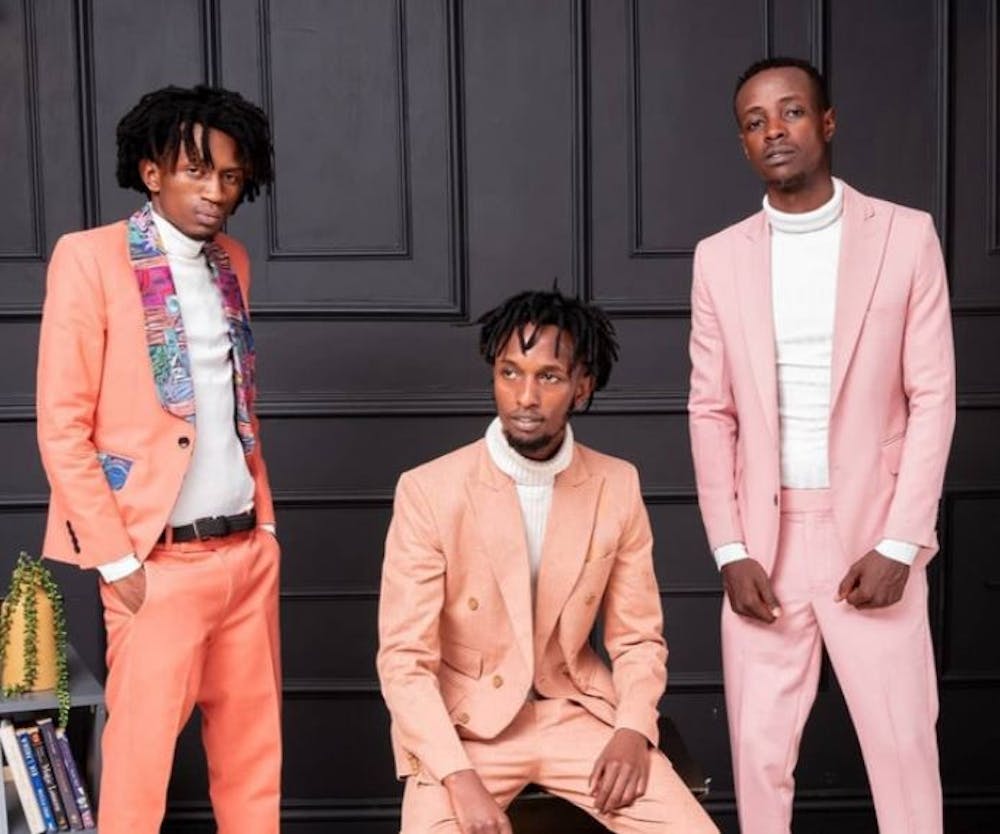
Nairobi, Kenya, also known as the “City in the Sun,” is the home to what can be considered the love child of hip-hop and dancehall music.
The lively beats and, at times, outrageous lyrics of Gengetone can be heard blasting everywhere from the raucous matatus — public minibuses — that line the streets to Nairobi's Electric Avenue, a stretch teeming with bars and clubs.
Origins: From Genge to Gengetone
Gengetone is inspired by the ‘Genge’ genre that was popular during the late ‘90s and early 2000s. This period in Kenyan history saw a burst of fresh and new ideas emerge on the nation’s music scene, ultimately producing what is arguably the best era for Kenya's music.
During this golden era, the legendary rapper and radio presenter Nonini, often referred to as “The Godfather,” campaigned for the name “genge,” slang for a mass group of people, to refer to the style of music that was coming out of the country.
Alongside Nonini, other pioneers of the ‘genge’ genre include Jua Cali and producers like Clemo, who popularized the term ‘genge’ that also refers to the ordinary working-class youth. Since its inception, the genre has been a force aimed at bringing people together, especially in a country often divided along tribal and class lines.
After being adopted by the younger generation of music artists in Kenya, the genre is experiencing a somewhat unexpected comeback; gengetone has risen to the top of people’s playlists in the country.
Controversy and significance


During the late 2010s, the new gengetone was created after being popularized by artists like Ethic Entertainment, Boondocks Gang and Sailors 254, who each rose to fame following controversial breakout songs that were quite sexually explicit.
While the songs in the genre are notorious for their explicit language, they also comment on the societal issues everyday Kenyans face. This was particularly significant in 2024, after a period of civil unrest erupted and protests occurred across the country in response to government dissatisfaction.
The song “Anguka Nayo,” meaning 'drop with it’ in Swahili, is a perfect example of this. It became the theme song for struggle and for unity. Though the artists behind the song, a duo called Wadagliz, argue that it is not gengetone, it has widely been accepted as such.
Popular gengetone songs
During the early 2010s, songs like “Wamlambez,” by the Sailors and “Lamba Lolo,” by Ethic Entertainment brought the genre to life.
More recently, songs like “Anguka Nayo,” “Dundaing,” by King Kaka and “Sipangwingwi” by Exray have dominated the sound waves, both at home and for Kenyans in the diaspora.
Gengetone is more than a genre of music characterized by explicit language and suggestive lyrics: it is a movement.
This music is a way for the youth, particularly those who feel disempowered by difficult circumstances brought about either by social or political circumstances, to dictate their own lives. It offers a chance for them to reclaim an identity and language that is often looked down upon, and prove that it is something beautiful that they should be proud of.
This article was edited by Jessica Ackerman, Marina Zaczkiewicz and Walker Whalen. Copy editing done by Sabine Kanter-Huchting and Emma Brown.
