
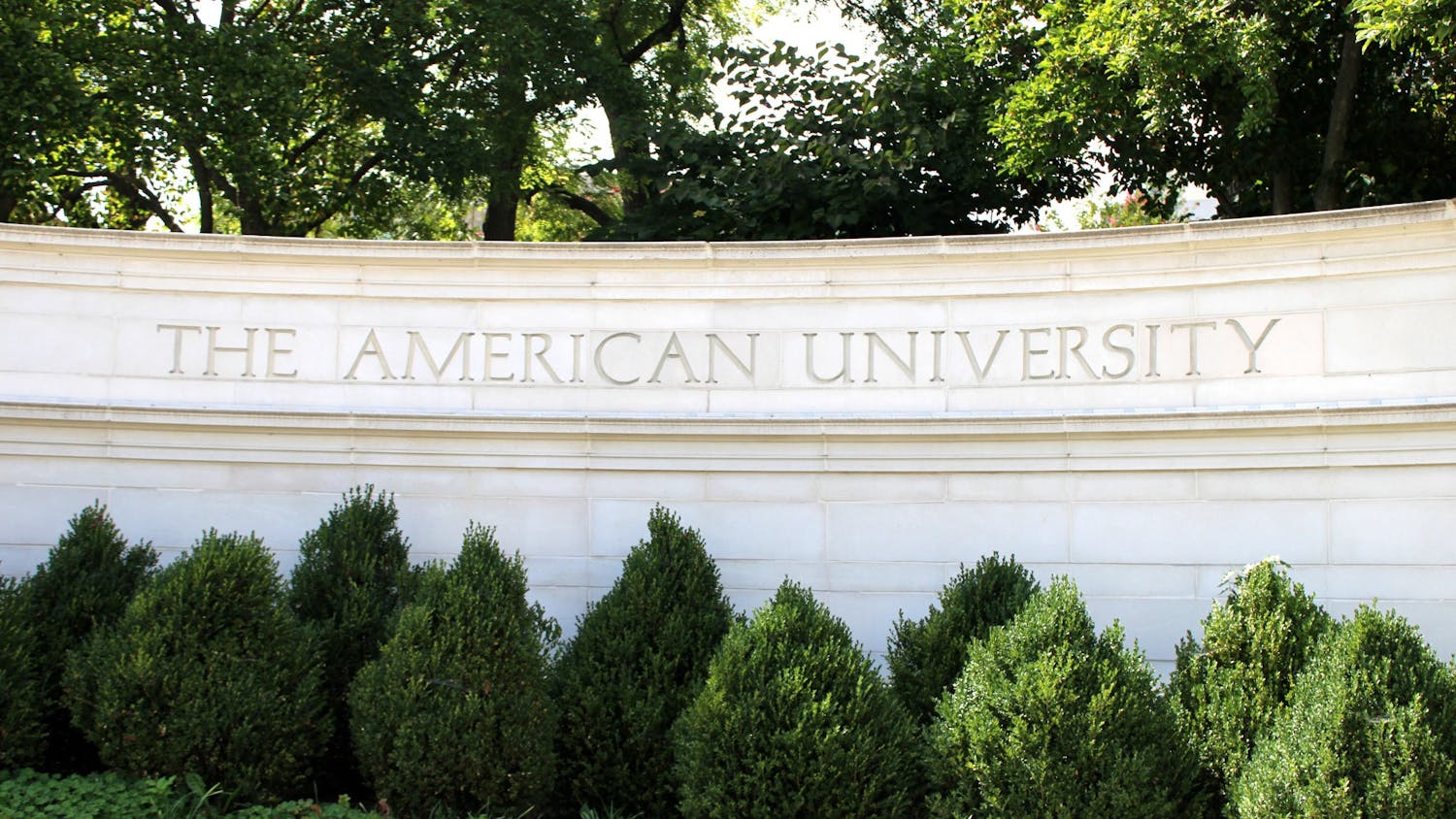
American University laid off around 40 staff in various schools and offices across the University in the first two weeks of June without notifying students or faculty, according to two people with direct knowledge of the layoffs.
The layoffs were largely due to a lower number of employees than expected taking part in the Voluntary Retirement Incentive Program, meaning more positions needed to be cut to meet the University’s spending goals, according to one person briefed on the situation. AU announced in May that 123 employees took the offer. Some faculty and staff opted to defer their retirement by one year under the terms of the VRIP.
The two people, who were not laid off, spoke to The Eagle under the condition of anonymity because they were not authorized to publicly discuss the layoffs, which the University described as a “reorganization” of its workforce.
The Eagle confirmed that departments affected by the layoffs include, but may not be limited to, the Center for Teaching, Research and Learning; University Advancement; Housing and Residence Life; Undergraduate Education and Academic Student Services; the School of Communication; and the School of Public Affairs.
AU has not announced this round of layoffs, but Vice President, Chief Financial Officer and Treasurer Bronté Burleigh-Jones said in December 2024 there could be “some streamlining of our workforce.” In a June 20 email to the community discussing “workforce alignment efforts,” AU President Jonathan Alger said, “There are no immediate new actions or plans.”
Vice President and Chief Communications Officer Matt Bennett applauded the 2026 budget’s “more than $80 million in revenue enhancements and cost savings” in a statement to The Eagle. Bennett declined to share details about the positions and offices affected, citing privacy concerns.
“All other cost savings and revenue opportunities were exhausted before this action and the affected positions were kept to the smallest possible number because of the hard work across the community in the budget process,” Bennett said.
John Bracht, an associate biology professor and president of AU’s chapter of the American Association of University Professors, said the layoffs are “shrouded in mystery” for many community members.

“We are just trying to find out what happened,” Bracht said. “I mean, it’s just crazy how much happened in the dark.”
About 20 of the laid-off employees who were unionized with SEIU Local 500 received 45 days of pay in lieu of advance notice of termination and were placed on a “recall list” for 12 months, where they can be placed in a vacant position, according to an email from the Office of Human Resources that was reviewed by The Eagle and details the terms of the separation agreement.
According to AU Staff Union Organizing Co-chair Eleanor Sciannella, some staff union members laid off have already been placed in vacant positions.
The University will also pay up to $1,500 per employee for “outplacement services” from the HR firm Lee Hecht Harrison, which helps laid-off employees find new work. Employees could also turn down outplacement and instead take a cash payment of $1,500, the email said.
The VRIP offered long-time faculty and staff additional compensation if they chose to retire at the end of the 2025 school year. Of the 123 employees who chose to take the VRIP, 99 opted to depart May 30, Burleigh-Jones said in a May 1 email to the AU community. An unspecified number of employees left May 2 and others are deferring their retirement to May 2026.
Shed Siliman, who was laid off from CTRL, said she and other staff union members heard “through the grapevine” on June 2 that limited layoffs were happening to both unionized and non-unionized staff.
When Siliman received an email the next morning for a Zoom meeting with Deputy Provost and Dean of Faculty Monica Jackson and Vice Provost for Academic Administration Prita Patel, she knew she had been laid off. The meeting was about three minutes long, she said, and felt like an uninterrupted script. They also told Silliman access to her AU accounts would be shut off immediately.
“That’s when I cut in. And I was like when or how do I turn my stuff in? They didn’t have an answer,” Silliman said. “They said, ask employee relations. And then they went back to reading.”
After that, Siliman said, Jackson and Patel finished and quickly left the meeting.
“They didn’t wait for me to say bye,” Siliman said.
Siliman said the layoffs felt “dehumanizing and denigrating” to staff after several years of time, energy and care dedicated to AU, especially with how valued CTRL’s work was by the University community.
“We’re all PhDs except our supervisor,” Siliman said. “We’re all experts in our fields. We like what we do. It’s just like a shame to see the center … to be dismissed in three minutes.”
The layoffs happened at a time when multiple staff were away from campus, or even out of the country on approved vacation time, according to Siliman.
Mary Catherine Stoumbos, a former teaching and learning specialist at CTRL, said she landed in Chicago for a layover while on a long flight back from vacation to a text, two voicemails and multiple emails.
One email requested a Zoom meeting with Jackson, similar to the one Siliman received, Stoumbos said. The next email, sent shortly after, told Stoumbos her position was eliminated and her access to University accounts had been removed. She said there was no attempt by her supervisors to talk to her after she landed.
“Because they couldn't reach [me] for the meeting, they just decided to send [me] an email and call it a day,” Stoumbos said. “[...] It was really bad, and they're totally heartless for doing it this way.”
Stoumbos is still employed with the University as an adjunct professional lecturer in the Department of Performing Arts.
With access to her University accounts completely removed after the elimination of her CTRL position, she cannot access her teaching and research materials for the adjunct position the University confirmed she still has — including sensitive data for research being done with professors at other universities.
When trying to regain access to her accounts, Stoumbos said, her department told her the University discusses whether there is a need to keep terminated employees’ accounts active — a process she says didn’t happen for her.
Two weeks and multiple referrals to other offices later, and Stoumbos says she is still locked out.
“It’s just totally disorientating,” Stoumbos said. “And [CTRL] worked so hard to get these programs we offer up and running, and we work really hard to follow all the evidence and connect with others in our field to make sure that we're providing the best services we can, and it was a big slap in the face to have none of that acknowledged.”
AAUP is currently circulating petitions to reinstate multiple eliminated positions, including those in CTRL. However, Bracht said he is pessimistic that the administration will change their minds.
Bracht said the problem with these layoffs is that the core mission of the University — the education and scholarship — is not the administration’s main concern.
“So when you get to a moment like this, or resources have to be allocated, I think unfortunately, the core mission takes the hit,” Bracht said. “I mean, the core mission is always under threat.”
Walker Whalen contributed reporting.
This article was edited by Cara Halford, Abigail Hatting and Walker Whalen. Copy editing done by Sabine Kanter-Huchting.
