
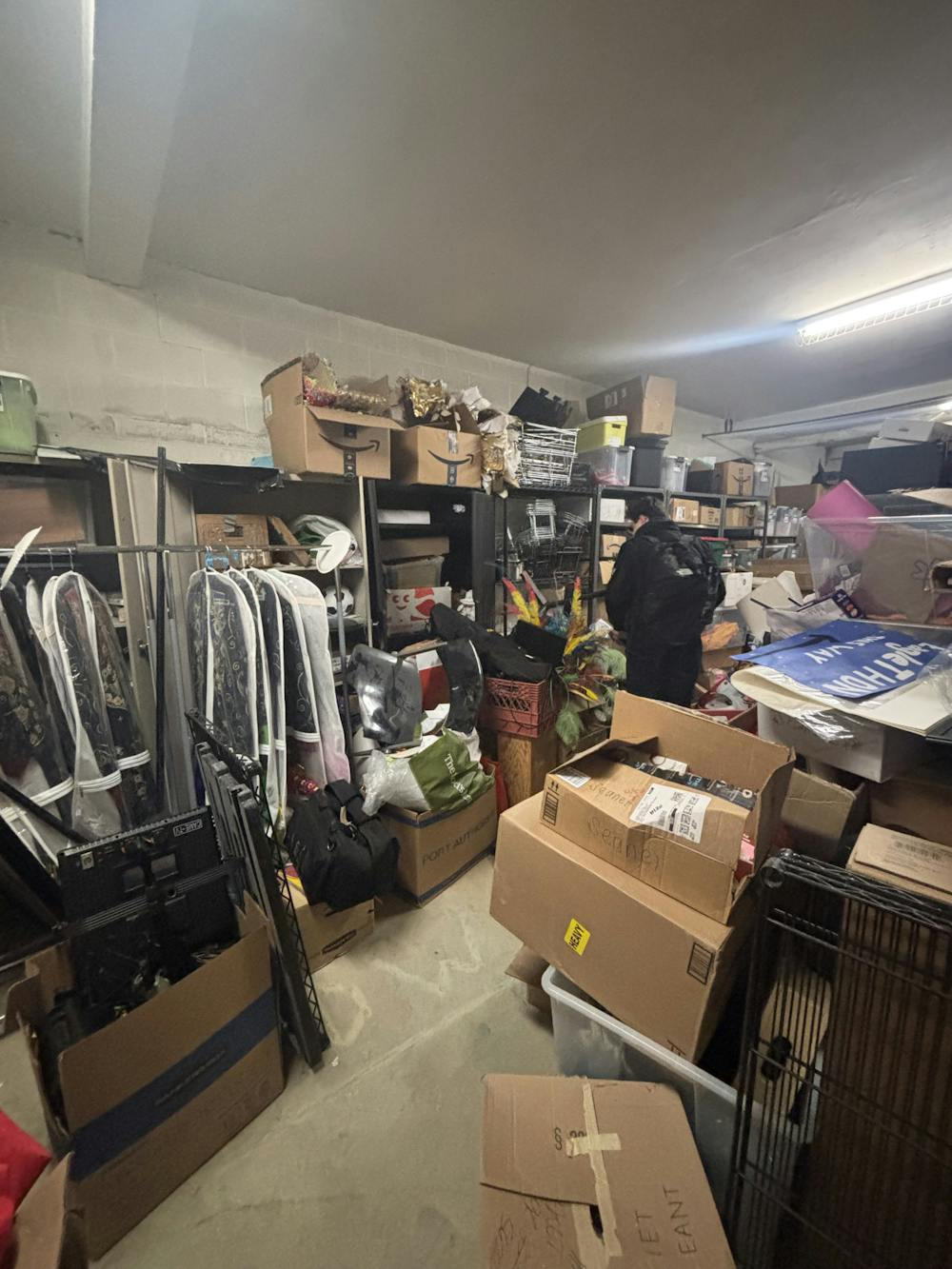
When Sofia Rodriguez attended a Project Move Out event on campus, she found items that did not belong there. An arts-and-crafts box with only stickers remaining labeled “Latinos En Acción” sat in the room, as well as a pop-up banner from Sister Sister, a group on campus that creates spaces of empowerment for Black women.
Some club leaders allege that the Center for Student Involvement lost supplies from the office’s multicultural closet during Mary Graydon Center renovations, causing students to express concerns over lack of communication, budget denials and canceled events.
As part of the new Student Thriving Complex under the Change Can’t Wait campaign, the second and third floors of MGC were set for renovations starting in November 2023. The new Student Engagement Commons were added to the third floor during construction, and the second floor includes event spaces and student activity offices.
Prior to renovations, all multicultural groups shared a space for their club supplies, which they dubbed “the multicultural closet.” Before the fall semester, CSI moved supplies from the multicultural closet into a storage unit, which is for all student organizations, because of the ongoing renovations. While many of the club supplies were labeled, student leaders returned to campus to discover their supplies missing.
The University’s Office of Planning & Project Management “hired professional movers to assist with relocating all second-floor occupants,” Assistant Vice President and Deputy Chief Communications Officer Elizabeth Deal said in an emailed statement to The Eagle. Deal did not respond to specific questions asked by The Eagle, but largely reiterated CSI’s Recognized Student Organization Manual.
“CSI communicated detailed information about moving logistics, available support options, and key deadlines, emphasizing that any items left behind would be subject to repurposing or disposal,” Deal said in the statement.
Rodriguez, a senior in the School of Public Affairs and president of Latinos En Acción, went back to the old multicultural closet last semester and found food, trays and merchandise left behind.
“It’s not even organized, like, ‘Oh this little sliver is for LEA’, and ‘This one’s for another club,’” Rodriguez said. “It’s wherever anything fits, put it.”


Disorganization
Abby Sommers, who graduated in fall 2024 and served as Adoptee Alliance’s former director of operations, also lost supplies during the transition, including a binder of information for the organization. When she tried to communicate the issue to CSI, a representative told her it was “out of their hands,” Sommers said.
After Sommers lost supplies housed in the storage unit, CSI told her that the budget was first-come, first-served.
“It makes my job harder, because I have to go back to our club and say, ‘Okay we can’t do this, this or this,’” Sommers said. “The precedents keep changing.”
According to JJ Dimino, the chair of AU Club Council, the budget for student organizations is based on availability. Each club consultant — students assigned to represent numerous recognized student clubs to the club council — has to vote and consider how much funding would be left and if a request is putting funding to good use.
“It would be impossible for us to reserve funds for an event in May when we’re making decisions in September,” Dimino said. “We are trying to be good stewards of the funds by looking over those requests meticulously.”
Dimino said that the storage unit became crowded because the MGC renovations forced the Student Media Board to store its supplies there, but that AUCC is currently working with CSI to get it organized.
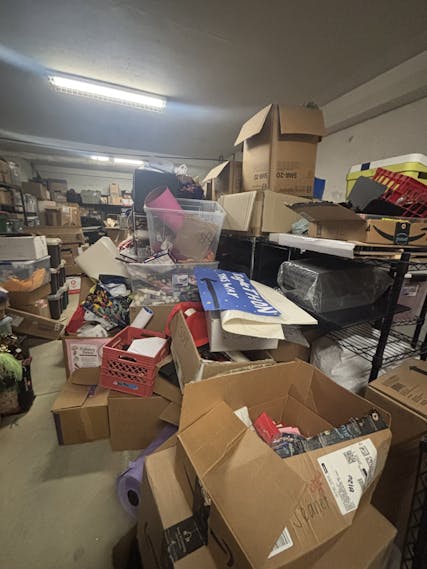
“I will be the first to say it’s a little bit of a disaster,” Dimino said. “It’s very messy, just like with all the renovations, more and more things are packed in [the AUCC storage unit].”
Cristian Benavidez, a senior in SPA and co-president of AU’s League of United Latin American Citizens, tried to propose a cleaning day for the storage unit. He made a budget request for cleaning supplies back in August, but it was denied because, according to Dimino in an email to Benavidez, specific organizations shouldn’t spend their funds towards a general purpose. Dimino asked what his team could do to solve the disorganization. Nothing has been done yet.
Benavidez said the storage unit is only open from 9 a.m. to 5 p.m., which makes it difficult to access supplies for events. In the old multicultural room, student representatives from each club were able to access the room at any time with their One Card.
“But nobody’s having events on campus between 9 to 5,” Benavidez said. “There’s been times where I’ve just dropped my stuff on the third floor near the storage unit, hoping that when I come back the next day, it’ll still be there.”
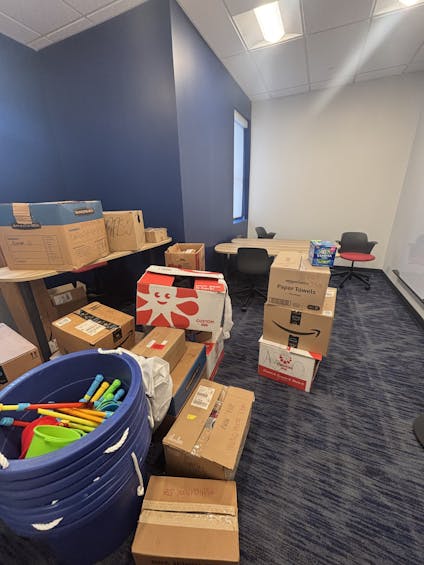
According to Benavidez, CSI has made some improvements, such as creating a multicultural collective space for organizations to hold meetings. Some organizations have used this space to keep their supplies instead of the storage unit because it’s more easily accessible.
Maya Vela, the assistant director for student involvement at CSI, sent an email to student leaders on April 25 informing them that the AUCC storage closet will be undergoing maintenance in the coming weeks. Due to the disorganization, she requested that all items students wish to save be labeled by May 2 with the organization name, the contents inside the box and the date.
“Anything not labeled by this deadline will be removed and disposed of,” Vela said in the email, encouraging students to reach out to CSI if they cannot label their items by the due date.
Budget Confusion
Students from multicultural organizations have also shared issues with getting budget requests approved because of the long waiting times and unclear guidelines for requests, forcing students to cancel or postpone planned events.
Anusha Mathur, a senior in SPA and co-president of Brave Spaces, an organization “of BIPoC students dedicated to building bridges across communities,” has struggled to get her budget requests approved because of these wait times and vague guidelines.
“There’s a lot of rules and regulations that we want to follow, but we’re not being told exactly what it is that we’re not following,” Mathur said. “It’s just frustrating.”
Daniel Domsky, a junior in the College of Arts and Sciences and the School of International Service and president of the Mexican Club at American University, has submitted budget requests three to four weeks in advance, only for AUCC to decline them.
“We’re students first and participating in these clubs second,” Domsky said. “So having to plan far in advance makes it more difficult.”
Vada Alshouse, a junior in SIS and president of Native American/Indigenous Student Association, has requested funding five to seven weeks in advance in anticipation of the long wait times, despite CSI’s recommendation that organizations file requests three to four weeks in advance.
AUCC denied Domsky’s request for merchandise, as well as Alshouse’s request for regalia last year for the graduating seniors.
According to Dimino, the AUCC Funding Principles state that club funding will not provide graduation cords.
Benavidez also requested merchandise after sending out a survey to his community to determine how many members wanted club merchandise. In an email chain between AUCC and Benavidez, AUCC requested “clarification on how this number was reached” and encouraged only one type of apparel.
Benavidez sent AUCC the interest form and said he followed the RSO Manual about items being below $20 each. Dimino responded that “budget requests that fit within the RSO manual and the AUCC Funding Principles should not be interpreted as an automatic yes.” Ultimately, LULAC’s executive board had to cut their order in half.
“We lost 50 percent of the merch we wanted to order because AUCC made a rule based on just their feelings, and not what we’ve been told,” Benavidez said.
Dimino said he typically sees requests being returned when contractual events are missing a screenshot of the total price, which has to be handled by CSI’s purchasing team, or students sign the contract, which is not allowed. When budgets are rejected, he said it’s because the requests are either “outrageously expensive” or violate the CSI RSO Manual or the AUCC Funding Principles.
Club leaders also cite rules and regulations changing semesterly without communication, which causes confusion. Sommers said the Adoptee Alliance catered an event with other student organizations in D.C. in the past, but when she tried to do it again, CSI told her that they don’t cater for organizations outside of the University.
The RSO Manual states that “while student organizations can collaborate with colleges and departments, student activity fee money cannot be used to fund departmental events.” It also states that when the planning, funding and execution of the event is managed by the student organization, the event is considered a student organization event and that events held off-campus are reviewed “on a case-by-case basis.” The manual did not mention events co-hosted by organizations outside of AU.
Reinforcing Barriers
While students said they do not believe their organizations are being targeted, some have said that CSI’s complex funding rules have put them at a disadvantage.
“We’ve established our presence on campus already, and we want to be this space for people,” Mathur said. “But it’s hard when we’re met with this confusion.”
While organizations struggle logistically, Benavidez said students are unable to participate equally in events. He said these issues have limited their capacity for outreach and there is frequently not enough food for everyone when they do host events.
Alshouse said it is hard for new students to know about the community she created on campus because of these issues. She said she wants CSI to help underrepresented groups on campus.
According to Rodriguez, many students have shared feedback about wanting LEA to do more events, and she does as well.
“I feel like it’s hard for people on the outside to understand the hurdles a lot of us have to jump to get these events going,” Rodriguez said.
This article was edited by Owen Auston-Babcock, Maya Cederlund, Tyler Davis and Walker Whalen. Copy editing done by Luna Jinks, Olivia Citarella, Sabine Kanter-Huchting, Hannah Langenfeld and Ella Rousseau.
