
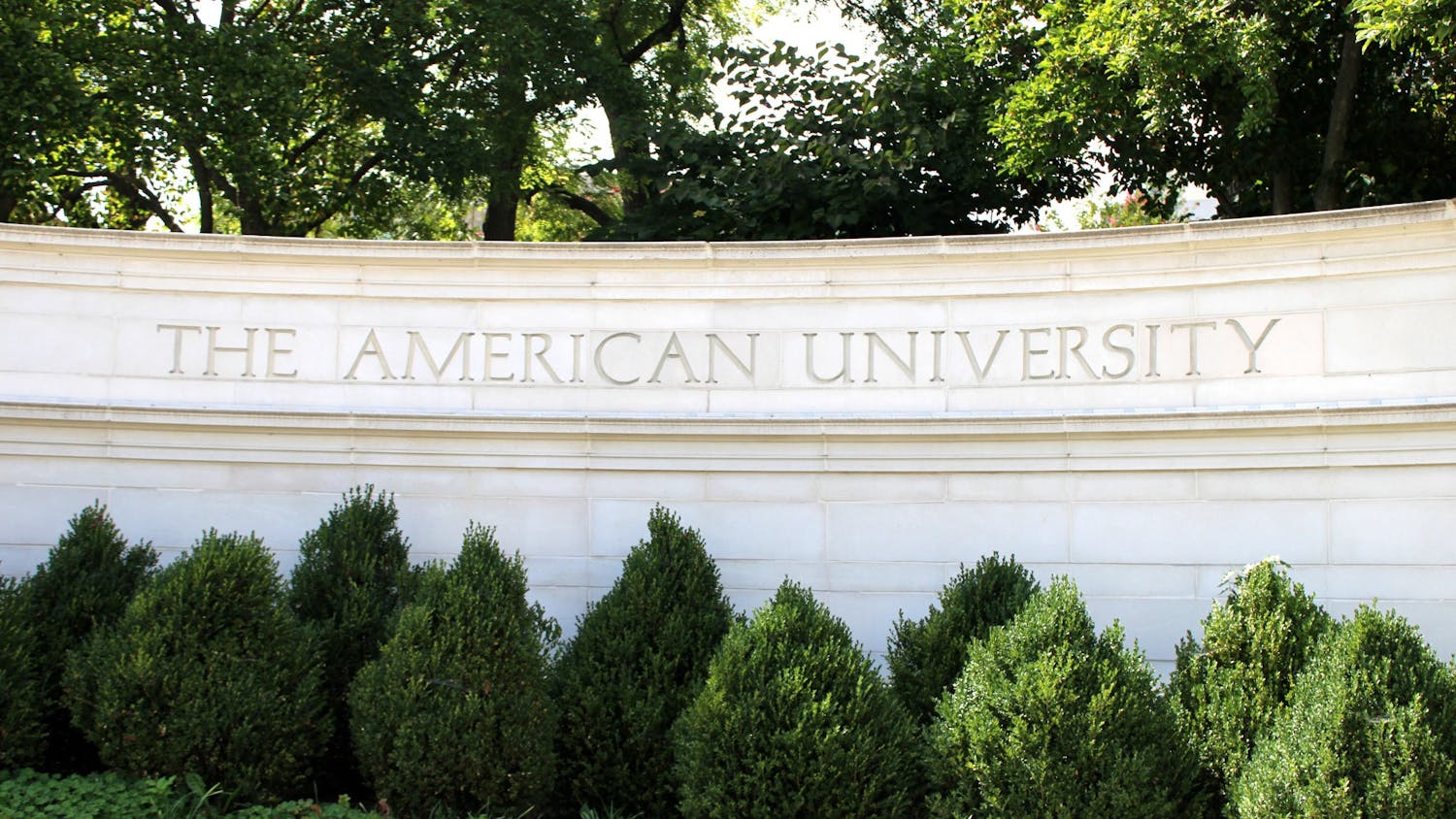
Trench investigations for dangerous materials are scheduled to start next week at three locations within AU, in order to investigate the whereabouts of chemicals from World War I, the project manager of the U.S. Army Corps of Engineers military response program said during a meeting of the Spring Valley Restoration Advisory Board Tuesday, Sept. 8.
The Corps determined the location of these "ground scars" using aerial photographs from 1922. The Corps hopes to establish whether or not the disturbances came from the disposal of chemical munitions or laboratory glassware during World War I. In 1917, the Bureau of Mines and the Army's Chemical Warfare Service developed and tested approximately 600 gases at AU they intended to use overseas, The Eagle previously reported.
"We're going to dig into those ground disturbances and see if there is anything there related to the [AU Experiment Station]," Project Manager Todd Beckwith said.
Three approximately 3-by-40 foot trenches will be dug in the Nebraska Ave. parking lot, while four other 2-by-8 foot trenches are to be excavated beside the campus radio tower, near the Beeghly Chemistry Building.
"Some people thought [the ground scars] might have been from horses training for equestrian, but don't know exactly why they were there."
Beckwith said he could not speculate as to how many parking spaces would be affected by the parking lot's scheduled excavation.
The digging will be a "low probability" investigation, meaning the Army Corps will perform it without an air-filtering structure in place.
Meanwhile, the Corps expects further "high probability" digging at the Pit 3 location at 4825 Glenbrook Rd. to recommence in late October at the earliest, according to Dan Noble, the Military Response Program manager.


The Corps temporarily suspended its investigations of Pit 3 on Aug. 12 after workers uncovered an open laboratory flask containing traces of the chemical agent mustard.
"The Army Corps suspended work [Aug. 12] and moved to an emergency response mode to secure the property. They sent workers to the site with additional protections (hazmat suits and respirators) to close the hole, remove affected soil to sealed drums, and close the site until further notice. A guard has been stationed at the site 24 hours a day," according to a memorandum from Assistant Vice President of Facilities Jorge Abud and President Kerwin's Chief of Staff David Taylor.
Switching back to high-probability procedures at Pit 3 will require additional precautionary measures, like setting up vapor containment tents, Noble said.
"We will be putting up [two] protective structures again at the property. Our workers will be upgrading to a level B personal protective equipment, working off supplied air, complete skin protection and things like that," he said.
"So basically where we're at right now is we have to essentially plan for high-probability situation, get it through all the approvals we need to get it through, bring back the high-probability crews and get them trained up."
The Aug. 12 discovery was not the first time that glassware items had been recovered from test pit investigations on that property. It was, however, the first glassware item found there that contained a World War I chemical agent, Noble said.
The Corps also located a container with so-called mustard agent breakdown products in a separate test pit in front of the house a week earlier. Breakdown products of chemical agents are less severe than the actual chemical agents themselves.
"So, basically a find of mustard in the test pit in the back yard, and then a find of the intact item with agent breakdown products in a different test pit," Noble said.
At the meeting, Kent Slowinski, a former Spring Valley resident and member of the Restoration Advisory Board, asked whether Army Corps engineers would be investigating 20 further potential burial sites in the Spring Valley area.
"We still have the [American University Experimental Station] inventory with either 2,000 or 4,000 munitions that remained at AUES at the end of the war," Slowinski said.
"And there's no documentation that they were shipped from AUES or that they were received at [the Army Corps' Chemical Materials Agency in Edgewood, Maryland]. So the logical conclusion is that they're somewhere in the area."
Slowinski told The Eagle after the meeting that he raised the concern about the burial pits on behalf of the safety of workers and residents.
"If [the Corps] doesn't investigate and clean them up, in the future more unsuspecting workers and residents will find these burial pits and either become ill or injured or worse," he said.
In response, Noble replied, "We're out in the woods looking ... right now, and we'll let you know what we find."
You can reach this staff writer as ccottrell@theeagleonline.com.
