
As corporations begin to manipulate what musical artists produce, the originality of that music begins to disappear, according to Henry Chalfant, director of "From Mambo to Hip Hop," a 55-minute documentary chronicling the history of hip-hop music in south Bronx.
Friday night, the School of Communication presented "Hip-Hop 101," the story behind hip-hop music, which opened with a screening of "From Mambo to Hip Hop" and was followed by open discussion and impromptu musical and lyrical performances.
The film began with the origins of mambo in the 1950s in south Bronx and culminated with the hip-hop culture's emergence in the 1970s. The film emphasized how different races with a common love for rhythm and dancing came together.
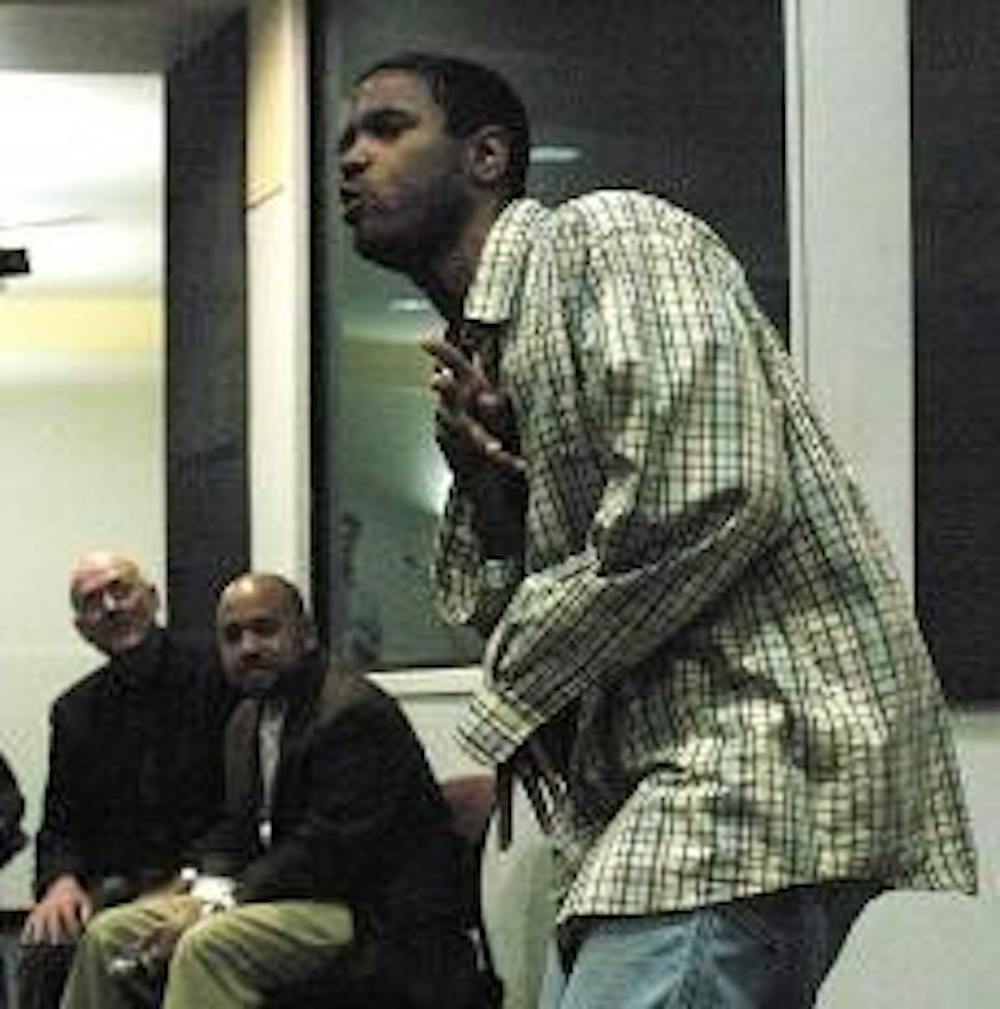
Following the film, Gregory Morrison, also known as Psalmayene 24, actor, hip-hop theatre artist and singer/songwriter, put on an original performance where he used his body and words to convey feelings about how hip-hop has recently begun to evolve into music viewed in a negative light.
William Smith, an assistant professor in the College of Arts and Sciences, director of AU's jazz ensemble and author of "Hip Hop as Performance and Ritual," said hip-hop no longer carries the same messages it did when it was first born.
"I stopped listening when gangster rap came out," Smith said. "I wanted to listen to positive music with a positive message."
He said that as the audience for hip-hop music widens, it has become more commercialized and less organic. He said artists have to "fit a certain sound in order to mass market [their music]," because ultimately musicians are trying to make a living.
He explained that the music industry, artists and consumers collectively are creating a negative image of hip-hop, but that everyone has the power to change this.


Chalfant discussed the importance of intergenerational connections, where children build off of their parents' music and are able to create music within the community in a way that gives a voice to the people.
Rachel Socia, a freshman in SOC, said she found the presentation "interesting and insightful" and enjoyed the music.
"It made me want to dance," Socia said.
Lauren Eden, a sophomore in SOC, said she appreciated how well the entire event was organized.
"I thought it was really amazing to see where hip-hop came from, and it provided us all with a great education about it," she said.
Smith said the new democratic power in music should be harnessed and used to provide positive images to balance out the current negative perception of hip-hop music.
"Right now is a fertile time for music. The Internet has made everything democratic," he said.
SOC professor Sarah Menke-Fish moderated the event, which was held in Ward 2 from 7 to 9 p.m.
